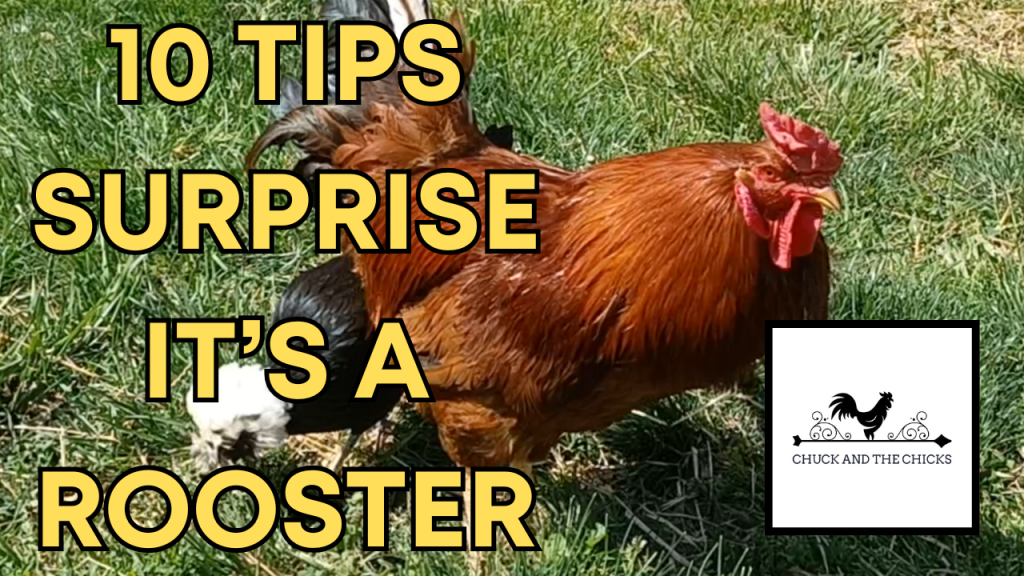
10 Tips Surprise It’s A Rooster
The longer that you keep backyard chickens the more likely it is you will at some point acquire rooster. Whether it is via an irresponsible animal dump in your neighborhood, you bought straight run chicks and the dice didn’t fall in your favor, or a local farm box store or hatchery made a mistake, an unplanned rooster can present a few challenges. In this video I’ll talk about options and techniques to acclimate and train friendly roosters. There are some roosters that due to an injury, health issues, prior abuse, poor breeding, and other factors may not respond to attempts to train them. However, most roosters when given adequate space, mates, and their basic needs are met can make a productive and positive addition to your backyard flock.
If you can’t legally own a rooster in your area or you have decided you can’t keep a rooster no matter what, here are a few options. You can responsibly rehome him. Social media has several pet relocation groups where you may be able to find a good home. If you have decided to cull or cull and process the rooster for meat, please acquire the proper equipment and do research first regarding safe and humane methods. You can fumble your way through many new experiences in life, butchering livestock is not one of those experiences. Improper butchering can not only result in spoiled unusable meat but it can also result in needless suffering for you and the animal. I’ll list a resource below that features information about responsible humane culling and butchering practices. Some local livestock veterinarians offer professional cull services for a small fee. Please don’t abandon an unwanted rooster. Roosters are domesticated livestock animals and they will not survive in the wild.
If you’ve decided to keep your rooster, here’s a few important things you should know.
A rooster’s basic needs are: adequate space, adequate mates, enrichment, proper nutrition, proactive health maintenance (like monitoring and trimming spurs, cleaning their chicken area etc.), and a calm consistent care routine.
Some of the benefits of having a rooster are: the ability to create fertile eggs which can be hatched into chicks, protection and predator awareness for your flock, roosters mediate pecking order fights within the flock and help maintain flock harmony, their appealing appearance and companionship.
Some of the challenges of having a rooster are: their heightened defensiveness can accidentally be directed at you, they need to be monitored around young children and unfamiliar animals, multiple roosters have the potential to spar and fight harming one another or worse.
Breed and heritage matters. Different chicken breeds have different temperaments and purposes. The type of breed will determine the temperament of the chicken whether they are flighty, docile, generally aggressive, or personable. While there are some exceptions to the rule in general breed plays a major role in the behavior and personality of the rooster. Some breeds are simply poorly suited for small family settings while other breeds are designed for it.
Make introductions slowly. Whether introducing a new rooster or additional chickens to your flock make introductions slowly and intentionally. New flock additions should be isolated for 2-4 weeks for biosecurity reasons. Make introductions visually at first through things like a dog kennel, screen, or hardware cloth to allow the flock to acclimate to the new members before combining them with the established flock. Make introductions in the largest space possible and smooth the transition with treats and other enrichment. Maintain your separate facilities for as long as introductions last which will differ based on your specific flock and situation. Acclimation typically takes 2 to 4 weeks depending on the flock.
Your rooster is ruled by his two main instincts, to protect his flock from predators and to service his flock to provide for the next generation of chickens. All his decisions are based on those two instincts. Roosters are extremely protective and vigilant by nature. You can accidentally become the target of their protective nature if you aren’t able to meet their needs, and even good roosters can have a bad day. Part of owning a rooster is knowing what those needs are and committing to meeting them to set the animal up for success. A rooster’s responses are based on instinct and should not be seen as personal attacks or emotionally motivated. If your rooster feels compelled to protect his flock, you will see signs he is about to charge including things like raising his heckles (the feathers along his neck) and lowering his head to charge. A rooster has two means of protecting his flock which are strong pinches with his beak and flogging with his spurs.
A rooster’s virility and hormones impact their behavior. Roosters reach the height of their virility approximately 2 years of age. Spring is the season which is the natural height of their breeding hormones where you can expect to see enthusiastic servicing and sparring behavior even among the most well-behaved docile rooster. His instincts to protect his flock will be naturally heightened in the spring.
Roosters and small children typically don’t mix well. While there are some wonderful exceptions children just being children run the risk of setting off a rooster’s protective instincts and being flogged or pinched. Running, screaming, and darting are all things that put roosters on high alert. Doing things like snatching up hens, chasing them, or disturbing the flock are also likely to incite a rooster who will feel compelled to protect his flock. When I have young visitors, I leave my chickens and my roosters in their protected chicken area (their coop and run) to avoid incidents. Separation is 100% effective. Roosters can be trained to cohabitate with children provided that you also invest in instructing children on how to behave appropriately around livestock animals and to give them plenty of space. Your rooster also may perceive unfamiliar animals as a threat, for example a visitor who brings their pet dog. Again, separation is among the easiest and most effective ways to avoid any incidents.
Your rooster needs adequate mates. Rooster can reliably service 7-10 hens as a single rooster meaning most of those hens will be serviced regularly and produce fertile eggs which can be hatched into chicks. If the flock a rooster has is too small, there is the potential for hens to be overserviced and stressed just from the rooster performing his normal role. While some feather loss and damage is a normal result of regular chicken breeding, signs your flock may be being overserviced include things like persistent bald patches, leg injuries, signs of blood, and other issues. Your rooster will need adequate mates. Even with adequate mates, it is possible for the rooster to choose a favorite hen who may receive a disproportionate amount of attention. This may require periodic isolation to allow the hen to recover. Smaller flocks can be successful, and the ratio can be adjusted based on breed and other factors. How many mates your rooster will need can vary based on things like their breed, age, health, and demeanor. These are best practices and general guidelines. Watch your flock closely for signs of imbalance or additional issues. Size also matters. While roosters are naturally larger than hens, if the rooster is disproportionately larger than then the hens in your flock he may harm them unintentionally. Not all your hens will be receptive to a new rooster. Providing additional perches, roosts, straw bales, old stumps, and other chicken-safe objects to climb gives them options to escape unwanted attention.
Your rooster needs as much space as you can give him. Roosters are high energy vigilant protectors. Crowded coops and inadequate space bring out the worst of their protective tendencies. Providing a run or protected fenced area where your rooster can roam is important to allow him to utilize his energy in a positive way. If a rooster feels cornered or trapped they are very likely to charge, flog, and pinch defensively.
You can trim rooster spurs like dog nails. This is important as some breeds’ spurs can grow to the extent of inhibiting a rooster when he walks posing harm to him or your hens. This needs to be judged on an individual basis as some roosters require frequent trimming while others may need none. Use a light to spot the quick in the spur. Trim conservatively to avoid hitting the quick which causes bleeding and pain. Smooth the rough edge from trimming with a file or sandpaper. If you accidentally over trim you can use corn starch or styptic powder to stop the bleeding.
A rooster dance is misguided romance. A rooster’s dance is not aggression, it is misplaced romance often followed by a pinch which is your rooster’s attempt to mount. If your rooster dances to you don’t flinch or run away. Remain calm and then slowly walk away. Wearing proper livestock clothing like long pants and muck boots negates the effectiveness of any pinch. A rooster’s virility peaks at 2 years old and naturally wanes over time. Roosters are naturally more aggressive and amorous in the spring at the height of their natural mating season.
Nesting mimicry. You may notice your rooster step into a nest box and cluck to draw attention to the nesting site. This behavior is both a safety check for the hen and the rooster demonstrating that the nesting box is a secure, appealing place to lay her eggs.
Tidbitting. Roosters once they find a food source will call other flock members to the food using a series of short sounds called tidbitting. This is an extremely desirable behavior and demonstrates your rooster’s nurturing nature.
Roosters crow. It is a myth roosters crow only at dawn. In my own flock my roosters typically crow at dawn, midday, and dusk. Roosters will also crow throughout the day for a variety of reasons including declaring terrioritory or status within the flock. If a rooster is crowing in the middle of the night, this can be the indicator of interrupted sleep, severe overcrowding, or a predator presence. Crowing in the night is a sign something is wrong.
Establish a report through calm, consistent behavior or perform maintenance tasks at night once the flock is roosted. You can build a positive relationship with your rooster through calm, intentional, consistent behavior. Roosters are highly trainable. Things like a spray bottle filled with water can be an effective deterrent (not to be used in freezing weather) but even more ideal is positive motivation like kind handling, treats, and training your rooster to do things like sit on a certain perch for treats. If hand taming isn’t a priority for you, you can perform maintenance tasks in your chicken area when your flock has roosted for the night and avoid the potential for unpleasant interactions entirely.
Overcrowding, boredom and poor or inadequate nutrition bring out bad behavior in roosters. Boredom is a form of stress for chickens and roosters. Overcrowding and boredom can result in things like pests and disease, feather pecking, aggression, and in extreme cases even cannibalism. Your flock needs adequate and appropriate poultry nutrition to perform at their best. Enrichment doesn’t have to be expensive or fancy. A vegetable hung from a string, bale of straw, and additional roosts and perches are all forms of affordable chicken enrichment. Overcrowding and boredom will bring out poor behavior outcomes in your flock and especially from your rooster.
Your demeanor when you interact with your livestock matters. Brandishing objects, rushing, screaming, introducing new objects, and running are all things that can incite a rooster’s protective instincts to pinch and flog. Interacting with your flock in a calm, intentional way goes a long way to avoid unpleasant interactions. That being said, even a good rooster can have a bad day. Wearing appropriate clothing when interacting with your flock (long pants and muck boots) and keeping a distraction object handy like an empty bucket can be helpful. Don’t strike your rooster with the bucket but if a negative interaction does occur you can direct his energy to the bucket instead of you.
Methods that suggest beating, striking, or pinning your rooster don’t work and instead instill fear, not trust in your rooster. By physically harming your rooster you have confirmed you are the threat he suspected you were. These methods also run the risk of injuring your rooster or worse. Your rooster is a bird, not a dog, and can’t be dominated into submission. Instead, understanding your rooster’s nature and building a consistent routine built on trust and stability is more likely to produce positive outcomes. Performing maintenance at the same time daily, moving calmly and intentionally around your flock, providing your flock with plenty of space and clean chicken facilities, and providing proper nutrition are all ways to encourage positive behavior in your flock and in your new rooster.
Two of my personal favorite beginner chicken care guide books are listed below. I’m not affiliated with these books, authors, or publishers in any way. I consider them wonderful beginner poultry care books.
Storey’s Guide to Raising Chickens, 4th Edition: Breed Selection, Facilities, Feeding, Health Care, Managing Layers & Meat Birds Hardcover, December 27, 2017, by Gail Damerow (Author)
The Beginner’s Guide to Raising Chickens: How to Raise a Happy Backyard Flock (Raising Chickens Guide), Jun 4, 2019, by Anne Kuo (Author)
I hope this has been a helpful post about positively working with your new rooster. If you enjoyed this post and want to see more backyard chicken and homesteading content check out Chuck’s other social media linked below.
 Chuck and the Chicks