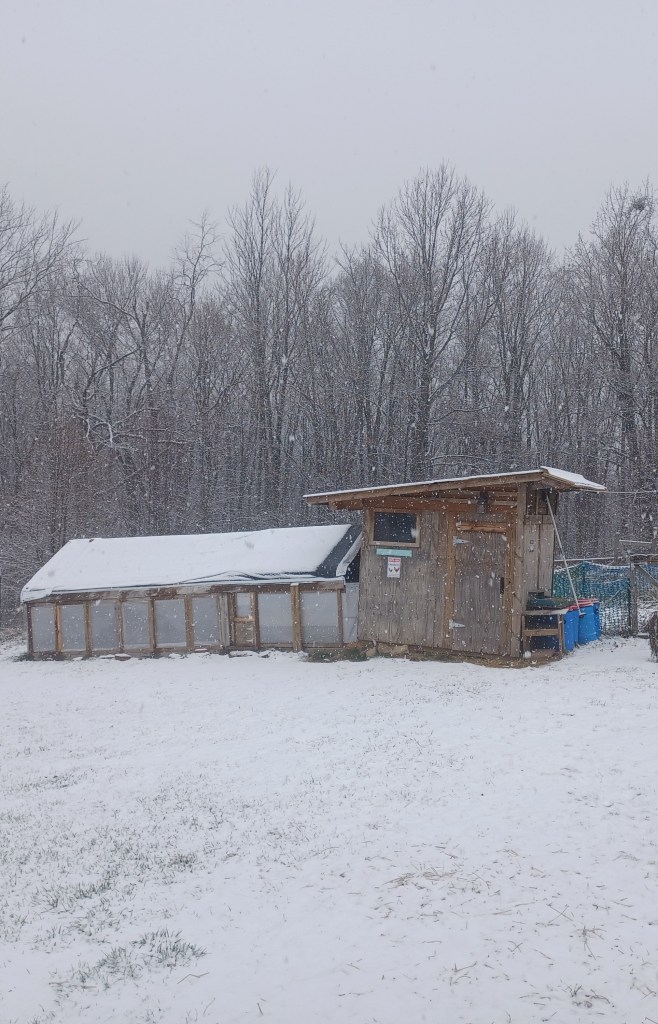
7 Tips For Your First Winter With Chickens
The fall season is here. Leaves are dropping. Harvest and preserving efforts are in full swing. Although winter isn’t here yet, there are some important things you can do right now to set you and your flock up for a healthy and safe winter ahead. If this is your first winter with chickens and you haven’t already done so, be sure to purchase at least one beginner chicken care book. Having access to good poultry care information in the case of power outage is a gift to you and your chickens.
- Do a deep seasonal clean. While the weather is still cooperating now (it’s fall as I’m writing this) is the time to a deep clean of your coop, run, and chicken accessories. Refresh your ground cover litter as needed. Refresh nesting box lining. Clean your roosts and perches. Remove droppings from your chicken area. This time of year, I also scrub and clean as many surfaces in my chicken area as I can. Clean and refresh water and food dispensers. I spray an all-natural castile soap mixture as my perimeter spray to reduce insects and deter pests. This spray is also great to use in dusty or hard to reach areas. Don’t introduce moisture into your coop and run if you are expecting freezing temperatures as this contributes to the conditions which cause frost bite.
- Check your infrastructure and fencing for signs of damage or needed repairs. Examine your chicken infrastructure. Replace any roofing, boards, or elements of your chickens’ structures that require repair. Look for signs of digging or damage to the walls and perimeter of your chicken housing. Seal up holes, cracks, or gaps in your chicken housing. Walk the fencing of your chicken area if applicable. Remove excess overgrowth near your chicken structures which can harbor pests. Predator pressure increases during the winter months as natural food sources become scarce forcing predators to become even more brazen in their quest for food for survival. Make your chicken area less appealing with sound maintenance. Needed maintenance and repair could be imperative for the protection of your backyard flock. Acquire extra tarps or plywood if needed to construct walls or wind breaks to protect your chickens from the elements. During the winter it is important to keep your chickens dry, protected from the elements, and out of direct cold drafty wind.
- Add additional perches and roosts. During the winter time many flocks will be spending more time in confinement. For flocks that live in confinement adequate perching and roosting space is essential. You can add additional roosts and perches constructed from 2x4s or scrap lumber, large fallen branches, or other chicken safe objects for your flock to perch on. Be sure to sand off of any sharp or protruding edges on new roosts to protect your chicken’s feet from injury.
- Think ahead about your water plan. If you live in an area that experiences freezing temperatures in the winter, start thinking now about how you will provide your flock with fresh water during the winter. Whether you will be using a heated livestock water bowl or manually refreshing their water throughout the day, now is the time to strategize and acquire any additional equipment you may need.
- Provide grit and calcium supplement. With their chances to forage reduced by extreme winter weather your flock will benefit from access to these important supplements. Chickens can naturally find grit if they have access to fresh pasture and forage. For many, this is not possible during the winter. Grit helps your chickens digest their food and avoid health conditions like sour crop. Calcium is important for strong egg shell and healthy feathers. Offer your flock grit and calcium supplement in a free choice container separate from their food. Refresh as needed.
- Acquire winter gear for yourself. Caring for backyard chickens is a 365 day a year commitment. In extreme winter weather even modest care chores can seem much more difficult. Make sure you have appropriate winter clothing and gear for yourself to stay safe and comfortable when caring for your chickens. At minimum you will want sturdy, weather proof boots just for livestock use, a winter appropriate coat, a hat, and gloves. Since these items will get soiled in the course of caring for your chickens you will want a set of winter items separate from those you wear in public. Many of these items can be found at thrift, second hand, and consignment stores. Look for sales and discounts now as the price of these items typically increases during peak season.
- Have extra chicken supplies on hand. The winter season in our region is extreme enough that usually at least once per winter my family will be genuinely snowed in and unable to safety travel for several days. Winter storms also bring things like unsafe driving conditions and power outages. To what extent is practical and appropriate for you, have at least one extra of your most essential chicken supplies on hand, things like your chosen chicken feed and a bag of your ground cover litter. Having these emergency back ups in place prior to extreme weather coming to your region is a small but effective thing you can do to set you and your flock up for a safe and happy winter season.
Most chicken breeds DO NOT require any supplemental heat during the winter. As long as your chickens are dry, protected from the elements (wind and precipitation), have sanitary conditions, adequate roost space, and access to food and water they will have their basic needs met. If you have ornamental chickens or young chicks and you feel supplemental heat is needed, use a safe alternative like a panel heater. *DO NOT put a heat bulb in your coop. These become encrusted with dust and cause coop fires. They are not intended to be used in this way. Heat bulbs are an extreme fire hazard.
I hope you found this a helpful starting point for your research about chicken care in the winter season. Check out Chuck’s other social media below for backyard chicken and homesteading content.
https://www.youtube.com/channel/UC6CjdDVs4qN1xxxJXAH6sOg?sub_confirmation=1
 Chuck and the Chicks
One response to “7 Tips For Your First Winter With Chickens”
[…] 7 Tips For Your First Winter With Chickens […]
LikeLike