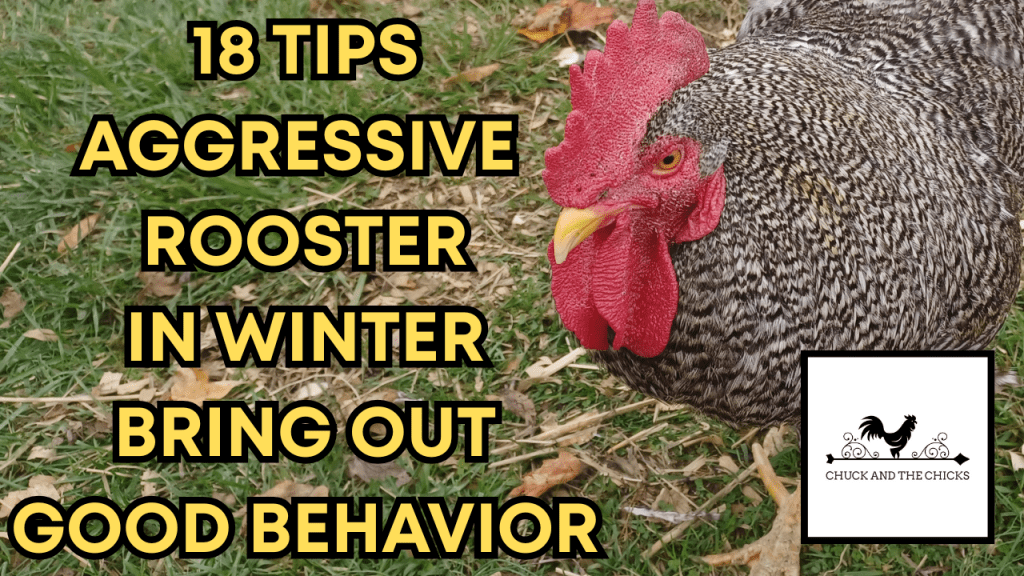
18 Tips Aggressive Rooster In Winter Bring Out Good Behavior
Roosters are easily one of the most misunderstood animals on farms and homesteads. To enjoy the best results with your rooster it’s important to meet his basic needs but very few people know or even care about what a rooster needs from you to be successful and non-violent towards humans. Meeting your rooster’s basic needs helps create good behavior outcomes. With the right circumstances and training a rooster can be a wonderful and peaceful addition to your backyard flock.
*Disclaimer. I’m not a veterinary professional. There are some roosters that due to conditions like illness or injury, poor breeding, genetic disposition, breed characteristics, prior abuse, or other issues will not respond to training. You are solely responsible for decisions regarding the care and maintenance of your flock.
General safety tips for roosters also include things like wearing appropriate clothing when working with your flock (full length pants and livestock boots), not waving objects or making loud disruptive noises, and not running or rushing towards your flock. For this reason, I don’t recommend roosters for households with small children as their loud noises and chaotic movements can trigger a rooster’s protective instincts. You can also choose to confine your rooster to his chicken area with his flock when young children visit as another alternative. I have also observed my roosters are noticeably more energetic and defensive in the earlier part of the day as opposed to the late afternoon or early evening. You can also carry safety items like an empty bucket to redirect rooster aggression toward an object instead of you. Don’t hit the rooster with the bucket but simply place the bucket between you and the rooster if an encounter becomes inevitable. Other tips include using a spray bottle with water or if necessary a few drops of vinegar in it and spraying it if the rooster acts aggressively. Roosters are highly trainable and this method should be used sparingly. Don’t use this method if temperatures will drop below 35 degrees F because moisture applied directly to a rooster’s skin and face during freezing temperatures will cause frostbite. Ultimately, both the bucket and the spray bottle technique are only temporary fixes. Ideally, you can identify and remedy the root cause of your rooster’s unwanted behavior.
Your rooster’s health will also impact his behavior. Rule out any underlying health problems like disease or infestation. Spurs can be regularly trimmed like dog nails using a pet nail trimmer and then filed smooth with light sandpaper or a coarse file to remove any sharp edges. Don’t trim spurs too short as they contain a quick like dog nails. Spurs contain nerves and a blood supply. You can use a flashlight held directly to the spur to see where the quick ends. Not all rooster spurs need to be trimmed as some individual roosters will trim them on their own. This helps prevent accidental injury to the rooster, yourself, and your hens.
Training tips that suggest pinning, beating, or otherwise being violent to your rooster to assert dominance rarely work. Instead, these methods run the risk of injuring your rooster or worse and they inspire fear, not trust. Being violent toward your rooster only heightens his aggressive behavior. Your rooster isn’t mean spirited; he is vigilant 24-7 because his hens are made of chicken. Everything wants to eat chicken, and he knows it. If your loved ones were made of chicken, you would be very nervous too. Reframe your rooster’s aggression as misdirected defensiveness. If your rooster is attacking you, he doesn’t realize you’re on his team. Your rooster has two modes of defending flock: sharp pinches with his beak and flogging with his spurs, the talon protrusions on the back of his legs. Signs your rooster is about to attack include raising his hackles or positioning to charge. The following tips can help train your rooster and deter negative behaviors.
The first and most important tip about training your rooster is to not take his behavior personally. Your rooster is an intact livestock animal meaning he is fertile, his behavior is impacted by his hormones, and his behavior choices are made from instinct. A rooster’s two most powerful instincts are 1) to protect from his flock from predators and 2) to service his hens to provide for the next generation of chickens. A rooster will readily lay down his life to protect his flock and many have. The issue with many mislabeled aggressive roosters is that the flock owner has somehow become perceived as a threat to the flock. With some slight adjustment to your flock environment and your approach you can help bring out the best in your rooster. Your rooster is not mean; he is not acting out of malice or intention. Your rooster is reacting from animal instincts. Once you understand that, you can direct his natural behaviors in a positive way. Your rooster’s behavior is also impacted by his hormones which change seasonally. Even the most docile rooster may become aggressive during the spring season when their hormone levels are at their highest for the breeding season. Things like poor health, untreated injuries, or pest infestations can also cause aggressive behavior.
Not all breeds of chicken are created equal. Did you know chicken breeds are highly specialized just like dog breeds? Over time humans have selectively bred chickens to serve various purposes. Some breeds of chicken are naturally more flighty and aggressive than other more friendly docile breeds. Your rooster’s breed will play a pivotal role in his demeanor.
Your rooster needs as much space as you can give him. Does this sound like you? During the spring and summer you had no issues with your flock’s rooster, but now that he’s been living in confinement in the coop and run during the wintertime you get attacked every time you come inside to care for your flock. It’s likely that your flock, but especially your rooster, needs more space. If your rooster is attacking you, he perceives you as a threat. Cramped living conditions exacerbate a rooster’s protective urges which become destructive behaviors like pinching and flogging when he doesn’t have enough room to diminish his energy levels during the day. The space recommendations for a standard size chicken are 4 square feet of coop space (per chicken) and 8-10 square feet of run space (per chicken). Bantams require approximately half of that. Larger, heavier, and especially giant breeds need extra space. If your coop and run are small, cramped, and your flock doesn’t have enough space, when you enter into that space to do regular maintenance your rooster may feel compelled to protect his flock, making chores a hassle. Here’s some possible solutions. Moveable livestock fencing, adding perches and roosts, creating a run from a modified dog kennel or green house, hoop houses, chicken chunnels, and allowing your flock to free range in the day if it is safe and practical are all ways to give your flock additional space. With enough space your rooster and your flock will be less anxious and aggressive because they’ll have plenty of opportunities to positively channel their energy.
Make sure your rooster has adequate mates. Your rooster can easily service 7-10 hens. Without adequate mates you’ll see signs of overbreeding in your flock like excessive feather loss and leg injuries. While some feather loss is an inevitable result of natural breeding behavior, excessive damage signs include things like growing bald patches and signs of blood. Sometimes even with adequate mates you may find your rooster pays disproportionate attention to one hen which may require periodic intervention and isolation. Make sure also that your rooster is a good size match for your flock. While roosters are naturally larger than hens if the size difference is too extreme this can result in unintended injuries from the rooster simply doing his job. For some, the behavior solution may be as simple as adding additional hens to your flock.
If handling your chickens isn’t important to you and you have no desire to hand tame or handle them, simply do your chores at night once your rooster and your flock have roosted. Chickens are diurnal and sleep at night. If training isn’t a priority for you, you can simply perform your chores at night and avoid your rooster entirely.
Provide strategic cover for your flock and your rooster. Did you know your domestic chickens are likely descended from the red jungle fowl of Asia? Wide, open spaces within an enclosure can make some members of your flock feel nervous, exposed, and uneasy. Provide enrichment objects for your flock and your rooster to hide behind and perch on to help them feel safe, secure, and engaged. Things like old stumps and branches, a thrifted chair, or straw bales make great enrichment objects to break up large space and give your flock places to perch and hide.
Perform tasks and chores on a predictable schedule. Routine builds consistency and trust with your flock and rooster. Try to perform maintenance tasks at the same time every day so your rooster can acclimate to your routine. If you can, move tasks to the later part of the day where he is likely to have less energy.
Be aware of your body language when you enter your chicken area. Waving objects, rushing, being loud and moving unpredictably can all incite your rooster’s protective instincts. Enter your chicken area with calm confidence and move deliberately. Flinching, running, and behaving erratically frighten your rooster and are likely to bring about negative behaviors in response.
Don’t run away from your rooster. Fleeing and running around and from your rooster will actually heighten their aggression. It can be difficult to confront your instincts to flee because a rooster’s aggressive tactics can be very effective even on humans. This is their primary way of protecting their flock. Rather than running, either direct their energy toward your distraction object like an empty bucket or, calmly and assertively walk towards them. Your calm, intentional approach may be enough to diminish the charge. Flinching, screaming, and otherwise acting agitated are all things that will ignite your rooster’s protective instincts.
If possible, handle your rooster by picking him up calmly or redirect his energy towards tricks like jumping through a hoop or perching on a specific roost. Ideally, you can hand raise your rooster and handle him daily to enhance his positive qualities. Having a kind rooster does not detrimentally affect his virility. If you can’t handle your rooster, you can try training out some of his energy by teaching him to perch in a specific spot or to jump through a hoop for treats. Rooster training is very reward driven so be sure to reward the behavior you want to see.
Refrain from picking up or snatching up hens in front of your rooster. This action mimics predator behavior (example, a hawk catching and flying away with a hen) and is likely to inspire his defensive instincts.
Build a positive report with your rooster and your flock with treats. Regularly giving your flock treats as part of your maintenance routine can serve as a form of distraction but also as a point of bonding between you and your rooster. Calm, consistent, kind behavior builds trust with your flock and with your flock protector.
Don’t skimp on enrichment. Did you know boredom is a form of stress for chickens and can manifest as aggression? Chicken enrichment doesn’t have to be elaborate or expensive. Healthy kitchen scraps, sturdy parrot toys, additional perches and roosts, and a simple chicken dust bath are all cheap and easy ways to provide essential enrichment to your flock.
Feed your flock adequate appropriate poultry nutrition. Hunger and malnutrition can cause aggression in backyard chickens. Be sure you’re feeding your flock adequate portions for their size and weight and that you’re feeding them food intended to help your flock thrive. Your flock’s breed, purpose, and age will all impact what poultry food is best for them.
Properly maintain your chicken facilities. Muddy, unkept, unsanitary housing saturated with droppings doesn’t only cause and perpetuate health issues, pests, and diseases within your flock but these conditions can also inspire aggressive behavior.
Check for predator pressure and signs of a predator presence. Your rooster’s aggression may be misdirected ire from a predator visit. When predators attack your flock, it often isn’t the first time they’ve been to your chicken area. Predator attacks will make your rooster ultra vigilant and on edge which may translate to aggressive behavior. Check your chicken area for unexplained holes, marking smells, signs of digging, claw marks, or other indicators there may be a predator presence.
Make sure your flock and your rooster are getting good sleep. Poor sleep makes your flock irritated and less able to cope with daily stressors. Your flock should be able to sleep through the night without interruptions. Things like a predator presence, inadequate perches and roosts, harsh lighting, loud sounds, and unsanitary conditions can all impact the rest your flock receives. Make any needed adjustments or improvements to your chicken area and coop to ensure your flock is receiving good uninterrupted sleep. If you rooster is crowing constantly through the night, something is wrong.
Stay patient and consistent. Training any animal, especially a rooster will take time. Realistically, efforts may take several weeks or more. For faster results, daily training motivated by kindness and sustained by patience will yield the best results. If your chicken environment is the cause of the aggression (i.e. poor sanitation, poor nutrition, or a facility that is too small) training efforts won’t be as effective until these elements are addressed.
If you ultimately decide your rooster is not a good fit for your family or flock, here are some options. You can create and maintain a bachelor pad for your excess roosters and keep them for genetic diversity within your flock as well as pets. You can humanely rehome him to another family. You can cull or process the rooster either through professional butchering services or at home with the proper research, preparation, and equipment. *Do not attempt to process any animal at home without first doing research and obtaining the proper equipment because this will result in unusable meat and the needless suffering of the animal and you. The American Pastured Poultry Association offers many free resources about this topic. I’m not officially associated with them; I’m just mentioning their resources.
I hope this has been helpful information about how to positively train and work with your rooster, not against him. If you’d like to see more informative backyard chicken and homesteading content, be sure to check out Chuck’s other social media linked below.
 Chuck and the Chicks