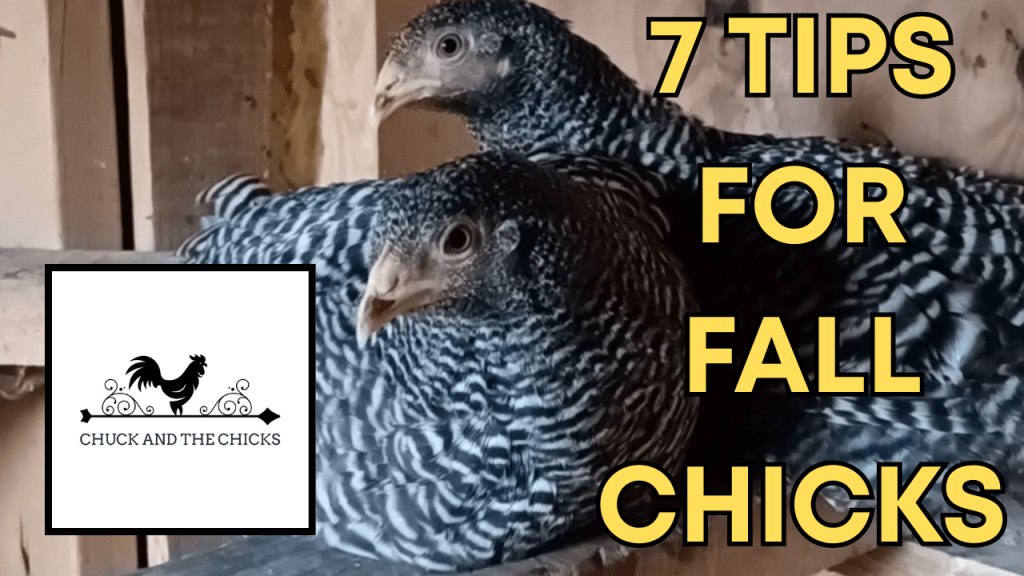
7 Tips For Fall Chicks
Creating or expanding your flock in the fall has some advantages and some disadvantages you’ll want to consider. With the right amount of forethought and planning you can have a pleasant experience growing your flock in the fall season.
Some advantages to growing your flock in the fall are:
*Farm box store retailers and hatcheries will often have chickens available at a reduced price. You can build the flock of your dreams for less money.
*Baby chicks will become productive hens anywhere from 4 months old to 1 year old depending on the breed. If you are raising chicks in the fall, they will likely be ready to start laying eggs by the following spring.
*Many livestock and pet exchange groups will be flooded with unwanted chickens are winter approaches as people who underestimated the effort and expense of caring for them. If you are brand new to chickens, adopting adult hens or rescue hens is a great low-pressure way to see if backyard chickens are right for you. In many instances unwanted adult chickens can be acquired for free or minimal cost. Your new flock if they’re adult chickens will be ready to move directly into their new outside housing (their new coop and run). Adult chickens don’t need a brooder and they will be ready to begin laying eggs after a short acclimation period.
Some disadvantages are:
*It is crucial to know your first frost date and when temperatures in your area will drop below 35 degrees F at night. It will take between 8-10 weeks until your chicks are fully feathered before they can survive freezing temperatures outside. Until then, they will need to be a protective brooder environment with the appropriate equipment until their full coat of feathers has grown in.
*Introducing extra chickens to the flock means the flock pecking order will need to be re-established. If your flock is already struggling with spacing issues or aggression, introducing new members to the flock when space is limited can make for a difficult transition for everyone involved. You’ll need to take extra care to carefully plan introductions and give your established flock the maximum amount of space possible to acclimate to your new additions.
*If the temperature difference is more than 20 degrees between inside/outside your chickens will need to be acclimated slowly when moving them outside from their brooder to their coop (once they have a full set of feathers) to avoid temperature shock.
*Your chicken housing (infrastructure) is crucial to the success of your new flock or new flock members. You will want to plan for adequate space, adequate nesting boxes, and adequate perches and roosts for your new chicks (or chickens).
Here are 7 tips to help set you and your new chickens up for success.
- Build your flock with breeds that are conducive to your homestead goals and that are compatible temperament-wise with your existing flock (if you already have chickens). Domestic chickens, like dog breeds, have been changed over time by humans to fulfill many different purposes on the homestead like being egg layer, meat chickens, show chickens, or companionship chickens. Know what your goals are and let that guide your breed selection. Also, different breeds have different energy levels. Be sure to pair chickens of similar temperaments together because mixing docile and flighty breeds can lead to unwanted aggression within your flock and other issues. If you’ll be building a mix flock it’s recommended to have at least 2-3 chickens of any breed you want represented in your flock so that they have natural companionship within the pecking order.
- Build your flock with breeds that are adapted to the weather conditions in your area. Whether you are in a hot, cold, or temperate climate make sure the chickens you select are well suited to not only survive but thrive in the weather extremes that are expected in your area.
- Have your brooder ready before you go to pick your new baby chicks. Your new baby chicks will need a chick-safe heat source, food, water, baby chick grit, and a liner for their brooder whether that is pine shavings or puppy pads. Baby chicks shouldn’t be placed directly on card board or plastic because this causes fall injuries which can result in splay leg or worse. Make sure your new brooder has a heavy, predator proof top whether it will indoors or outdoors. Baby chicks are not toys and young children should only handle baby chicks with adult supervision.
- Know your regions first frost date and when temperatures will be below 35 degrees F in your area. Young chickens will not be ready to be outside until they are fully feathered (sometime between 8-10 weeks of age). They need a complete set of feathers to regulate their body temperature in order to survive harsh temperatures.
- Invest in your chicken housing and provide your new flock with as much space as possible. Considering expanding your run using repurposed items like a dog kennel or cattle panels adapted to be safe chicken housing. More space for your flock has multiple benefits especially for their behavior and health. Depending upon the severity of winter weather in your area, you may consider insulating your new coop.
- Invest in a heated water station for your chickens or plan ahead how to provide water to your flock in freezing temperatures. Chickens will need access to food, water, and their supplements all year round even when the temperatures plummet.
- Don’t count out rescuing or adopting adult hens in the fall. As mentioned before as winter approaches pet groups and livestock groups will be flooded with unwanted chickens whose only problem was being adopted by someone unwilling or unable to care for them. Rescuing adult chickens has multiple advantages including that they will be ready to start making eggs and move directly into their outside housing right away! If you’ll be incorporating your rescues into an existing flock, be sure to observe an isolation plan somewhere between 2-4 weeks to be sure your new flock members are healthy and free from pests or disease before incorporating them into your existing flock.
I hope you enjoyed this post all about adding chicks or new chickens to your flock during the fall season. If you enjoyed this post, be sure to check out Chuck’s other social media for more backyard chicken and homesteading content.
 Chuck and the Chicks