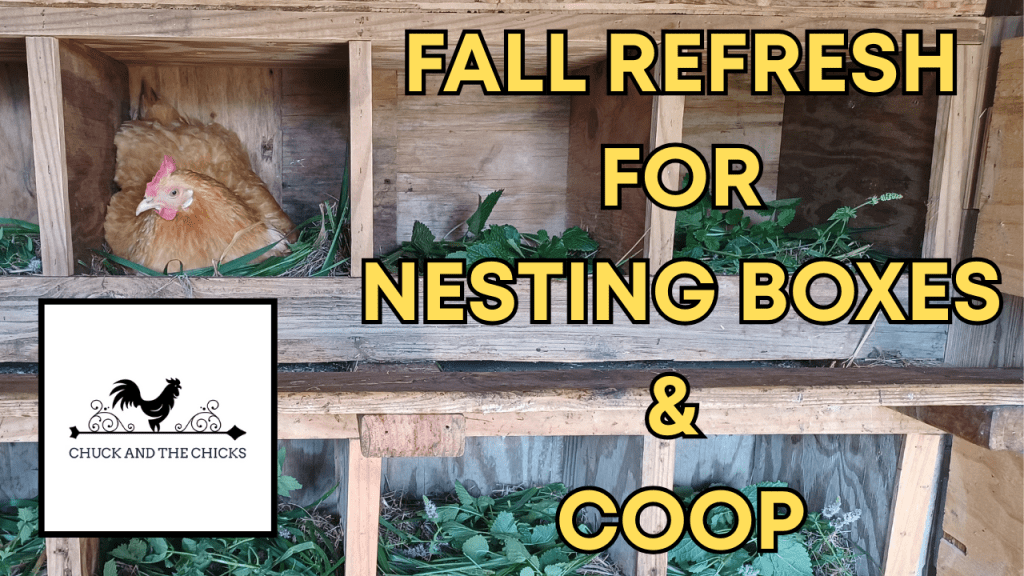
Fall Refresh For Nesting Boxes & Coop
Every season on the homestead I perform essential maintenance that is necessary to help keep my flock healthy and pest free in preparation for the months ahead. When temperatures are below 35 degrees F, it’s not advisable to use water for cleaning inside your chicken area because introducing moisture creates conditions that can cause frostbite in your flock. Before the coldest temperatures of the year are here, I do a seasonal refresh of my nesting box area and coop to preserve my flock’s health and the cleanliness of their eggs. Cleaning and timely maintenance of your chicken area helps to prevent many chicken ailments, behavioral issues, pests, and diseases. This is the routine that works great for me on my homestead.
When cleaning your chicken area if have respiratory issues or simply because you want to you can use a face mask to cover your nose and mouth to prevent from inhaling dust and to help dampen the smell. This is your personal choice and is optional.
The supplies I use are: a dedicated stiff bristle brush, a dry wall puddy scraper, natural castile soap, a reusable spray bottle filled with my castile soap mixture, a dedicated chicken use utility tub, hot water, and micro fiber rags. I also use food grade diatomaceous earth as a pest deterrent inside my coop and nesting boxes. *It’s important to use the food grade diatomaceous earth, not the pesticide kind. *
A note of caution using DE. DE is a natural product. Natural does not mean safe for any every circumstance. DE can be used to kill pests but it can also harm pollinators and beneficial insects too. I use DE very sparingly and only in very small amounts in my coop and chicken area to avoid harming beneficial insects or causing respiratory issues for my flock. DE is dusty and can become airborne so use and apply it cautiously and sparingly. A small amount is sufficient.
It’s important to not use harsh chemical cleaners or harshly scented cleaners intended for home use on or around livestock. Harsh artificial scents and chemicals can agitate your flock’s respiratory system, harm their skin and feathers, cause injury, or worse. I use an all-natural castile soap to clean my coop and all of my perches and chicken accessories.
My flock is most active in their coop in the early morning so I choose to do this maintenance in the afternoon or evening so I don’t disrupt their egg laying cycle.
I begin by refreshing the nesting boxes. Currently, my nesting box material is hay. You can also use nesting box materials like fresh straw, nesting box liners, or even long grasses from your yard as long as they’re dry and free from yard chemicals or pesticides. I use deep bedding method so the used hay goes directly onto the floor of the coop. If you’re not using deep bedding method, gather the soiled nesting material in a bucket and dispose of it in either your compost pile or yard waste bin. I then remove any remaining material inside the nesting box. I wipe the nesting boxes with the micro fiber towel wet with the hot water and soap mixture. I use my stiff bristle brush to scrub the boxes to get them as clean as possible. I repeat this process with all of the nesting boxes until they’re empty and clean. When the box is dry, I use the duster which comes with the diatomaceous earth to apply a small amount in the corners of the nesting box. I’m careful to only use a small amount as a little goes a long way and you don’t want to over apply DE because it is dusty and can become airborne which can agitate your flock’s respiratory system. A very small carefully applied amount in the corners of the nesting box prevents pests like mites or lice from making a home or laying eggs in the nesting box. Once all the boxes have been treated then it’s time to replace the nesting material. I add the fresh hay. I also do an additional optional step where I add untreated long yard grasses and chicken safe herbs like lemon balm and mint. I have both lemon balm and mint in my garden so I choose to add these to my chicken area and nesting boxes. These herbs are thought to be a natural deterrent for pests, bacteria, and viruses. They also smell pleasant and have a soft texture.
Once the nesting boxes have been reset, it’s time to start on the rest of the coop. I use the puddy scraper to remove any clumps of droppings off the perches, roosts, and ramp onto the floor of the coop. Removing these droppings helps keep my eggs clean and my flock healthy.
I use my stiff bristle brush the wash the perches, roosts, walls, ramp, and nesting boxes. Any place with smeared or stuck on droppings I use the bristle brush to clean it up.
I use the micro fiber rag dipped in the soap to dust the coop and all of the lateral surfaces as much as possible. Removing dust from the coop helps my flock breathe easier and stay healthy. This also deters pests and bacteria.
I use my duster to apply a very small amount of DE to the ramp to the nesting boxes, just a small amount to give my chickens additional protection when they use the ramp. I also use the duster to apply a small amount of DE in hard-to-reach corners I can’t clean otherwise.
I use my spray bottle filled the soap mixture as an overall treatment for the coop and perimeter spray. This soap mixture helps deter pests and bacteria as well as gives the coop a pleasant scent.
Lastly, I refresh the coop floor with a fresh layer of pine shavings.
I’ll repeat this process at least once more before freezing temperatures are here in my region in addition to my regular daily cleaning routine.
I hope you have found this information about my fall season nesting box and coop cleaning routine helpful. If you’d like to see more backyard chicken and homesteading content, be sure to check out Chuck’s other social media linked below.
 Chuck and the Chicks