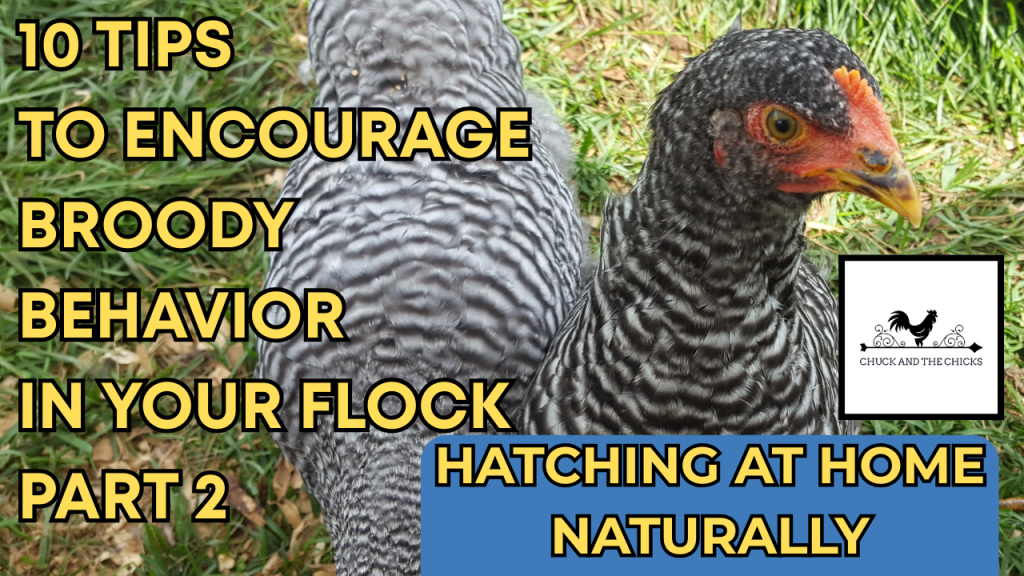
10 Tips To Encourage Broody Behavior In Your Flock, Hatching At Home Naturally Part 2
Disclaimer: The following is a very condensed overview in broad strokes of ways to encourage broodiness and hatch chicks. I’m not a veterinary professional. Any information here is for enrichment, entertainment, and educational purposes only. My content is not intended to be a substitute for professional services of any kind. Learn about the poultry laws in your area before expanding your flock. Your responsibility for the care of your livestock is solely your own.
What is broodiness in hens?
Broodiness or a broody cycle in a hen is a physical and mental change that happens when a hen is preparing herself for motherhood. During a broody cycle hormonal changes occur which impact the physical body and behaviors of your hen. Your hen will prioritize incubating and hatching eggs above all other activities. She may lay eggs to create her own clutch, a collection of eggs to hatch. It’s also possible for the hen to stop laying eggs. Your hen may even resort to stealing and accumulating the eggs from other hens in your flock. In order to successfully hatch chicks at home with your backyard flock you will need a rooster so your eggs will fertile and viable. Once a hen has gone broody, she is mentally and physically ready to undergo the hard work of incubating eggs and hatching baby chicks. With the right support you can have a pleasant and beautiful experience hatching chicks in your own backyard!
Before hatching eggs at home consider the following carefully. Is it the correct season to hatch eggs? Typically backyard chicken owners choose to hatch eggs in the spring when temperatures will not be below 35 degrees F. It is important to ensure your chicks will be fully feathered (which happens at about 8-10 weeks old) before they will be required to adapt to any harsh temperatures. Do you have adequate space and facilities to add to your flock at this time? If you’re already struggling with space and sanitation issues, additional chickens will only exacerbate those issues. Lastly, what is your rooster plan for excess roosters? There is no guaranteed way to determine the sex of an un-hatched egg (whether the egg will hatch into a rooster or a hen) so it’s important to have a plan in place for your excess roosters before you hatch additional chickens for your flock. Before expanding your flock, honestly reflect if you can do so safely and responsibly.
Prenatal care for chickens. Healthy hens make healthy eggs, and healthy eggs become healthy chicks. Vitamins deficiencies in hens can contribute to deformed, diseased, or otherwise struggling chicks. Be sure to provide your hens the highest quality nutrition you can in the form complete poultry feed, fermented feed, and high quality treats like healthy kitchen scraps, fly larvae, and grub worms. Additionally I would also recommend offering poultry safe vitamin supplement in a free choice water station. Your flock always needs fresh clean water so provide this supplement in one of multiple stations. There are many varieties of poultry vitamin supplements to choose from so pick the poultry supplement that would best support your chosen chicken breed. Begin this regimen to maximize your hen’s health prior to collecting your hatching eggs.
Choose eggs to hatch that have no imperfections in the shell, that are fertilized from the breeds you want to perpetuate in your flock (preferably healthy chickens that thrive in your region), and that are freshly laid no more than few days old. Create your clutch, your collection of eggs you would like your hen to hatch, all at the same time. It’s important that the eggs are incubated at the same time and that you’re not adding to the clutch once your hen has been placed on her new nesting site. This disrupts the incubation cycle and may cause your hen to cease her broody behavior. A typical clutch is anywhere between 7-12 eggs, realizing that it is unlikely that all of the eggs will hatch (although it’s possible so be prepared for that possibility!).
A broody hen will often choose a less than ideal nesting spot initially, most often their regular nesting area. It isn’t advisable to allow them to brood in their regular nesting box because 1) the nesting box is not a safe environment for chicks and they can become injured or worse falling from the nesting box and 2) you don’t want the broody behavior to spread to your entire flock or all of your hens will go off-lay. Once a hen has gone broody, you may be able to successfully move her to a suitable nesting site where you’ve prepared a clutch of your chosen eggs for her to hatch into my baby chicks.
A broody hen will need a nesting enclosure that is equipped with hardware cloth. Hardware cloth, not chicken wire, is essential to keep small baby chicks inside the enclosure once they have hatched and also to offer the maximum protection possible to the brooding mother hen. A hen will readily sacrifice her life to save her nest so it’s important that she is protected while she is working hard to hatch her clutch of eggs. You’ll want a removable roof or door opening in the enclosure so you can keep the nesting enclosure clean and provide your hen with the essential she needs while she is incubating her eggs. The enclosure will need to be placed somewhere safe and as peaceful as possible. You can use shade cloth or card board to further shade and protect your nesting enclosure. Loud noises, frequent interruptions, and bright light will all end a broody episode and your hen may abandon her clutch. Avoid over handling or excessively disturbing your hen as this could also end her broody episode.
Prepare a nesting pad. This doesn’t have to be a fancy or purchased container just something that is safe for the hen and her chicks to occupy. I use a repurposed cardboard box or box lid. Line your nesting pad with safe, soft materials like straw, hay, untreated long yard grasses, or chicken safe herbs. The herbs are entirely optional. I grow mint and lemon balm in my garden and I choose to include them in my nesting materials. It’s essential whatever materials you choose that they are soft, appealing, and safe for chickens and baby chicks.
Include the essentials your hen will need during her time incubating her eggs inside her enclosure. She will likely only leave the nest once a day or every other day while she is incubating her eggs. Provide your hen with food (I use 16% layer feed), water, and grit and calcium supplement. I combine these in a free choice dish and refresh as needed. It’s important that the nesting enclosure you create has an opening so you can clean up her droppings during the incubation process.
Place your chosen clutch of eggs onto your nesting pad inside the predator proof enclosure. Carefully move your broody hen into the nesting enclosure and gently place her onto the nesting pad. If you’re lucky and the transfer was successful you will see your hen settle onto her clutch and proceed to brood and incubate her clutch of eggs.
Some people choose to occasionally check and monitor the growth of the chicks by candling the eggs. In modern times you can use a cell phone light or small flash light to check the eggs to ensure they are developing. You will see a shadow which the baby chick taking shape and growing inside the egg. *Minimize interruptions to your hen during this time as each interruption may break her broodiness and risk your hen abandoning her nest. You can mark the developing eggs with a magic marker to distinguish them from any additional eggs your hen may lay.
Mark your calendar at the beginning of your incubation cycle. It takes 21 days of consistent incubation to hatch baby chicks. By day 25 all of the chicks will likely have been born. You will know the hen is finished incubating when she moves away from any remaining eggs and begins to explore her enclosure with her new chicks. Compost and or safely dispose of any un-hatched eggs, they are not suitable for eating or any other form of use. The hen will need to remain in her enclosure with her baby chicks for sometime in order for the flock to slowly acclimate to the new members through the safety of the hardware cloth. Once the chicks are born, provide starter grower formula for the hen and her chicks to eat as the mother hen won’t resume laying eggs until she has raised her current chicks. Chicks will be ready to transition to adult formula feed at approximately 4 months old. At 3 months I begin the transition by feeding half layer formula half chick starter grower formula and slowly transition to adult formula entirely as the chicks grow into adult chickens.
When is it safe to allow the mother hen and her new chicks to venture of their enclosure and meet the flock? The answer is entirely flock and situation specific. I advocate regardless of how long you choose to wait before making introductions to carefully monitor introductions for the first few days to ensure that the mother hen and her chicks are successfully socializing with the rest of the flock. *I choose to wait a minimum of 2 months before attempting introductions. For the first two months I continue to clean and maintain the nesting enclosure with all of the appropriate provisions. The safety of your free ranging space, your enclosure, your facilities, your chosen breed of chicken, environmental and health factors, the time you are able to dedicate to introductions all play a role in determining what timing is right for you. Ultimately you will need to do a risk benefit analysis (considering all the factors) based on your specific flock to determine when the best time is for you to begin to incorporate your new flock members. At approximately 3-4 months old the mother hen will begin to transition away from her new chicks and the new chicks will form their own brooder group and begin to find their way into the existing pecking order in your flock, starting at the bottom. *Excellent and adequate nutrition, multiple food and water stations, providing as much space as possible, timely maintenance and sanitation, and plenty of enrichment for your flock are all ways to help ease the incorporation of your new flock members.
I hope you enjoyed this very condensed post about what to do to provide a safe and appealing place for your broody hen to hatch and raise baby chicks in your own backyard. If you enjoyed this post and would like to learn more about backyard chickens and homesteading, be sure to check out Chuck’s other social media which is linked below.
 Chuck and the Chicks