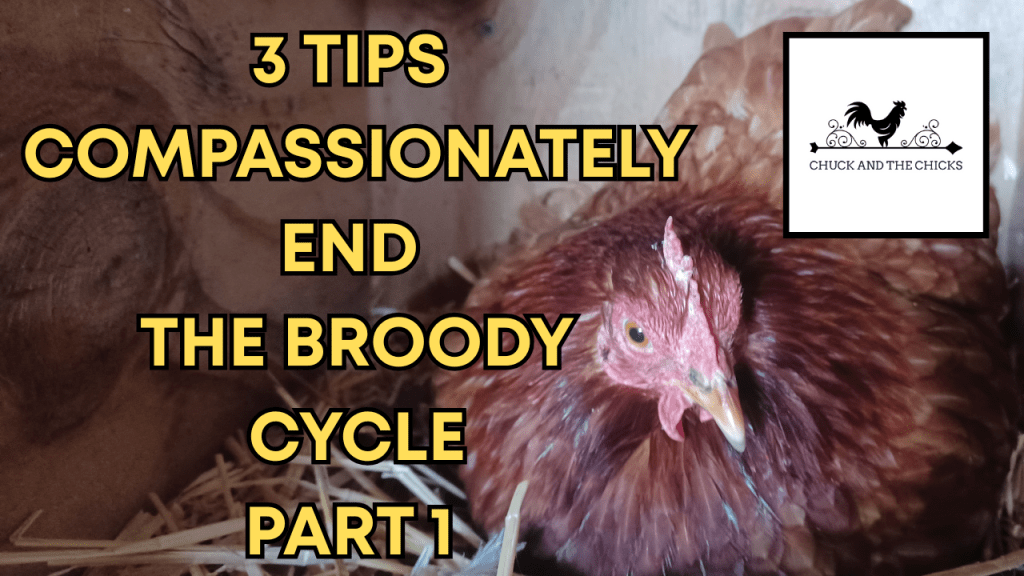
3 Tips Compassionately End The Broody Cycle
What is broodiness in hens?
Broodiness or a broody cycle in a hen is a physical and mental change that happens when a hen is preparing herself for motherhood. During a broody cycle hormonal changes occur which impact the physical body and behaviors of your hen. Your hen will prioritize incubating and hatching eggs above all other activities. She may lay eggs to create her own clutch, a collection of eggs to hatch. It’s also possible for the hen to stop laying eggs. Your hen may even resort to stealing and accumulating the eggs from other hens in your flock. If you don’t have a rooster you won’t have fertile, viable eggs but this fact won’t stop some hens from attempting to hatch eggs anyway. During a broody cycle hen’s will neglect their own personal health including grooming as well as eating and drinking water. Broodiness takes a toll on your hen’s health and if you’re not intentionally trying to hatch chicks, it’s a good idea to compassionately end the broody episode so the hen can resume her normal activities. *Broodiness is not something that a hen does on purpose and it shouldn’t be treated like a behavioral problem. In fact, broodiness is a very desirable trait especially if you would like to attempt to hatch your own chicks at home. Broodiness can be caused by environmental factors, your chicken’s breed type and heritage, hormone fluctuations, seasonal changes, and even by the presence or sound of baby chicks. Some breeds of chicken are more prone to broody behavior than others.
Indicators a hen is broody and not just laying her eggs are: she remain on the nest of eggs for the entire day and night, she may tidbit for imaginary chicks, she doesn’t move to eat or drink if that, and she puffs ups and screeches in defense of her nest when she’s approached.
If the broody episode might endanger the health of the hen or the resulting chicks, this is how I compassionately end a broody episode on the homestead.
Sometimes a broody episode is minor and you can deter the behavior by simply removing the hen from the nest and placing her somewhere away from the nesting site with her other flock mates while they’re free ranging. Removing eggs promptly and daily helps to diminish the temptation for hens to sit on eggs and hatch them. If the broody episode is major or has lasted several days to the point the hen is neglecting normal activities, an isolation plan may be needed to end the broody episode.
Create an isolation plan complete with shade, food, water, and grit. Utilize a dog crate or other type of enclosure to ensure your hen doesn’t return to her nesting site. Fresh air is helpful to end a broody episode. Make sure your hen has all of the essentials she will need for her day in isolation. Ensure your hen is not danger, that she has shade, and anything else she’ll need in her isolation area. Don’t include anything that could be perceived as nesting material like straw or soft materials inside the isolation or your hen may attempt to continue to nest while in isolation. *An isolation plan is NOT adequate protection for overnight from predators so be sure to place your hen back into her protected chicken area at night fall. This is only temporary and only appropriate for daylight hours. * For maximum safety enact your isolation plan when you (or someone you trust) can be present and monitor your hen like during the weekend. Different hens will react in a variety of ways to isolation so it’s important to monitor the situation closely for any emergent issues.
How long do you keep a hen in isolation to end the broody episode? The answer is as short of a time as you can without her resuming broody behavior. You’ll know she’s ready to rejoin the flock when you allow your hen to leave isolation and she resumes normal activities. If your hen runs straight back to the nesting area, she is still having a broody episode, and you’ll need to continue to utilize your isolation plan during the day, monitored, until the broodiness dissipates. It can take anywhere from 1 day to one week depending on the individual hen. Depending on the breed of chicken and the individual hen some hens can be more resistant to ending their broody episode than others. For especially stubborn hens you can additionally gently mist their belly area with cool water. Don’t apply water to your hen if you are expecting freezing temperatures in your area (35F or lower). With patience and consistency your hen will hopefully conclude her broody episode within a few days. Some sources suggest placing hens directly on wire to improve circulation around the hen, but I choose not to do this because lacerations of your hens’ feet that become infected are what cause bumble foot. Wire can cut your chickens’ feet, this cut becomes infected with bacteria, and this causes the condition known as bumble foot so I choose not to use the wire method and instead use an enclosure (a dog pen as a temporary isolation plan) lined with disposable puppy pads. Ultimately you will have to decide the best course for managing your flock. I encourage you to use compassion, patience, and consistency.
If you want to learn more about backyard chickens and homesteading, be sure to check out Chuck’s other social media linked below.
 Chuck and the Chicks