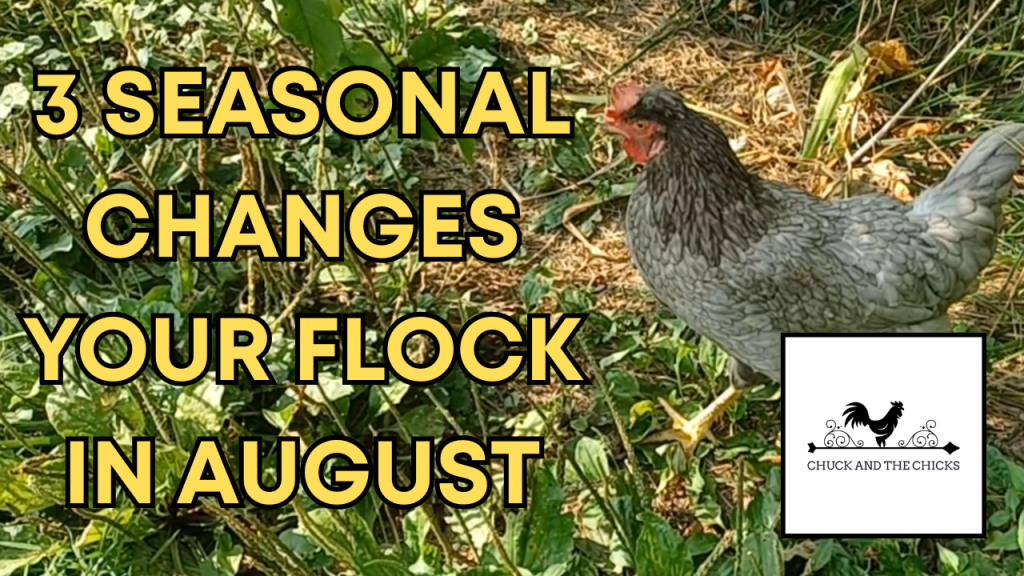
3 Seasonal Changes Your Flock In August
The dog days of summer are here in the Midwest. While there are still plenty of hot days ahead, on the homestead I’m already beginning to prepare my flock for the changes the fall season will bring. Depending on your region, your chosen breed of chicken, and the purpose of your flock, you may be seeing some of these changes too.
Your flock may begin molting. Molting is a natural annual process where chickens shed their damaged feathers and grow a new pristine set of feathers in order to have adequate protection for harsh winter temperatures. Molting can vary drastically even between chickens of the same breed in the same flock. Age, breed, overall health and nutrition, and other factors all impact the severity and duration of molt. The molting process can last anywhere from one to four months depending on the individual chicken, their health, and environmental factors. Molting typically progresses in patches starting at the head and working its way through all of the feathers on your chicken. While extremely unsightly, this is a totally normal and natural seasonal process. Minimize or refrain from over handling your chickens during molt as pin feathers can be painful for your chicken and handling could also damage newly forming feathers. Don’t intervene in the molting process as trimming, pulling, or interfering could actually holt the molting process or cause severe health issues for your chicken. Support your chickens with excellent nutrition high in protein (I add fly larvae, grub worms, and all flock feed to my chickens’ regular diet during molt), provide a free choice calcium supplement (I use oyster shell in a free choice dispenser), and an accessible poultry dust bath are all ways to help your flock progress through molt as quickly as possible.
How can you tell your flock is molting and doesn’t have mites? While both molting and a mite infestation will present with feather loss, mites will be visible on your chicken. You will likely see the small parasites congregated on perches and nest boxes. They are small, about the size of pin, but you will see them move. They (mites) will also be visible on your chickens on their legs, feet, vent area, and around their eyes. You may also notice raised scales on your chickens’ legs. Signs of a parasite infestation are different than regular seasonal molt.
Your flock’s egg production may begin to wane. Molting and shorter days mean your flock may begin to slow down on their egg production. This is totally natural as your chickens’ bodies will begin prioritizing replacing their feathers in anticipation of the winter season ahead. Shorter days and cooler nights may signal your flock especially if they are a heritage to breed to slow their laying process. Egg production is linked to the length of the natural day and sunlight so as the days become shorter, your flock will naturally lay fewer eggs. I don’t recommend artificially manipulating your flock’s egg cycle with unnatural light as this can reduce their lifespan by as much as half as well as cause issues like egg binding and even death. Instead, now is the time to begin to preserve your extra eggs for long term use over the winter so you can enjoy fresh eggs all winter long even as your flock goes on their natural winter break.
You may have flock members ending or beginning episodes of broodiness. Broodiness is when a hen’s hormones change in anticipation of having chicks and the hen experiences full body and mental changes to prepare her for motherhood. Some breeds of chicken are more prone to broody behavior than others. If you don’t have a rooster, your eggs will not be fertile and viable to hatch. This fact won’t stop some hens from attempting to hatch eggs regardless. You will notice your hen is protective of her nesting area, sits for hours on eggs, and puffs up becoming defensive when approached. If you’re not intentionally trying to hatch eggs it’s advisable to end the broody episode because hens will neglect their own personal health in favor of hatching behavior meaning they won’t groom, eat, or drink adequate water. A minor broody episode can be ended by gently lifting the hen off the nest and placing her far away from the nest in direct sunlight. Severe episodes may require isolation where the broody hen is kept in a pen or enclosure with her own food, water, and grit somewhere safe for 24-48 hours until the broody episode has passed. Without the option to nest the broody hormones should eventually dissipate. You can also discourage broodiness by collecting eggs promptly on a daily basis to remove the temptation for hens to sit on them. Broodiness shouldn’t be treated as behavioral problem and is in fact a desirable trait especially if you would eventually like to try hatching your own chicks at home. Treat broody hens with patience and utilize an isolation plan if necessary.
I hope you enjoyed this post about some seasonal changes your flock may be experiencing in early fall. If you would like to learn more about backyard chickens and homesteading, be sure to check out Chuck’s other social media linked below.
 Chuck and the Chicks