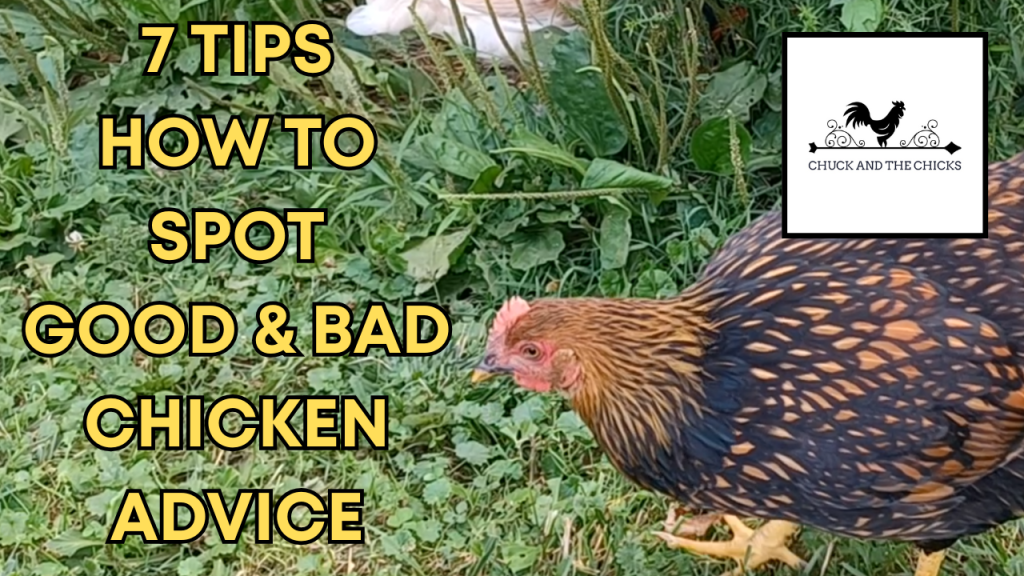
7 Tips How To Spot Good & Bad Chicken Advice
It’s common when you first begin your backyard chicken journey to be a little overwhelmed at first. Even the best prepared families will encounter an unexpected bump in the road at some point while raising and caring for chickens for the first time. Things like environmental issues, behavioral issues, flock balance, diseases, pests, accidents and injuries can all test your beginner chicken knowledge. Written and online resources offer a wealth of information for every potential chicken issue. But, how can you tell if the chicken advice you’re reading is good or bad advice? Don’t worry. You have what is takes to make informed, confident, and compassionate decisions to raise a healthy and happy backyard flock. These tips have worked great for me when sorting through all of the information available about backyard chickens.
Does the information also appear in the written and published reputable chicken resources? While the internet offers literal worlds of information at your fingertips beginner chicken care guide books and magazines are essential resources for any family with backyard chickens. When the internet may not be available these resources are a crucial source of proven, trust worthy information. I frequently use my beginner care guides as the standard by which I judge any and all advice about chickens on the internet. If what’s being said in an online article contradicts what’s written in my beginner care guides, I choose to trust my care guides. Many of my favorite chicken books have been publication for a decade or more with multiple millions of copies sold. They have been edited, improved, and verified time and time again over many years. This is where my confidence in them stems from.
Does the person giving the advice have the same kind of chickens as you? People keep backyard chickens for many different reasons: as egg layers, as meat chickens, as companionship chickens, and as show chickens. The goal behind the flock and the kind of flock being kept determines what kind of housing, nutrition, and daily maintenance the flock will require. Advice that is pertinent and relevant for egg layers may be completely inapplicable to meat chickens and vice versa. While there is some overlap to all of chicken keeping the needs of individual flocks are always going to be breed and purpose specific.
Does the solution or advice seem drastic or extreme to you? At the end of the day you are responsible for the care and maintenance of your flock. Many older methods of chicken keeping continue to regard your flock as disposable and promote a very cull-heavy response to any and all problems. Having an isolation plan and removing any concerning flock members can afford you extra time to adequately research issues which are transpiring in your flock. Don’t underestimate the power of your own gut instincts. If a solution to a problem seems very drastic or hasty, it may very well be.
Does the advice come from someone with a healthy flock? Do you they treat their chickens with care and compassion? Even the best, most diligent backyard chicken owners will encounter an issue at some point in their animal husbandry journey. Observing how the person giving advice addresses those issues and at heart, if their flock is ultimately healthy speaks volumes to the quality of the advice. Flock balance is an ongoing journey but I’m weary of advice from anyone whose flock is perpetually diseased, mistreated, starving, or repeatedly wiped out by the same predators over and over again. Even the most loved and properly cared for flocks will have issues from time to time. Environmental stresses, predator pressure, pests and disease are not uncommon but they are not a normal part of healthy responsible chicken care. Every chicken owner will make mistakes. I take note to see if and what they have learned from those mistakes. Perpetual lice and mites, rampant bumble foot, or losing a flock in entirety multiple times are indicators of underlying issues and not a reflection of responsible chicken care. The key quality of any good backyard chicken owner is their willingness to continue to learn and grow with their flock. No matter how many years I keep and love my flock I know I will never be able to know absolutely every possible thing there is know about my chickens and their care so I keep growing, reading, and expanding my skills at every opportunity. My deepest hope is that you will all do they same, and that I can play a part in that journey.
Always utilize multiple sources. Don’t rely just on AI summaries, they are not intended to be a substitute for research. Try to compare at least 2-3 sources for any backyard chicken issue. Whenever you encounter an issue be aware there are just as may solutions to any chicken problem as there are stars in the sky. Finding the perfect fit for your flock may take time. Compare online, written, and personal accounts of solutions from other flocks and once you’ve had time to compare decide what is best and appropriate for your family and flock. If you have access to a livestock veterinarian, many are willing to offer guidance and resources. Bad chicken advice will only be in one place. Good chicken advice will be repeated from multiple kinds of sources. Never rely on just one AI summary to form your treatment plan. Consider more than one source and compare before deciding what is most appropriate for your situation, your family, and your flock.
Remember to consider your chosen chicken breed, your flock, and your region. Chicken advice can be very breed, flock and flock purpose, and regionally specific. The summer tips that work great for a flock in New England will likely not be enough for someone raising chickens in the South. Consider the extremes of the weather in your area and look for advice originating from people local or semi-local to you who share the same challenges you do. Also, always consider the unique needs of your chosen chicken breed and your individual family flock. Don’t be too proud to revisit your own infrastructure and environment, spacing for your flock, nutrition regimen, and maintenance routines when pin pointing the source of potential issues. Your routines will likely have to be adjusted season to season and as your flock ages and changes.
Ultimately, note if the advice actually works. Chickens will never be a one size fits all situation. At the end of the day, you will have to develop tweeks and tips that are specific to your flock. While the basics are just that for a reason, backyard chicken keeping is very nuanced. Does the advice you’re receiving work? If the answer is no, keep seeking out new sources until you find a match for you, your family, and your flock. The more information you can access about backyard chickens, this will help you become the best backyard chicken keeper possible.
I hope you enjoyed this post about analyzing and finding good backyard chicken advice. If you liked this post, be sure to check out Chuck’s other social media for more backyard chicken and homesteading content.
 Chuck and the Chicks