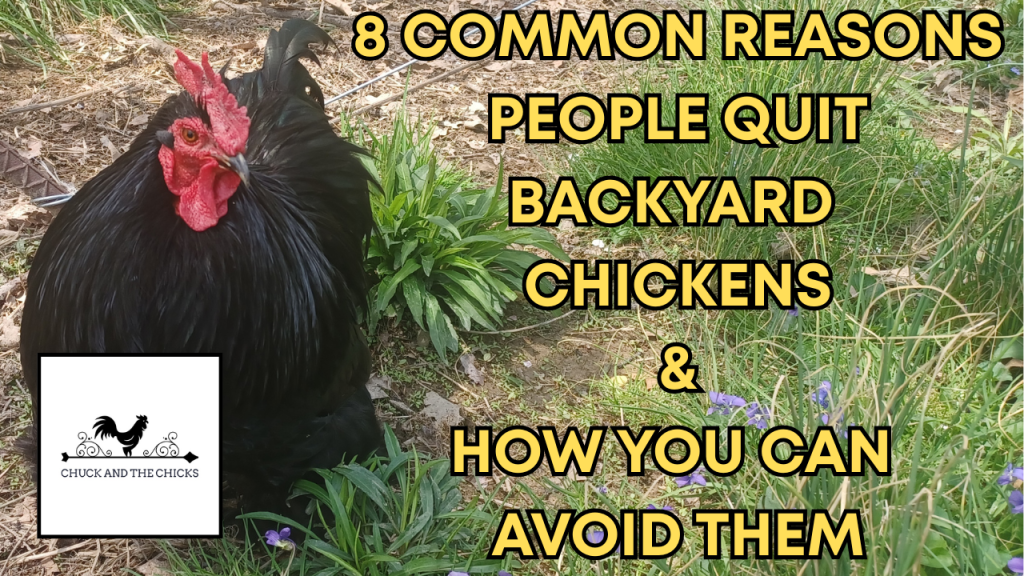
8 Common Reasons People Quit Backyard Chickens & How You Can Avoid Them
Backyard chickens and homesteading are without question some of the best things I’ve ever decided to do for myself and for my family. That being said, it is very easy for small problems to overwhelm beginners and turn a dream experience into a nightmare fast. Here are 8 common backyard chicken mistakes and how you can avoid them.
- Not knowing the local poultry laws in your areas. Legal restrictions and rules regarding backyard chickens vary drastically from state to state, region to region, even neighborhood to neighborhood. While more places are receptive to people owning backyard chickens many still have restrictions that apply to things like roosters and coop placement. Know the particulars of your specific living situation before you bring home your first chickens.
- Not researching what breed is best for your intended purpose. Much like dogs, chickens have been changed overtime by humankind to fill very specific purposes. Chicken breeds can be egg layers, meat chickens, dual purpose chickens, companionship chickens, and show chickens. Buying the wrong breed of chicken based solely on appearance can lead to a mismatch between the flock you create and your homestead goals. Research what breeds of chicken are best suited for your family homestead goals and the climate of your specific region.
- Buying straight run chickens without a rooster plan. Straight run means there is no guarantee of the sex of the chickens and the chances of adopting a rooster are about 50/50. Many first-time owners may purchase straight run chickens not knowing what this term means. It’s important to have a plan to re-home or humanely process your excess roosters. Even when the hatchery or farm box store assures you that you’re only buying hens, it is still possible to acquire an accidental rooster, or several roosters. Before adopting your first chickens create a plan to re-home excess roosters or research and acquire the necessary equipment to humanely process excess roosters. Do not attempt to cull or process an animal at home without doing the proper research or acquiring the necessary equipment. This can result in injury to you, unusable meat, and the needless suffering of an animal. The American Pastured Poultry Association, I’m not associated with this organization, but they provide a wealth of free online resources about the humane processing of chickens for the small-scale homestead. It is possible for multiple roosters to coexist in the same flock with the right support and circumstances. Check out Chuck’s YouTube channel for more information about this specific topic.
- Underestimating the space needs of your flock. Especially if it is your first time raising chickens it can be astounding how big adult chickens become compared to the small fluffy chicks you bring home. In 8-10 short weeks, approximately 2 months, your chicks are fully feathered and they are ready to transition outside to their permanent housing. Providing them with as much space as you feasibly can is essential to their health, happiness, and productivity. Err on the side of overestimating your space needs as it is very likely you will want to expand your flock in the future.
- Not developing a sanitation and maintenance routine and having a disease or pest outbreak. While sanitation and maintenance alone are not enough to prevent all potential disease and pest outbreaks, this is the primary way to protect your flock from experiencing things like mites, lice, and respiratory illness. Excess droppings, moisture, and unchecked muddy conditions are breeding grounds for the vast majority of poultry diseases and pests. Chickens are birds, they create droppings, and you will need to develop effective methods based on your housing to remove droppings and maintain your chicken area. Developing daily and seasonal deep cleaning methods are essential to maintaining a healthy and productive flock.
- Not buying any chicken care resources and relying solely on online advice. The internet is a wealth of wonderful information and a great way to share and access great tips. However, there are times when online resources aren’t available or you may encounter contradictory advice about a particular backyard chicken issue. Beginner chicken care guide books and magazines provide essential guidelines, tips, coop and run plans, first aid recommendations, and so much more wonderful information that is essential for beginners. Even though I’ve had chickens for years I still refer to my introductory materials often. You can find these resources at your local library, your local bookseller, your local farm box store, your local agricultural office, and online. Have at least one beginner chicken care guidebook or magazine to reinforce positive backyard chicken care habits.
- Underestimating the predator presence in your area. Predators exist in every region even in suburban areas. The predator pressure you will face is unique to your specific region and environmental conditions. Don’t assume that all backyard chicken predators are wild animals. Unmonitored domestic animals can be just as dangerous to your flock if not more so than any wild creature. Know the predator pressure that exists in your specific area and take proactive measures to protect your flock. Don’t rely on just one form of protection but instead stack multiple predator prevention methods for the most success.
- Underestimating the long-term responsibility associated with caring for backyard chickens. Most beginner backyard chicken owners are surprised to discover domestic chickens can be long lived animals. When provided with proper care and predator proof housing chickens can live 5 years up to a decade or longer. Backyard chickens require daily care and unlike pets like dogs they can’t be boarded when you want to go on vacation. Adopting chickens is a commitment to their care, maintenance, and wellbeing. Even shorter-lived meat chickens require daily care, maintenance, and proper housing. Adopting backyard chickens is an amazing and immensely rewarding experience but should be regarded as a long-term commitment and not an impulse or whim.
I hope you found this post helpful regarding things to consider and avoid when beginning your backyard chicken journey. If you enjoyed this post be sure to check out Chuck’s other social media for more backyard chicken and homesteading content.
 Chuck and the Chicks