When Will Your New Chickens Lay Eggs? And How To Help Them
Getting your first eggs from your new flock is an exciting and rewarding experience. Before your hens can provide you with your first homegrown eggs, there are a few basic things they will need from you first.
Your new hens will begin to lay eggs anywhere from 4 months to old to one year old depending on their breed. Many factors play a role in how quickly your hens will become productive including their general health, their environment, nutrition, their breed, their individual heritage, and other factors. Healthy, happy chickens lay more eggs than chickens that are struggling with insufficient resources. Here are some simple things you can do to give your egg layers a natural boost.
Provide your flock with adequate nutrition. Your chickens are domesticated livestock animals and they can’t survive on forage alone. Unlike their wild ancestors the red jungle fowl, modern domestic chicken breeds have been changed over time by humankind to be more productive and serve various purposes including being egg layers, meat chickens, show chickens, and companionship chickens. While forage, meaning the grasses, seeds, and insects they have access to on pasture can absolutely be a portion of their diet, you will need to feed your chickens in some way in order for them to have the nutrients they need to produce eggs specifically a diet that is rich in protein and calcium. Chickens are omnivores, meaning they need both protein and vegetation to be healthy. A complete chicken layer feed, healthy kitchen scraps, and fermenting chicken feed are all ways to provide nutrition to your flock. Your flock will also benefit from access to grit and calcium supplement especially if they are living partially or in fulltime confinement. Grit makes it possible for your chickens to digest their food properly for maximum nutrition absorption. Grit also helps prevent conditions like impacted crop and sour crop. Calcium supplement like oyster shell helps your chickens form strong egg shells and assists with feather regrowth. If your chickens don’t receive the essential building blocks in the form of nutrition that their bodies need, they can’t produce eggs because their body will prioritize survival.
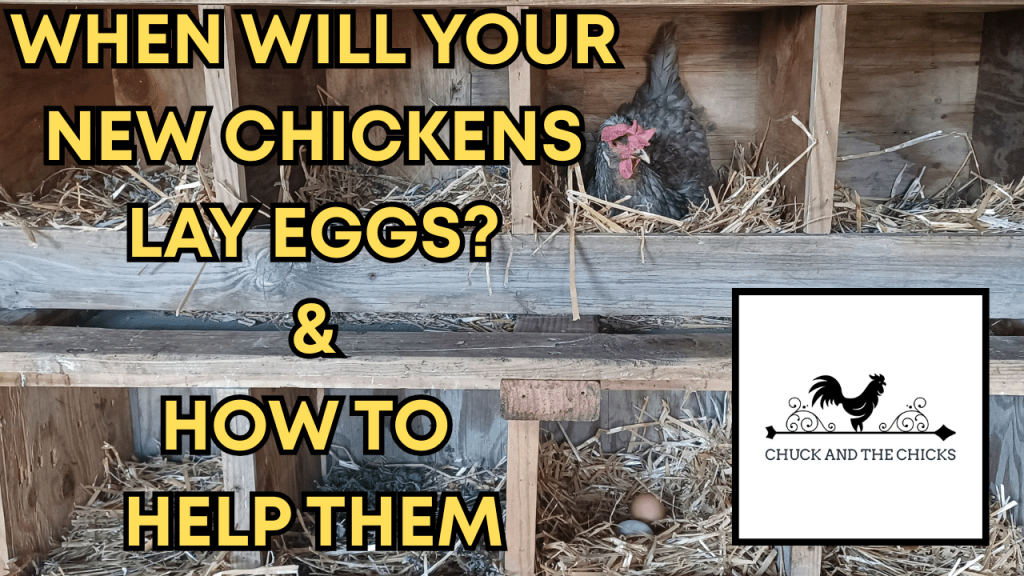
Provide your flock with appealing nesting boxes and shelter. Adult chickens will need a structure in order to be safe from potential predators. There are many designs and options to choose from. Nesting boxes should be soft, spacious, clean, accessible, and appealing to your chickens in order to promote their use. Rather than having to hunt for your eggs, creating appealing nesting boxes makes this essential chicken chore much easier and prevents your eggs from being wasted or eaten by predators. Provide your flock with nesting boxes in a dim, calm, safe location. Provide at least one nesting box for every 4 hens.
Provide your flock with as much space as you feasibly can. Overcrowding causes a host of health and behavioral problems among backyard chickens including reduced and ceased productivity. Especially if your chickens will be living in confinement, expanding their spacing options, providing plenty of enrichment, and a variety of roosts and perches will not only keep them healthier but it will also support their egg producing efforts.
Chickens will never withhold productivity, making eggs, as a form of defiance. A lack of productivity is not a behavioral problem but should be explored as a possible environmental, nutritional, or health issue. There is no such thing as a bad or lazy chicken. If chickens don’t have their basic needs met, they can’t perform at their best. When chickens have what they need to remain healthy and thrive, egg production is a natural result.
If you enjoyed this post or if you have additional questions about supporting your flock for the best experience possible be sure to check Chuck’s other social media for more backyard chicken and homesteading content.
 Chuck and the Chicks