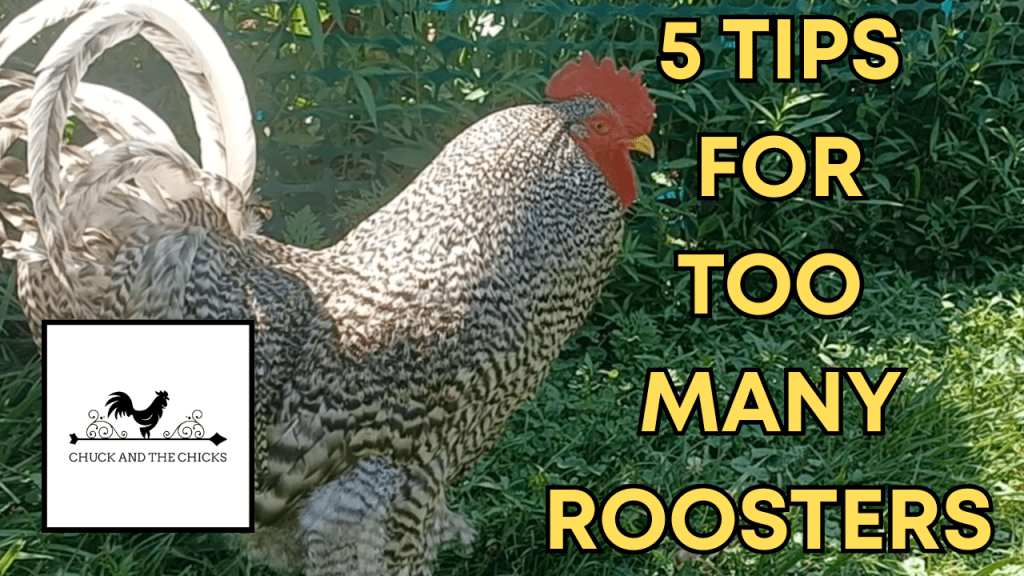
When you’re forming your flock, no matter how you acquire your first chickens, it’s likely at some point you will have too many roosters. A rooster can reliably service 7-10 hens, meaning the eggs from those hens will most likely be fertile and viable. Too many roosters in your flock can result in excessive damage to your hens from being serviced too frequently and inevitability too many roosters will result in fighting between the roosters themselves causing harm to one another or worse. You might not be able to keep roosters in your area and or accidentally adopted one into your flock. Here are tips to consider if you find yourself with too many roosters in your flock.
Consider expanding your flock if you reasonably can to include additional hens for your excess roosters. If it is a safe, practical, and reasonable option for you, you can adopt additional hens for your excess rooster(s). Multiple roosters can coexist peacefully within the same flock if the roosters have adequate resources, space, and mates. If you are already struggling with space and crowding issues for your flock or you can’t afford the cost of additional chickens than this isn’t a practical option for you. However, if you have the space, funds, and time to devote to a larger flock with multiple roosters this can be a very rewarding experience. It is also an option to create duplicate facilities (2 coops, 2 runs etc.) to maintain two flocks each with their own respective rooster.
You can create a bachelor pad for your excess roosters. A bachelor pad is when you create and maintain a separate coop and run solely to house a group of excess roosters. While for some this is cost or space prohibitive, some backyard chicken owners choose to do this as the excess roosters retain value to them as sources of companionship and genetic diversity for their flock. In the instance where your primary rooster passes away or is no longer functional, a rooster from the bachelor pad can join the primary flock. Once isolated among themselves a group of roosters will establish their own pecking order and be able to coexist peacefully provided their housing has adequate space, resources, and plenty of enrichment. It is important that the roosters are similar in size and age. It is also helpful if they were part of the same brooder group.
You can rehome your excess roosters. Poultry enthusiast groups and clubs, poultry message boards, social media, and other outlets offer ways to reach people who want to adopt your excess roosters either as flock members or as a food source. With the increased interest in backyard chickens there are more options than ever to find people interested in acquiring roosters. While your extra rooster may not be a good fit for you, your rooster may be the perfect fit for another flock. Some individuals are even willing to adopt roosters as pets as chickens are gaining popularity as companionship animals.
You can locate a farm rescue or animal rescue willing to take your roosters. While this is an option, it is not one that should be relied on as your sole way of addressing excess roosters in your flock. Farm rescue organizations and animal rescues are overwhelmed with record numbers of unwanted animals so while this a possibility, it is one that is out of reach for most.
You can cull or process and consume your excess roosters. My sincere hope is if you feel this your only reasonable option that you proceed with respect to the life of the animal and use humane established practices. Some farm veterinary services for a small fee will offer culling services for ill or unwanted chickens. Culling or butchering a living animal requires both research and the proper equipment. Do not attempt to cull or butcher your excess roosters without first doing the appropriate research and acquiring the appropriate equipment. Culling or butchering a rooster with no prior experience without proper preparation may result in unusable meat, injury to you, and the needless suffering of an animal. There are safe, practical, humane ways to perform these tasks. The American Pastured Poultry Association, I’m not associated with this organization, but they exist and they offer a variety of free online resources about this topic. There are also entire books available at your local library, local bookseller, and online and other content creators devoted to the humane butchering and processing of chickens for the small-scale homestead. Please do your research about humane butchering or culling of chickens and acquire the appropriate equipment first. If possible, find an experienced local poultry owner who can help guide you through the process.
I hope this has been helpful information for you regarding options if your flock has too many roosters. If you enjoyed this post, check out Chuck’s other social media for more backyard chicken and homesteading content.
 Chuck and the Chicks