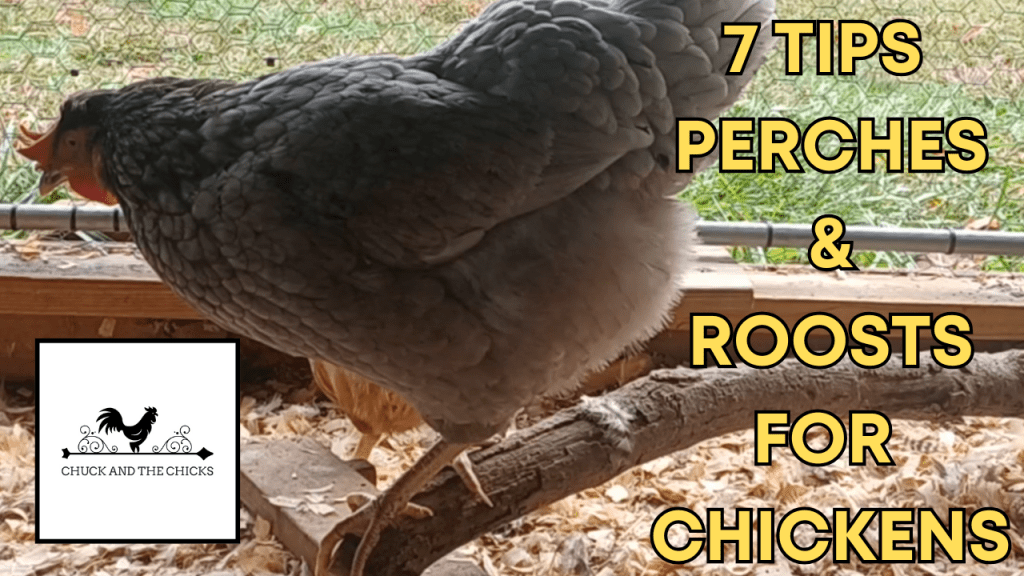
7 Tips Perches & Roosts For Chickens
Your backyard chickens will need perches and roosts in their chicken area and in their coop. Perching and roosting are natural behaviors that chickens exhibit which are essential to their health and wellness. Perches and roosts are important components of your chicken area and housing.
It’s recommended that perches are at least 18 inches off of the ground, but it is fine to include some lower perches for aging flock members as well as platforms or ramps. This height is important to provide separation between your backyard chicken and the moist, soiled ground. This is especially important during wet conditions and cold temperatures because perches and roosts allow your backyard chickens to escape the cold ground to protect their feet with their feathers. Be mindful that the area underneath your primary roosts and perches is free from objects. At some point, one of your chickens is likely to fall from their roost or perch. Ensure that your chickens have a safe and clear path down to their bedding below.
Adequate perches and roosts help alleviate overcrowding as well as help your flock feel safe. At night chickens will naturally gravitate to a high place to sleep for safety. Their wild ancestors the red jungle fowl sleep in trees. Your domesticated backyard chickens will need perches and roosts to use at night to escape the ground and find a safe place to sleep. Perches provide spacing options for your flock and allow them to create distance from one another especially when living partially or in full-time confinement.
Perches and roosts should be at least 2-4 inches wide depending on the size of your chickens. Typical perches include a 2×4 board placed with the flat side down, large natural branches at least 3 inches in diameter, or scrap lumber. The perches should be wide enough so your chickens can rest comfortably and cover their feet with their feathers. It is important the perches and roosts are sturdy enough to support the weight of multiple flock members. Avoid completely round perches like dowl rods or poles as they put additional strain on your chickens’ feet and can result in injuries.
Perches and roosts should be placed higher than your nesting boxes. Placement and accessibility are important when choosing the perfect roosts and perches for your flock. Place some perches and roosts higher than your nesting boxes so your flock is less tempted to sleep in their nesting boxes at night.
Remove sharp edges and protrusions from perches and roosts. Injuries to your chickens’ feet can result in lameness, lacerations, or infections like bumblefoot. Carefully sand off any sharp edges, corners, or protrusions from any roosts or perches you provide for your backyard chickens.
Material matters. Wood is the appropriate material for backyard chicken perches either lumber or natural branches. Materials like metal and plastic can result in frostbite on your chickens’ feet. Plastic when exposed to sun weathers and can disintegrate unexpectantly causing injury.
Explore alternative roosting options for aging or small flock members. Additional roosting options like an old wooden ladder, a pallet with any sharp objects removed, a bale of straw or hay, and ramps all provide ways for flock members with mobility issues or small stature to get off of the ground and roost safely. You can create a perching tree by securing several perches to a post or you can use salvaged large branches as low-level perches and enrichment.
Keep perches and roosts clean with simple tools like a puddy scraper or rag. Soiled perches and roosts can result in droppings accumulating on your chickens’ feet which ultimately may end up in your nesting boxes or on your chicken eggs. Chicken diseases and pests are spread through excess accusations of droppings. Clean the area underneath where your chickens’ roost at night using either spot clean and scoop method or deep bedding method depending on your chicken housing and chosen bedding method.
I hope this has been helpful information about perch and roost basics for backyard chickens. If you enjoyed this post, check out Chuck’s other social media for more backyard chicken and homesteading content.
 Chuck and the Chicks