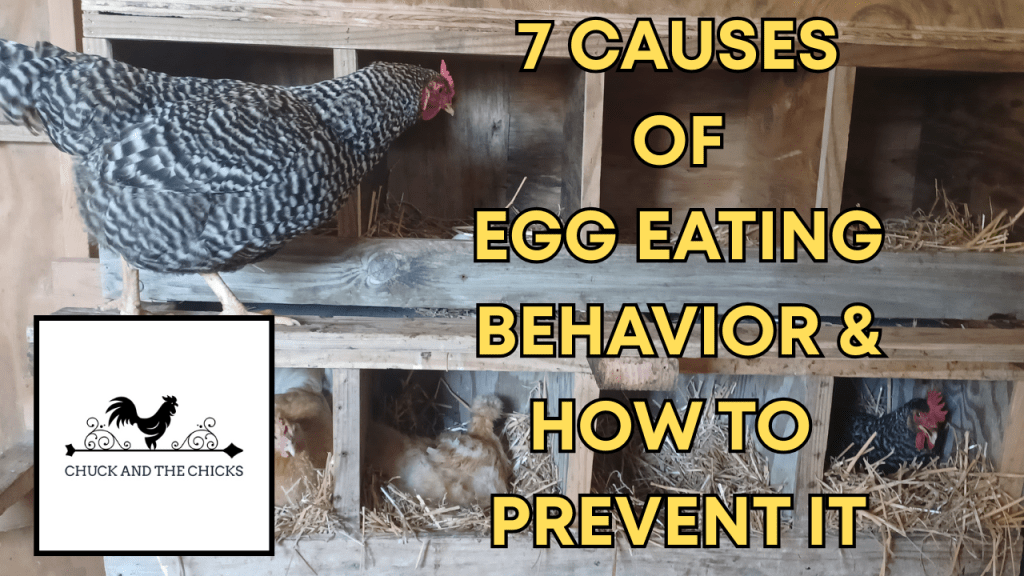
7 Causes Of Egg Eating Behavior And How To Prevent It
Collecting eggs from your backyard chickens is among the greatest privileges of owning backyard chickens. In order to be productive, happy, and healthy your chickens have basic care requirements that need to be met in order for them to perform at their best. Egg eating behavior is a form of destructive behavior in chickens that once it is present in your flock, it is extremely difficult to discourage. Here are 7 possible causes of egg eating behavior and what you can do to prevent this from occurring in your backyard flock.
Eliminate the possibility of a predator presence. Don’t be so quick to blame your flock! There are many common predators including snakes, rats, mice, and even squirrels who may damage eggs if they have found a way to encroach upon your coop and chicken area. Look for signs of droppings, digging, or unexplained holes in your coop and run area. Don’t forget to look up! Rodents and snakes can even take refuge in the roofing of your chicken housing.
Inadequate nutrition, specifically protein and calcium. Modern chicken breeds are as much as 3x more productive than their ancestors from even a few hundred years ago. Unlike their wild ancestors, the red jungle fowl, domesticated backyard chickens can’t survive on forage alone. Domesticated backyard chickens have been modified by selective breeding to be more productive and also to fit other purposes like being egg layers, meat chickens, companionship chickens, and show chickens. This breeding and heightened productivity has increased their nutritional needs. You will need to supplement their diet in some way in order for them to be both healthy and productive. Chicken treats like scratch grain and corn while wonderful treats for chickens don’t contain the necessary protein or calcium needed by adult laying hens. Your flock will greatly benefit from a free choice calcium supplement like oyster shell in a free choice dispenser or livestock safe dish. Especially when their egg production increases in early spring and reaches it’s height in the summer your chickens will crave additional calcium. Providing this inexpensive supplement in a free choice dispenser or livestock safe dish is all that’s needed to ensure they receive sufficient calcium for strong shells and feather regrowth. Other ways to boost your flock’s nutrition is fermenting chicken feed, providing a protein rich treat like grub worms or fly larvae, healthy kitchen scraps, or mixing a high protein feed like all-flock which is 20% protein in with your normal layer feed. I use a mix of 1 to 4 parts (1 part all-flock to 4 parts regular layer feed) when my flock is molting and will need more calcium and protein to regrow their feathers. Too much protein for a prolonged period of time can cause unintended organ damage to your chickens so I discontinue the all-flock when they are no longer molting. This can also be done temporarily to help correct a nutritional imbalance. Reduce your offerings of grain and use a complete layer feed if you’re seeing signs of egg deformities, soft shells, or poor feather regrowth.
Overcrowding. The recommendations for adequate spacing for backyard chickens is at least 4 square feet of coop space and 8 square feet of run space per standard size chicken. Bantam breeds require approximately half of that. Larger, heavier breeds will need more space. Inadequate housing and crowded conditions cause high levels of stress in chickens which creates unhealthy competition for resources like food and space. Egg eating behavior can result from overcrowding, unsanitary, or cramped conditions. You can alleviate overcrowding by expanding your chicken area with moveable fencing, utilizing a chunnel (a day-time chicken activity tunnel), or providing extra roosts and perches.
Lack of enrichment, boredom. Boredom is a form of stress for chickens. Especially during the winter months when many flocks will be spending more time in confinement, enrichment is essential to keeping your flock occupied. Egg eating behavior can result from boredom. The combat boredom in your flock, you can provide low-cost and no cost enrichment items. Vegetables hung for them to peck at, treat blocks, roosts and perches, a bale of straw or hay to scratch through, or sturdy parrot toys are all ways to provide your flock with boredom busting enrichment.
Inadequate nesting boxes. The recommended size for nesting boxes is 12 inches by 12 inches. It is recommended to have at least 1 nesting box for every 4 hens. Nesting material should be soft and cleaned regularly. If the nesting box is too small, hens can accidentally crush eggs when attempting to turn around and situate themselves comfortably in the nesting box. You can add additional nesting boxes to your set up with any variety of creative containers. Provide your flock with a soft, clean nesting material like straw, hay, untreated grass, nest liners, dry leaves, or other safe and soft materials. I have family members who even use shredded paper from their home office. All that matters is the material is soft, safe, and can be easily cleaned.
You accidentally taught them the behavior by feeding them eggs in egg shape. Chickens are intelligent and resourceful animals. While it is common practice to feed crumbled egg shells or crumbled eggs or scrambled eggs to chickens as a treat IT IS ESSENTIAL that they are not recognizably in egg shape when you do so. If you feed your chickens eggs in their intact shape, it is only a matter of time until they make the connection that their own eggs are food and begin to consume them. I always process my eggs or shells in a food processor before sharing them with my chickens. Never break an egg on the ground for your chickens to eat. That is literally teaching them egg eating behavior and is poor husbandry.
Collect your eggs daily to remove the temptation for curious flock members to explore their own eggs as a potential food source. Collecting eggs daily is part of responsible chicken care. You can also leave faux eggs in your nesting boxes. This demonstrates to your hens where to lay and if they peck and explore the faux eggs, they will find they aren’t edible and move on.
Some breeds are more prone to egg eating behavior than others. With adequate space, well maintained facilities, proper calcium and protein, adequate nutrition, and enrichment your flock is unlikely to develop egg eating behavior. Some resources suggest culling your egg eating chicken. I suggest a more humane approach of isolating the offending chicken, giving the chicken a high protein, high calcium diet, then reintroducing them to the flock after a few days. If one chicken is demonstrating signs of inadequate nutrition, other flock members likely also have deficiencies. The 1 to 4 parts all-flock and layer feed (1 part all-flock to 4 parts layer feed) can be used to help correct a nutritional imbalance within your flock. Fermenting your chicken feed is another way to provide your flock with excellent nutrition, combat possible deficiencies, and it also helps them feel full for longer.
I have never experienced egg eating behavior in my flock. I credit this to sound basic maintenance and providing my flock with adequate, high-quality nutrition. Fermenting your own chicken feed and creating your own chicken treats at home are great, low-cost ways to ensure your backyard flock is receiving adequate nutrition. I also provide grit and calcium supplement in a free choice dispenser. This not only ensures my flock receives adequate calcium but it helps prevent conditions like sour crop and impacted crop.
I hope this was helpful information to help prevent egg eating behavior from ever occurring in your flock and if it has, I hope these suggestions will help you address some of the potential causes. If you enjoyed this post, check out Chuck’s other social media for more backyard chicken and homesteading content.
 Chuck and the Chicks