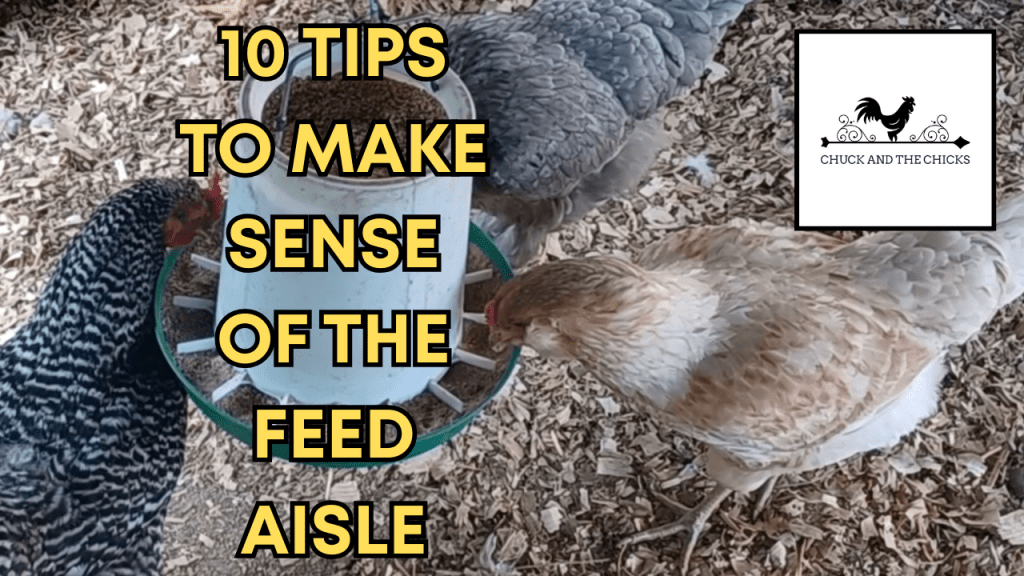
10 Tips To Make Sense Of The Feed Aisle
Providing your backyard chickens with adequate and appropriate nutrition is essential to their health, happiness, and productivity. There is a boggling number of options in the common feed store aisle and you may be wondering about the details, differences, and types of feed that are available for your flock.
Your chickens are domestic livestock animals and unlike their wild ancestors the red jungle fowl, your backyard chickens can’t survive on forage alone. While forage, meaning the bugs and plants they have access to on pasture or in a backyard, can absolutely be a portion of their diet, you will need to supplement their diet in some way in order for them to get the appropriate nutrition they need to be healthy, happy, and productive. Domesticated chickens have been changed by selective and intentional breeding over time to be the modern breeds that exist today which are meant to fill different purposes like egg layers, meat chickens, show chickens, and companionship chickens. Modern breeds are as much as 3 times more productive than their ancestors from even a few hundred years ago meaning their nutritional requirements have also increased.
Pelletized, mass-produced feed that is commonplace today was invented during the 1920-30s. Before pelletized feed, farmers and backyard chicken owners still fed their chickens but they fed them the components of pelletized feed, just separately. Pelletized feed is comprised of things like wheat and flour waste, corn, animal by-product, and supplemental nutrients. Prior to mass produced feed, people fed their chickens things like corn, grain, seeds, and kitchen scraps. At this time in history most chickens also existed on or near a working farm meaning there would have been animals like horses and cattle present, which would also mean superfluous grain waste, as well as manure that the chickens could scratch through to obtain food and nutrients. Historic shipping records demonstrate that people set aside supplies like barrels of corn and grain, specifically to feed livestock. Even though pelletized feed did not exist, farmers, early settlers, and backyard chicken owners still provided food and nutrition to their chickens.
The kind of nutrition that is best for your chickens is dependent on many factors including their age, breed, and purpose. Nutrition is a key component of maintaining your flock’s health and productivity in addition to safe, weather-proof housing, and a regular sanitation and maintenance routine. There is no one size fits all solution to chicken nutrition and instead you will need to determine the best way to meet your flock’s needs depending on things like their purpose, their life stage (their age), and other constraints like availability and budget considerations.
The housing and nutritional needs of chickens intended to be meat chickens and the housing and nutritional needs of egg layers are different. Chickens will need different nutrients also depending on their age. The nutritional needs of baby chicks are not the same as adult chickens. This makes sense as meat chickens and egg layers have been bred to age and develop differently. It also makes sense that as chickens grow throughout their lifetime that their nutritional needs would also change.
Chicken feed is offered in a variety of textures including pellets, crumble, and mash. Pellets are small segments of compressed food material. Crumble is made from the same thing as pellets but ground into a finer texture. Mash is the finest crumble and is almost powder-like in texture. Mash can also refer to mixing any of these forms of food with water to create a moist feed paste. One is not superior to the other, it is a matter of flock preference and availability. Crumble and mash are typically easier for chicks, bantams, and aging chickens to eat. It may take some experimenting to see which texture suits your flock best. When transitioning between textures do so gradually like you would when transitioning any type of animal food.
What happens if your chickens don’t receive proper and adequate nutrition? Possible signs of poor or inadequate nutrition include but aren’t limited to: soft egg shells, drastically decreased or ceased egg production, poor feather regrowth, dull feathers and eyes, skin and scale issues, aggression, self-mutilation, cannibalism, egg eating behavior, egg bound condition, and other serious health issues. Without proper care and resources chickens won’t only be unhealthy but they will also demonstrate undesirable behaviors. Chickens need adequate space, food, shelter, and basic care to perform at their best. Improper nutrition is not the only possible cause of these symptoms but is a common and contributing factor.
Chicken starter/grower formula. This is a high protein feed that is designed to be fed to young chicks so they develop properly. It typically contains around 18% protein. Some brands may have differentiated starter (the first 6 weeks of life) and grower stages (up to 18 weeks or about 4 months old), and some brands may simply combine these two stages in a starter-grower formula. This kind of feed contains a higher protein content but not high levels of calcium which could be toxic to young chicks. A chick starter-grower formula is appropriate until about 18 weeks or 4 months of age when it is time to transition your flock to an adult style formula which contains the nutrients needed, particularly calcium, to support healthy egg production.
Medicated feed versus non-medicated feed. Medicated feed typically contains a substance called Amprolium which is intended to combat coccidiosis. Coccidiosis is a parasite infection which is caused by chickens consuming droppings or being kept in cramped, overcrowded, unsanitary conditions. Medicated feed does not treat or cure coccidiosis but instead it works by blocking the parasite from receiving essential nutrients, rendering the parasite sterile and giving the growing chicken time to develop a natural immunity. It offers some protection and additional immunity to growing chickens that have been kept in previously undesirable environmental conditions. Recommendations for using medicated style feed are between 2 weeks to one month of use. If used for too long, medicated feed can also prevent chickens from absorbing nutrients properly, particularly thiamine, so it’s overuse is not recommended. Medicated feed is suggested for non-vaccinated chickens as it offers some additional protection. Whether or not you choose to use medicated feed is a personal choice.
Layer formula feed. Layer formula as the name suggests is designed for laying hens. This style of feed typically contains between 16-18% protein as well as calcium which are both essential for healthy strong eggs and strong egg shells.
All-flock formula. This style formula is designed for mixed flocks that include chickens, turkeys, geese, and ducks. It is 20% protein. You can use all-flock formula to boost the protein content of your regular feed regimen when your flock is molting to boost feather regrowth. Too much protein for a prolonged period of time can cause unintended organ damage to your chickens. I use a 1 part to 4 parts formula (1 part all-flock to 4 parts regular layer feed) when my flock is molting to help boost feather regrowth and then discontinue using the all-flock once their new feathers have grown.
Broiler or finisher feed. This is feed especially formulated with the calories and nutrients for meat chickens to prepare them for butchering.
Scratch. Scratch is not a complete feed and is more of a supplement or treat. It typically contains about 12% protein and is high in carbohydrates and grain content. It is essentially chicken junk food. It does not contain the necessary protein or calcium to support healthy laying hens and should be given as a treat, not as your flock’s sole source of nutrition.
Cracked corn. Cracked corn is a grain and does not contain protein or calcium. It is a delicious treat for your chickens and can be used strategically especially in colder months as a boredom buster as well as a warm grain on cold evenings. Cracked corn is not a complete feed and should be given as a treat and not as your flock’s sole source of nutrition.
Grit. Grit is a supplement that is small pieces of rock and gravel that help chickens digest their food properly. If your flock is able to graze on fresh pasture daily than a grit supplement is not necessary. If your flock lives partially or in full-time confinement or is only able to graze one stationary area, it is important to provide grit in a free choice container separate from their food. Your chickens will consume grit as they need it. Providing grit also helps prevent conditions like sour crop and impacted crop.
Oyster shell calcium supplement. Like grit, calcium supplement should be offered to chickens in a free choice container separate from their food. This is especially important for egg laying flocks as calcium is essential for strong, healthy egg shells. While many complete layer formulas contain calcium, especially at the height of their productivity, your flock will need and crave additional calcium to remain healthy and avoid shell deformities, soft shells, or conditions like becoming egg bound. Note, calcium deficiency is not the only cause of these conditions, but it is among the most common causes.
Is expensive feed really worth it? Individual budgets vary greatly and some designer feeds can be very cost prohibitive. If you’ll be investing in a higher priced feed, I highly recommend fermenting your chicken feed in small batches which doubles the volume as well as increases the nutritional bioavailability for your chickens. The fermentation process much like healthy fermented foods for people like sour kraut activates beneficial bacteria which helps boost your chicken’s microflora and natural immunity. Because the fermentation process expands the food and adds moisture, your chickens will also eat less and feel fuller. Start with a small batch first to ensure your feed ferments well. If you have success with fermenting feed you can transition to large batches like a food-safe plastic bucket.
Is store brand or bargain feed safe for chickens? Store brand and bargain complete feeds are safe for chickens in my lived experience. That being said, less expensive brands do typically contain more filler material and like any mass-produced product they are not immune from quality control issues and spoilage. I also will never diminish anyone’s lived experience with any type of feed or product. If you use any product, feed or otherwise, and you feel your chicken’s reacted adversely to it, don’t continue to use that product and find an alternative. It’s important to experiment with different brands to find one your flock will eat and thrive on. You will know if you have purchased spoiled chicken feed. It may appear discolored, abnormally dusty, and smell moldy or musty. If your chickens are reluctant to eat their feed, examine their dispenser and the feed itself for signs of mold or rot. I don’t recommend forcing chickens or any animals to eat food they are reluctant to consume. They have senses we don’t and can detect spoilage. I have had positive experiences using and feeding store brand complete layer feed. I offer store brand complete layer feed to my flock in free choice dispensers and I supplement with fermented high-quality feed and kitchen scraps as treats 3 times per week. This combination approach has helped my backyard flock thrive, be productive, and have impeccable health. The occasional healthy kitchen scraps and fermented feed help to address some of the nutritional gaps that may be present in the less expensive store brand feed.
I hope this has been helpful information to make more sense of your choices and selections when browsing the feed aisle for your backyard flock. If you enjoyed this post, be sure to check out Chuck’s other social media for more backyard chicken and homesteading content.
 Chuck and the Chicks