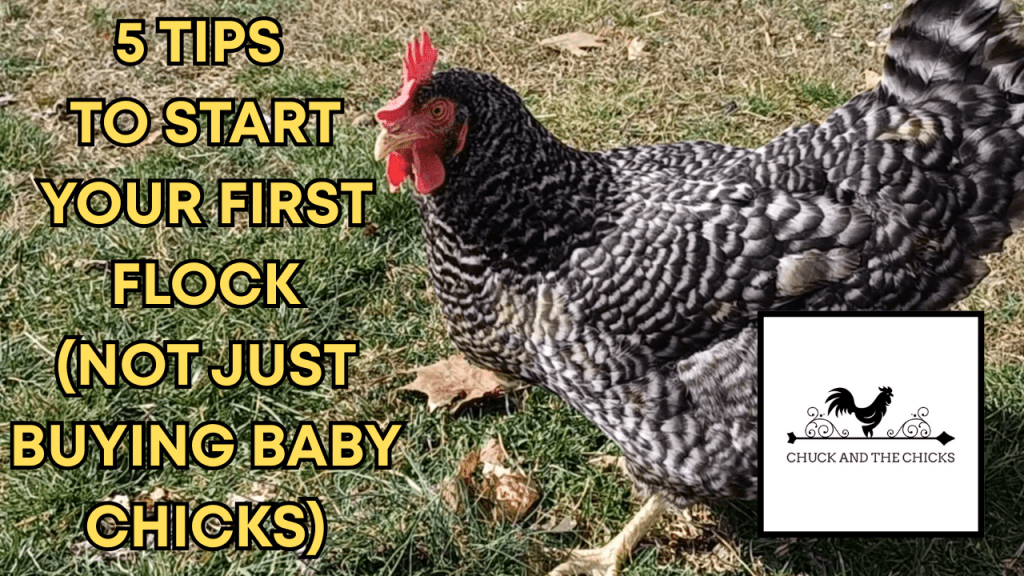
5 Tips To Start Your First Flock (Not Just Buying Chicks)
While buying your first chicks from your local farm box store might be the first thing you think of when considering starting your backyard flock, there are other options to consider. There’s nothing wrong with adopting your first chicks from your local farm store but for some, the alternative methods mentioned below offer additional options. You will spend the most money preparing predator proof infrastructure for your flock. Acquiring the chickens themselves is often the cheapest and quickest part of process! Be aware in just a short 8-10 weeks, approximately 2 months, once they are fully feathered, your young chicks will be ready to move from their brooder to their permanent housing outside. Preparing a space for your chickens before you bring them home, even if you’re adopting young chicks, considerably reduces stress for you and for your new flock. Your new flock will need a chicken feed appropriate to their breed and purpose. While forage can be a portion of our chicken’s diet, you will need to supplement their diet in order for them to remain healthy, produce eggs, and perform at their best. Unlike their ancestors the red jungle fowl, your chickens are domesticated livestock and can’t survive on forage alone. There are many ways to save money feeding your chickens including fermenting your chicken feed, supplementing with healthy kitchen scraps, and other methods. There is more than one way to start your first backyard flock. If you will be adding to an existing flock, be sure to observe an isolation period and acclimation period for your new flock members. I have videos about acclimating new chickens to an existing flock available on my YouTube channel linked below. For beginning your first flock, here are 5 tips regarding different ways to begin your first flock, beyond buying chicks at the local farm box store.
Hatcheries can mail chicks to you. National hatcheries offer a variety of breeds of chicken to suit many backyard flock and homestead goals. Mailing live baby chicks to your home offers an additional way to build the flock of your dreams. Keep in mind being sent in the mail is an extremely difficult experience for your new baby chicks. It’s important regardless of how you obtain your baby chicks that you have their brooder, the protective place where they will grow for the first 2 months of their life, set up and ready to go to minimize the transition time from their box to their brooder. Additionally, if you’re obtaining chicks by mail it’s recommended to use a hydration packet and offer them water immediately with the hydration packet in their brooder upon receiving them to increase their survival rate.
Hatcheries also offer pullets and cockerels. A pullet is a teenage hen that is approximately 12 weeks old. A cockerel is a rooster that is approximately 12 weeks old. While substantially more expensive than baby chicks, the advantage of adopting pullets or cockerels is that you know with absolute certainty whether they are hens or roosters. Hens are female chickens that produce eggs. Roosters are male chickens that help protect the flock from predators and service hens to produce the next generation of chickens. You will pay more for the time hatchery spent raising chickens to this age but you will know for sure whether they are hens or roosters. Also, your pullets and cockerels will be fully feathered and ready to move directly into their permanent infrastructure outside. They won’t require a brooder set up.
You can hatch fertilized eggs. Also available from many hatcheries are what’s called hatching eggs. These require additional equipment called an incubator which is a special device for hatching the eggs safely in the absence of a mother hen. Hatching eggs are typically categorized as straight run meaning your chances of getting a rooster or hen are about 50/50. For some this may prove to be more economical or interesting. It does however require additional equipment, research, and expertise.
You can rescue adult hens. Many animal rescues have expanded their operations to include farm animals including chickens. Several organizations offer hens that have been discarded by the industrial food system considered to be no longer viable even though they still have many years of potential productivity when given time to heal and proper care. Rescuing hens has many advantages including you can acquire them practically for free and they will be able to produce as soon as they have acclimated to their new surroundings and healed from their past experiences. While it’s true a hen’s productivity wanes after 2 years of age, many breeds can produce for much longer, even up to 7 years old. Rescue hens once they have healed will be productive unlike baby chicks which may take between 4-6 months or even up to 1 year to produce eggs. Egg laying was a not priority in the development of all chicken breeds so be sure to select a breed aligned with your homestead goals. What challenges rescue hens may present in their rehabilitation is countered by their availability and lack of expense.
You can attend a livestock auction, local livestock fair, or poultry swap event. Small local organizations host livestock auctions which may include chickens. Poultry club meet and greets and swap events take place all over the country. The specifics of what to expect at these events varies drastically by region but these events offer yet another way to build your flock very often at discounted rates. Many individuals at these events will be eager to rehome chickens that simply do not fit their flock dynamic. Again, the specifics, costs, and protocols of these events will vary state by state and region by region. With a little research, this might be a good fit for your flock goals.
Bonus tip. Utilize social media to locate unwanted chickens. Sometimes, people purchase chicks hastily and without proper infrastructure or a long-term flock plan. While hopefully it doesn’t happen often, sometimes people will acquire chickens and for either legal zoning reasons or other limitations choose to rehome them. It’s possible to locate entire flocks whose only flaw was being adopted by the wrong person at the wrong time, or perhaps their owner is no longer able to care for them for whatever reason. Like other rescue hens, once this new flock has acclimated to their new surroundings and healed from their experiences, they will be ready to be a productive and happy backyard flock.
I hope this has been a helpful starting point for your research regarding ways to form your first backyard flock beyond buying chicks at your local farm box store. Check out Chuck’s other social media for more backyard chicken and homesteading content.
 Chuck and the Chicks