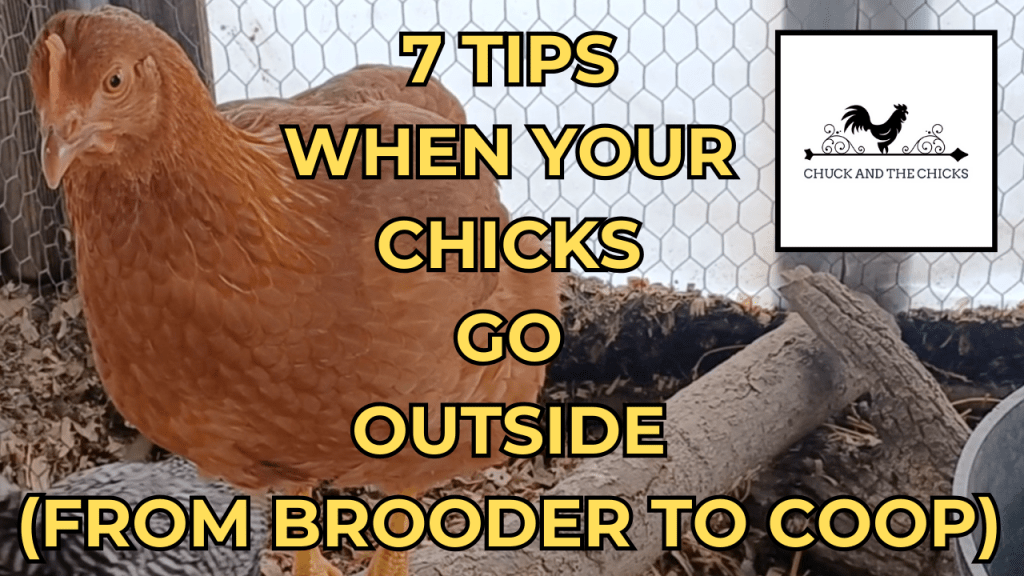
7 Tips When Your Chicks Go Outside (From Brooder To Coop)
You will be amazed how fast your young chicks grow up. In a short 8-10 weeks, about two months, your chicks will be ready to be outside. Chicks are ready to be outside once they have a complete set of feathers and no longer have any downy chick fuzz. A full set of feathers is what allows them to regulate their body temperature without the assistance of an additional heat source. You will notice your chicks progress from small fuzz covered chicks, to an awkward half feathered- half downy fuzz state, and then finally to fully feathered chicks. Here are 7 tips that were helpful to me when my first chicks were ready to transition outside.
At 12 weeks old, young hens are called pullets. At the same age young roosters are called cockerels. The purpose of your flock will determine what kind of housing is most appropriate for them. My flock is a small backyard family homestead flock (for family use only) whose primary purposes are to be egg layers, pest control, and companionship chickens. Chickens which are being raised for meat or for show purposes will require different kinds of housing and other forms of care.
If you already have an existing flock, I’ve made a whole video about how to incorporate new chicks into an established flock. Please visit my YouTube channel link below to watch that video titled, 7 Tips For Introducing New Chickens To Your Flock.
Prepare an outdoor area for your new flock which includes a coop and if possible, a run. A coop is the structure that will be your chickens’ new permanent home. This is where they will roost at night to stay safe from predators. Many people also choose designs that include nesting boxes so the coop will then also be where your chickens lay their eggs. A run is an optional design addition but one that I highly recommend for the overall health and safety of your flock if at all possible. A run is a protected exercise and activity area for your chickens. It provides your flock with additional space and allows them to exhibit natural behaviors like scratching, perching, and exploring. A run expands the structured space available to your chickens. Revised recommendations for chicken spacing recommend at least 5 square feet of coop space per standard size chicken and 10 square feet of run space. Allowing your flock access to the maximum amount of space possible boosts flock harmony, helps your chickens stay healthy, and allows you the option to expand your flock in the future without having to alter your facilities. A run is also a safe place to locate your food, water, and grit stations. Beginner chicken care guide books often include plans to build your own coop and run. There are also pre-made kits of various designs. You can also modify and adapt other kinds of structures like a utility shed or a dog housing. These structures will need to be modified to include the features your chickens need to be safe and comfortable.
Transition your chicks outside during good weather. Transitioning your chicks outside during inclement weather can cause them injury or worse. Feathers once they are wet don’t provide the insulation your chickens need to regulate their body temperature. Be weather aware and plan to transition your chicks outside on a day that will not drop below 35 degrees Fahrenheit and it is not raining or any other form of precipitation. Your chicken’s new housing should include a roof to protect them from the elements.
Provide your chickens with food and water stations as well as a calcium supplement and grit station. Your chickens will be ready to transition from their chick started grower formula sometime around 18 weeks old, approximately 4-5 months old. Transition them from their starter grower formula slowly to their new style of adult chicken layer feed. I do this by mixing the formula by ½ then fully transition to the adult formula. There are many brands and styles of feed to choose from. Your chickens are domesticated livestock and unlike their ancestors, the red jungle fowl, they can’t survive on forage alone. While forage can be a portion of their diet, you will have to supplement their diet in order for them to obtain the nutrition they need to be productive and healthy. Your flock will not be able to provide you with eggs and will be subject to a myriad of health problems if they don’t receive proper and adequate nutrition. There are many options to feed your chickens at a reduced cost including fermenting your chicken feed and other options. Modern chickens are as much as 3x more productive than chickens from just a few hundred years ago as they have been bred and modified for human purposes. This increased production has also increased their nutritional requirements. If your chickens live partially or fulltime in confinement, they will also benefit from a calcium supplement and grit supplement in a free choice container separate from their food. If you are moving your chickens on fresh pasture daily these supplements are not necessary but that is not the reality for most backyard chicken owners. Calcium supplement helps your chickens form strong egg shells and assists with feather regrowth. Grit helps your chickens properly digest their food for maximum nutrition absorption and it helps prevent conditions like sour crop and impacted crop. A station can be any style of dispenser you choose, there are many designs and styles to choose from, and you also use livestock safe dishes. It’s recommended that dispensers are hung at the level of your chicken’s back when they are standing.
Choose a ground cover litter for your chicken area. While it may be initially covered in grass any area your chickens are confined to will quickly turn into a mud pit. Muddy and unsanitary conditions can lead to many chicken pests and diseases. Choose a livestock appropriate ground cover litter that is appropriate for your region. Your bedding maintenance style (spot clean and scoop or deep bedding method), your weather extremes and the style of chicken housing you have will impact what litter is the best choice for you. The most common choices are course construction sand or pine flake shavings. Landscape mulch is not a livestock safe material for a chicken run as it contains sharp pieces which can harm your chickens’ feet (causing bumble foot) as well as harsh chemical dyes.
Provide your chickens with perches and roosts. Roosting and perching are natural behaviors that provide your flock with enrichment and safety. Perches can help alleviate overcrowding as well as provide your flock with options to escape the ground when they choose to. You can create perches from 2x4s with the flat side up, large fallen branches at 3 inches in diameter, scrap lumber, or other chicken safe objects. Remove any sharp edges or protrusions from any objects your chickens will perch and roost on to protect them from injury.
Reinforce your coop with hardware cloth. Chicken wire is efficient for keeping chickens in, not at keeping predators out. While covering your entire chicken structure in hardware cloth may be cost prohibitive, at minimum, reinforce your coop with hardware cloth which has smaller holes than chicken wire and provides your flock with more protection. Your flock is most vulnerable to predators when they are asleep in their coop at night. Predators like snakes and rodents can easily permeate chicken wire. Also, all predators aren’t wild animals. Don’t underestimate the threat that unmonitored domestic animals can pose to the safety of your flock.
Create a regular maintenance routine. Chickens need adequate space and clean facilities to perform at their best. As your chickens grow you will need to develop a cleaning and maintenance routine that includes daily and seasonal tasks. Daily tasks will include things like gathering eggs and cleaning perches while seasonal tasks will include things like cleaning the coop and changing their litter in entirety to prevent pests and disease from lingering in the litter from season to season. Begin to plan now where these chores and tasks, which are essential to maintaining your chicken’s health and productivity, will fall in your existing schedule. Chickens thrive in a calm, consistent, and clean environment. Your new chickens will begin to lay eggs sometime between 4-6 months old and up to one year old depending on their breed. Other factors include their general health, care, and nutrition. Healthy chickens in a well-maintained environment receiving adequate and appropriate nutrition will produce more eggs than chickens without proper care or nutrition. There is no such thing as a lazy or bad chicken. Chickens will not withhold production as a form a defiance. If your flock is struggling with productivity, revisit your nutrition regimen and maintenance practices. Choose practices that support your flock’s overall health so they can perform at their best and live healthy, vibrant, productive backyard lives.
I hope this has been a helpful starting point for your research about creating a nurturing, safe, and healthy environment for your new backyard flock. Check out Chuck’s other social media for more backyard chicken and homesteading content.
 Chuck and the Chicks