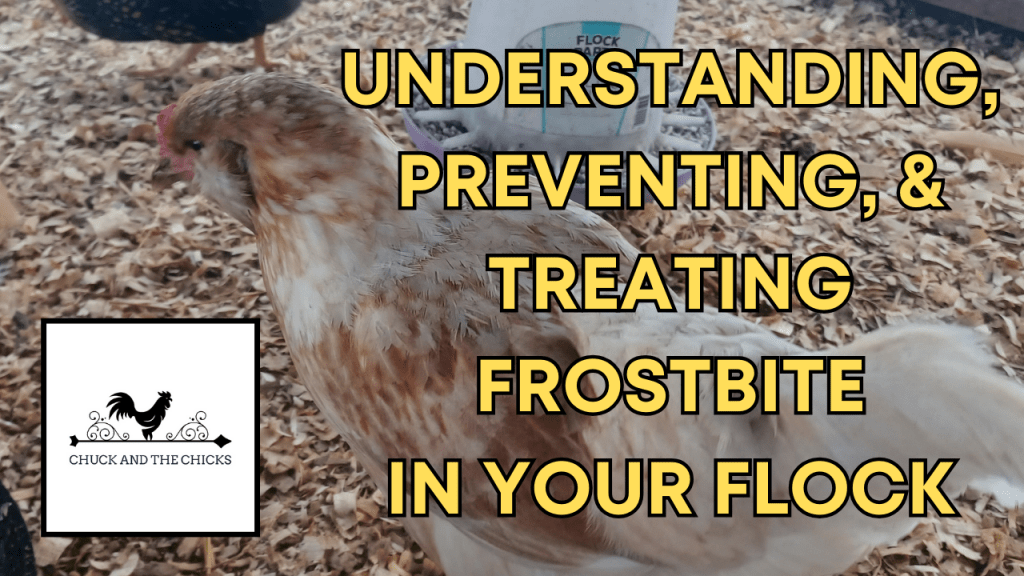
Understanding, Preventing, And Treating Frostbite In Your Flock
With a little forethought, work, and prevention you can avoid many major health issues within your backyard chickens during the winter season. Freezing temperatures can pose challenges but you have the ability to take measures to protect your flock from many major ailments. During the winter time simple things like dry sanitary conditions, adequate food and water, grit and calcium supplement, plenty of perches and roosting space, and the use of an effective ground cover litter for your region and climate will all support your flock’s overall health during freezing temperatures and all year round.
Disclaimer. *I’m not a livestock veterinary professional. I am not officially associated with any of the products mentioned here in any way. *
What is frostbite?
Frostbite is a condition that can cause tissue death in your backyard flock. Frostbite is an injury caused when the skin cells and tissue of your chicken freezes causing cell and tissue death. Frostbite can be minor like minor damage to combs and waddles to major and life threatening in cases which might cause a chicken to lose a limb or worse. Some breeds due to their ornamental nature, elaborate large combs and waddles, their age, or other underlying health issues are more prone to frostbite than others.
Indicators of frostbite include:
A color change in combs in waddles. Combs and waddles may appear white, grey, or black, and severely discolored.
Swelling. The area of the chicken subject to frostbite may appear abnormally swollen. Chicken feet may appear a dark red.
Lameness, limping, immobility. Injured chickens with frostbite may appear limping or lame.
Disinterest in eating or normal activities. Extreme cases of frostbite could cause a loss of appetite and impair all normal healthy flock activity.
What causes frostbite in chickens?
Frostbite is the result of two main elements coming together, moist conditions and freezing temperatures. Excess moisture in your chicken area is primarily caused by excess droppings and the lack of use of a ground cover litter. Mud, excess droppings, moisture, unventilated conditions, and freezing temperatures when combined cause frostbite in chickens. Frostbite can also occur in extreme cold when your chickens are subject to draft, meaning cold winter weather or precipitation blowing directly on them. If your chickens are wet their feathers can’t keep them warm effectively. Your chicken infrastructure should have ventilation high in the structure above any areas where your chickens roost or perch. High ventilation allows fresh air in and moist air out to escape while protecting your chickens from draft blowing directly onto them.
How can you prevent frostbite in chickens?
Provide sanitary, dry conditions to your chickens. Clean up excess droppings daily using dry methods like spot clean and scoop or deep bedding method. Use a drywall scraping tool to remove excess droppings from perches and nest boxes. Replace and refresh your nest box liner as needed. Use dry cleaning methods when needed like a stiff bristle brush.
Provide adequate nutrition and fresh water daily for your chickens. During the wintertime even when they are not producing eggs during their natural winter break your chickens’ bodies will be doing extra work to keep them healthy in harsh winter temperatures. Your chickens are domesticated livestock and unlike their wild ancestors the red jungle fowl they cannot survive on forage alone especially in the winter when foraging opportunities are greatly diminished. Feeding a complete poultry feed appropriate to their breed and purpose as well providing water either warmed and refreshed daily or via a heated livestock bowl is essential to maintaining their overall health in harsh winter conditions. Dehydration and malnutrition make any ailments worse!
Utilize a ground cover litter. Chickens sitting in mud permeated by droppings is the prime conditions for frostbite. Instead of a mud floor utilize a ground cover litter like pine flake shavings or course construction sand. I would not recommend straw as a ground cover litter in most situations because it retains too much moisture and can be hard to clean. I also do not recommend mulch as a livestock litter because it contains sharp pieces which can harm your chickens’ feet (causing bumble foot) as well as harsh chemicals and dyes which can also harm your flock.
Make sure your chicken area has ventilation, not draft. Provide space for ventilation high in your coop and run preferably covered by hardware cloth, when possible, to allow fresh air in and to allow moist stale air to escape. Ventilation should be high above any place your chickens roost, perch, or frequent.
Keep your chickens dry. Provide your chickens with a weatherproof roof to protect them from the elements. Consider constructing temporary winter side walls to prevent draft, harsh winds, and precipitation from blowing directly onto your chickens while they’re in their housing. You can construct temporary winter walls from things like scrap lumber, plywood, straw bales, tarps, construction plastic, or other salvaged materials. Leave a small gap at the top high above your chickens for ventilation.
Provide plenty of roosts and perches. Homemade branch perches, 2x4s, straw bales, scrap lumber, and other chicken safe objects provide a chance for your flock to escape the cold ground. Chickens can cover their feet with their feathers when they roost and keep them warm. Roosting space also helps reduce bullying among your flock by expanding spacing options. Be sure to remove any sharp edges from any roosts or perches you provide for your flock.
Avoid adding excess moisture to your chicken area during freezing temperatures. While your chickens need access to fresh water daily regardless of the temperatures be sure you are emptying and cleaning their water container somewhere outside of their enclosure, especially in the winter time. It is important not to dispose of unused water inside their area all year round as excess mud poses a myriad of potential issues for you and your flock. Use dry cleaning methods to clean your coop and run during times of freezing temperatures. Avoid feeding moist treats that might stick to combs, waddles, and feet during freezing temperatures.
Treating frostbite in your flock.
Rather than rely on regularly treating frostbite it is imperative if you notice frostbite occurring regularly within your flock to examine your practices and your chicken area for the root causes and address them. Properly winterizing your chicken coop and run prevents most cases of frostbite. Frostbite even in the extreme cold of winter is a preventable condition.
Frostbite if caught in the very first initial stages can be treated. Contrary to instinct, do not attempt to rapidly warm the area! Heating the damaged tissue up too quickly can actually worsen the tissue damage. Don’t use items like a heat lamp or hair dryer because this can cause more harm than good. The injured chicken may need to be temporarily isolated to be treated. If the frostbite injury is on combs and waddles you can apply a slightly warmed cloth to the area for 15-20 minutes. Remove the slightly warm compress and then reapply. Watch and observe your chicken closely for any signs of infection. In the case of frost-bitten feet, the chicken can be isolated and stood in lukewarm water just enough to cover the feet to allow to feet to slowly and gradually warm. This can also be done in 15-20 minute intervals. There may be sloughing off of skin or resulting blisters. Apply a poultry safe ointment like Hen Healer or a beeswax-based salve. Don’t use any water-based ointments including petroleum jelly because they can freeze in severely cold temperatures. Watch the affected areas closely for any signs of infection. Spraying a poultry safe veterinary topical spray like Thercyn wound spray or Vetericyn will also help protect the injured tissue and prevent infection. I would not recommend wrapping any effected areas as wrappings can become easily soiled and cause infection. Topical spray and close monitoring of the area once the chicken is well enough to leave isolation and re-enter the flock is recommended. Don’t apply excessive moisture of any form to your chicken before reintroducing them to freezing temperatures as this can worsen the frostbite. Ensure any medications have dried prior to re-releasing the chicken back into the flock. Remember to transition them slowly indoors and outdoors and vice versa especially if there is a 20 degree or more temperature difference so they don’t perish from temperature shock.
If you notice your chickens have severe frostbite on their combs or waddles, there is nothing that can be done to revive the physical damage. Once the tissue has turned black and become necrotic it can’t be saved and it will not grow back. It’s important not to attempt to remove or touch the damaged area as this is extremely painful for your chickens. Do not rub or attempt to remove the damaged tissue. They will naturally shed the dead skin on their own when provided with the grooming tools they need like a chicken dust bath. You can use beeswax-based salves to provide care to the affected area once the damaged skin has been shed. Ointments like Hen Healer, Vetericyn, and similar products can help aid healing. A chicken dust bath can be made from any chicken safe container they can easily get in and out of. My chicken dust bath contains clean fill dirt, wood ash from non-chemically treated wood, coarse construction sand, and food-grade diatomaceous earth. While chickens can create a dust bath for themselves and often will during the warmer months it is important to provide them with a dust bath year-round to support their overall health and natural grooming behavior.
Ointments like Hen Healer and similar products can help aid healing. For severe cases it is important to contact a livestock veterinarian if possible. If the chicken has ceased eating or drinking it may be necessary to separate them from the flock and provide care in isolation until they’ve recovered. If you will be isolating a chicken in a more than 20-degree temperature difference between inside and outside, be sure to transition them slowly from outside to inside and vice versa so they don’t perish from temperature shock. You can use a garage or covered porch to transition them slowly both inside and back outside. Isolation should only be considered in severe life-threatening cases. Any form of separation from the flock causes severe stress in chickens. Minor topical injuries can often be treated while keeping the chicken within the flock.
When the sun sets be sure if your flock is free-ranging that all of your flock has returned at night. During winter especially during deep snow it is easy for smaller chickens to become confused, lost, or stuck in dangerous winter conditions. In emergency winter conditions consider keeping your flock indoors in their infrastructure until the storm conditions have passed.
Checklist of questions to ask if you see frostbite reoccurring in your flock:
- Does my chicken structure have a leak proof roof?
- Are there winter walls to keep my chickens dry?
- What ground cover litter is best for my region to combat muddy conditions?
- Do my chickens have enough roosts and perches?
- Do they have access to food and water?
- Is my chicken housing clean?
- Does my flock need their ground litter or nesting box material refreshed?
I hope these simple tips were a helpful review for your research about maintaining your chickens’ health and preventing frostbite during winter conditions. Check out Chuck’s other social media for more backyard chicken and homesteading content.
 Chuck and the Chicks