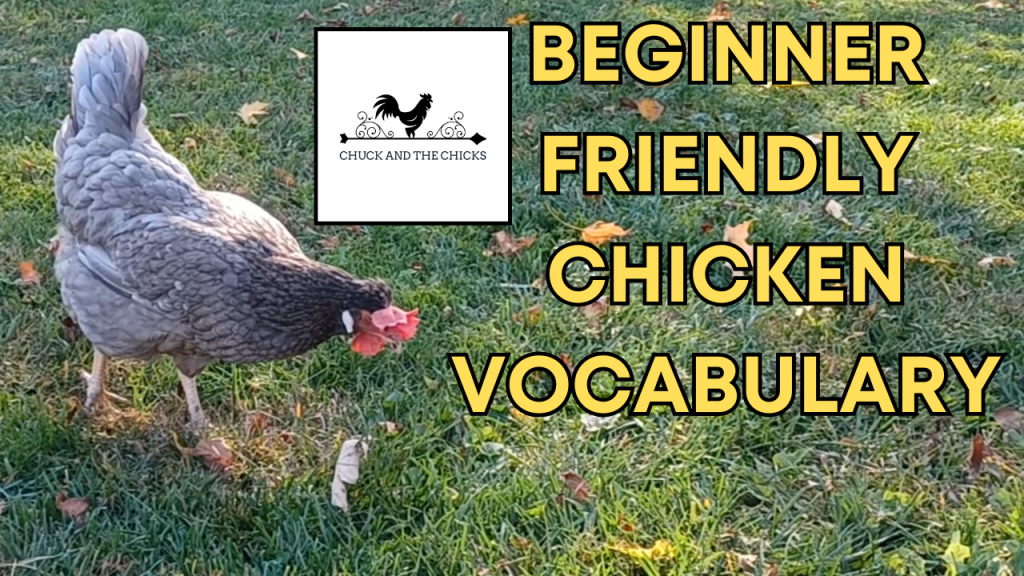
Beginner Friendly Chicken Vocabulary
If you’re new to backyard chickens, you may have encountered some words you aren’t quite sure of. Don’t worry! As you learn and grow with your chickens you will be able to learn new things daily about their breed traits, behaviors, care, and maintenance needs. What your chickens need from you more than anything is a willingness to adopt a learning attitude and to seek out answers about questions you have about their care. Here are a few basic chicken terms to help begin your research journey. Some of these terms are probably familiar to most of you, some may be totally new.
Coop-a form of shelter that houses your chickens and protects them from the elements. Good coops have adequate space for the number of chickens they house, protect them from predators, have adequate ventilation, and allow in natural light. Coops come in many forms from repurposed trailers, sheds, small barns, tractors, and others.
Run-a protected activity area for your chickens that protects them from predoters while allowing adequate space for natural behaviors like perching, roosting, and exploring. Runs can be covered or uncovered and include designs like re-purposed dog kennels, constructed chicken runs with tarp roofs, fenced in backyards, and others.
Nesting box-a box or other container filled with a clean suitable nesting material to attract a hen to lay her eggs there.
Nesting boxes should be cleaned regularly and lined with materials like fresh straw, hay, grass, or nesting pads to make them appealing to your hens.
Chick– a baby chicken that still has downy chick fuzz, chicks can be male or female, chick denotes age and not gender of the chicken
Pullet-A female chicken less than a year old
Cockerel– A male chicken less than a year old
Hen– A female chicken at least one year old
Hens lay eggs.
Rooster-A male chicken at least one year old
A rooster can protect the flock and fertilize eggs.
Comb-is the skin-like protrusion from the top of your chicken’s head.
Combs come in many shapes and colors depending on your chicken’s breed and specific heritage. Some comb shapes are meant for hotter temperatures while other combs can be found on breeds meant to endure harsh winters. Your chicken’s comb is part of how they regulate their body temperature, it is a heat and cooling exchange system. Combs come in many different shapes like: rose combs, single combs, carnation combs, pea combs, and others.
Wattles– are the skin flaps beneath your chicken’s beak.
Like the comb, they also play a role in helping your chicken regulate their body temperature. Also like the combs, wattles can come in a variety of sizes and colors depending on your chicken’s breed and heritage. Bearded varieties of chickens may have smaller wattles or none at all.
Hackles-The feathers growing along the back and sides of your chicken’s neck.
Both hens and roosters can raise their hackles when they feel threatened.
Sickles-the long, curved feathers present in most rooster tails. There are main sickles: the longest most prominent feathers in the tail and lesser sickles, the remaining tail feathers which hang on both sides of the tail.
Tidbitting-when a chicken repeatedly picks up and drops food while making a vocal food call. Hens can tidbit for their chicks and other flock members. Roosters can tidbit to attract and appeal to their hens and other flock members.
Preening-part of chicken’s typical grooming behavior which is an important part of how they maintain the health of their feathers. Preening involves straightening the feathers with their beak and using their beak to distribute preen oil from their uropygial gland.
Preen oil-which comes from uropygial gland of the chicken is located near the base of their tail. With their beak chickens spread this oil on their feathers to condition them and keep them from becoming brittle.
Spurs-the sharp protrusions on the back of rooster legs.
Spurs, if necessary, can be trimmed like dog nails. Don’t trim too severely or you will cut the quick which causes pain, infection, bleeding, and other potential harm. After trimming the spur can be sanded or filed smooth. Not all rooster spurs need to be trimmed but it may become necessary if your rooster’s spurs are inhibiting him from walking normally or doing unintentional damage to your hens. If in doubt, consult a livestock veterinarian.
Vent-is the outer opening of the cloaca on your chicken.
The vent is both where eggs emerge and where chickens eliminate their waste, but not simultaneously.
Pecking order-the social structure of the flock which determine who eats first and who roosts the highest among other social roles.
Other roles include things like the lead hen who teaches skills to other chickens within the flock and the lead rooster who has won the right to breed with the flock. Every time a new group of chickens is added or subtracted to the flock the pecking order must be reestablished with varying levels of severity. It’s recommended to never add one single chicken to a flock because they will become the subject of extreme bullying. When adding to your flock, do so in sets of at least 2-3 chickens preferably of the same breed so they have a natural companion within the pecking order. Frequent disruptions to the pecking order cause high levels of stress in chickens.
I hope these terms sparked your curiosity about all things related to chickens. Backyard chickens and homesteading contains a lifetime of learning and growth. Check out Chuck’s other social media for more backyard chicken and homesteading content.
 Chuck and the Chicks