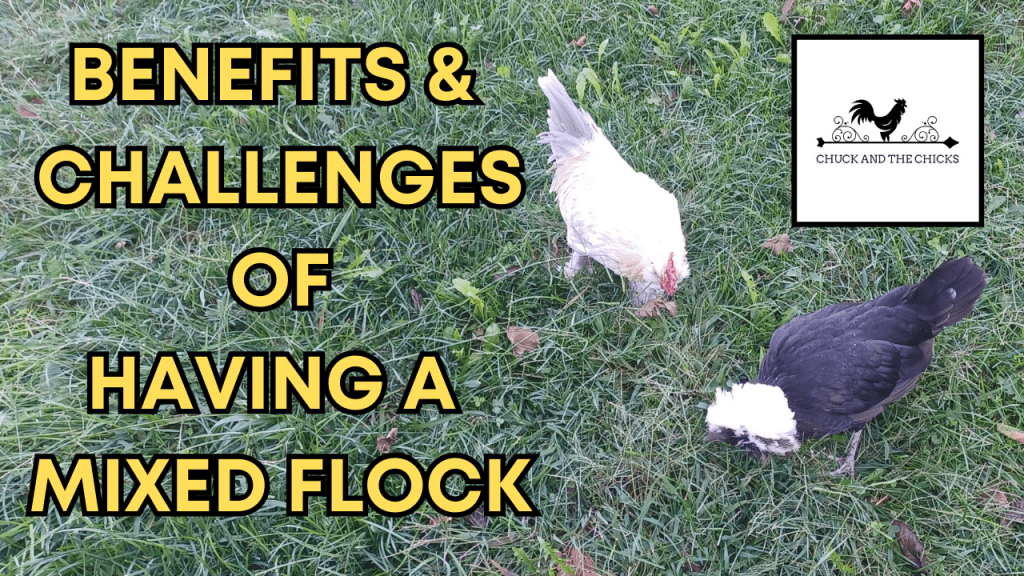
Benefits And Challenges Of Having A Mixed Flock
When you’re building your backyard flock there are many details to consider. It’s important to select chicken breeds that are suited for your intended purpose and that will thrive in the weather conditions in your area. People keep chickens for many reasons including eggs, meat, to have show birds, or as companionship animals. Chickens can serve multiple purposes. It is recommended to begin with a small flock at first to ensure you have adequate space before acquiring additional chickens. The more chickens you have, the more care, maintenance, and supplies they will require.
Many backyard chicken owners have mixed flocks, meaning they have several different breeds and age ranges represented in their flock. There are benefits, challenges, and some recommended practices for this kind of flock.
Benefits
Older generations of chickens will mentor younger generations. Older chickens will teach skills to the younger generations within your flock including things like where to lay their eggs, where the best places to forage are, and where to hide from predators. Even once the height of their productivity is over older hens can still be excellent mothers as well as assist with protecting younger chicks. Older chickens can also continue to provide the excellent service of pest control, eating many insects in any area they have access to. As chickens age, they also generally become more docile and handleable.
You can build a rainbow of egg colors. Different breeds will lay different colors of eggs. It is one of the joys and backyard chicken keeping. Having a mixed flock that produces many colors of eggs is a simple form of endless joy and amazing, quality, ethical food.
Different breeds of chickens are beautiful. Chickens come in every shape and size. From the colorful to the curious to the whimsical, humankind has designed many kinds of chicken breeds over the years to suit their preferences and needs. There are hundreds of breeds to choose from to create your perfect flock.
Challenges
Chickens will congregate in clicks based on their breed. You’ve heard the saying ‘birds of a feather flock together’. It is quite literally true that in a mixed flock of varying breeds chickens will form small sub groups based on their breeds and show a pronounced preference for chickens that are the same breed or look similar to them. This can result in increased pecking order skirmishes between the groups as well as any chicken without a corresponding partner of the same breed to be the subject of bullying behavior from the rest of the flock.
Baby chicks and additional members may require a longer integration time. Within a mixed flock adding new members can be form of significant stress for your chickens. Flocks organize themselves in a social structure called the pecking order. It is recommended when adding fully feathered chicks between 8-10 weeks of age or when adding additional adult chickens to use an integration pen. You can construct one and hardware cloth sides or adapt something like a dog pen for this purpose. The new chickens will need their own food, water, and grit inside of their integration pen. Allowing the rest of the flock to meet the new chickens from behind the safety of the hardware cloth assists with the integration process. In a mixed flock, this process will likely take longer than if the chickens were all the same breed. Within our flock it typically takes 4 weeks to fully integrate new flock members but the process may take more or less time depending on your specific flock and your chicken facilities. I begin by allowing short windows of socialization with the flock which are monitored and increase the periods of time gradually. The integration pen also serves as a protected area for new chickens to retreat to until they are fully accepted by the flock as a whole.
Different breeds and ages require different accommodations. While cold hardy and dual-purpose breeds are often weather tolerant many types of chickens like ornamental breeds, bantams, and aging chickens are more temperature sensitive and will require some additional considerations and care. Ornamental chickens, bantams, and aging chickens may require supplemental heat or additional cooling measures depending on the severity of weather in your region. Aging chickens are prone to conditions associated with growing older like arthritis and in additional to their naturally waning productivity they will require things like lowered roosts and perches and ramps to utilize their environment. A chickens’ ability to climb and agility will naturally decrease with age as will their activity level. If you have a mixed flock, it will be important to develop your chicken infrastructure and space with needs of your most fragile flock members in mind. The average lifespan of bantams is between 4-8 years, while larger breeds can live between 5-10 years and in special cases beyond. Your long term flock management plan for aging flock members is something to consider as you grow your flock.
Recommended practices for keeping a mixed flock
Keep at least 2-3 of each breed in your flock. Having more than one of any breeds represented in your flock can reduce bullying and ensure each chicken within the flock has at least one companion within the pecking order. It is highly advised to never introduce just one singular chicken to your flock because this heightens the risk of bullying for the solo new flock member. This is especially true for crested breeds like the Polish chicken. Crested breeds have a visual impairment because of their lush feathers and can be subject to bullying from other flock members because they can unknowingly encroach on their space as well as not be able to defend themselves from attacks they don’t see coming. An integration pen can be used to provide relief for severely bullied flock members and help with reintegration by giving you more time and more options to include the ostracized flock member.
Avoid unintentionally creating a clique by acquiring disproportionately more of one kind of breed within your mix flock. If you plan to build a mixed flock, it’s advised to not purchase a large number of any one breed within the flock because this small sub group can become aggressive and may be resistant to incorporating with the rest of your flock. They may try to separate and become their own flock or at the very least will be very socially resistant to incorporating with the larger flock as a whole.
Intentionally build your flock and limit the number of times you add or subtract flock members. Adding or subtracting new members to your flock is a significant form of stress and requires an adjustment period. This time period can be a longer adjustment for mixed flocks. Rather than adding or subtracting new members without intention, limit flock changes as much as possible. The longer a flock is allowed to grow alongside each other unchanged the more stable the pecking order will be.
Give your mixed flock maximum space, plenty of roosts and perches, and hiding areas. More space is always better when it comes to flocks of any kind. The bare minimum recommended space for standard size chickens is 4 square feet of coop space and 8 square feet of run space. Bantams will require approximately half of that. Larger, heavier breeds will require more. Overcrowding is linked to aggression, lowered or loss of productivity, feather pecking, diseases, and in extreme cases even cannibalism. Provide your flock with as much space as you feasibly can. Create multiple levels of roosts and perches to alleviate overcrowding. Create hiding areas by arranging objects like straw bales or by leaning a pallet against a wall so less dominant flock members have spaces they can retreat to.
Provide multiple food and water stations. With chickens of varying size, age, breed, and status multiple food and water stations are essential to ensuring all of your flock members have access to food and water. In extreme cases less dominant flock members can be kept from eating and drinking entirely by more active members. Multiple food and water stations ensures less dominant flock members can eat and drink freely without harassment. When hanging food of water stations, try to aim for the level of food access to coincide with level of your chicken’s back. Hang some stations lower for bantams and higher for your larger flock members. Chickens appreciate options!
Egg layers and meat chickens require different facilities. The nutritional and housing needs of meat chickens (broiler chickens who have been genetically created to grow fast for meat production) and egg laying breeds are drastically different. If you intend to keep both an egg laying flock and a broiler flock to process for meat, they will require separate facilities.
I hope this information was a helpful starting point for your research regarding raising a happy and healthy mixed backyard flock. Check out Chuck’s other social media for more backyard chicken and homesteading content.
 Chuck and the Chicks