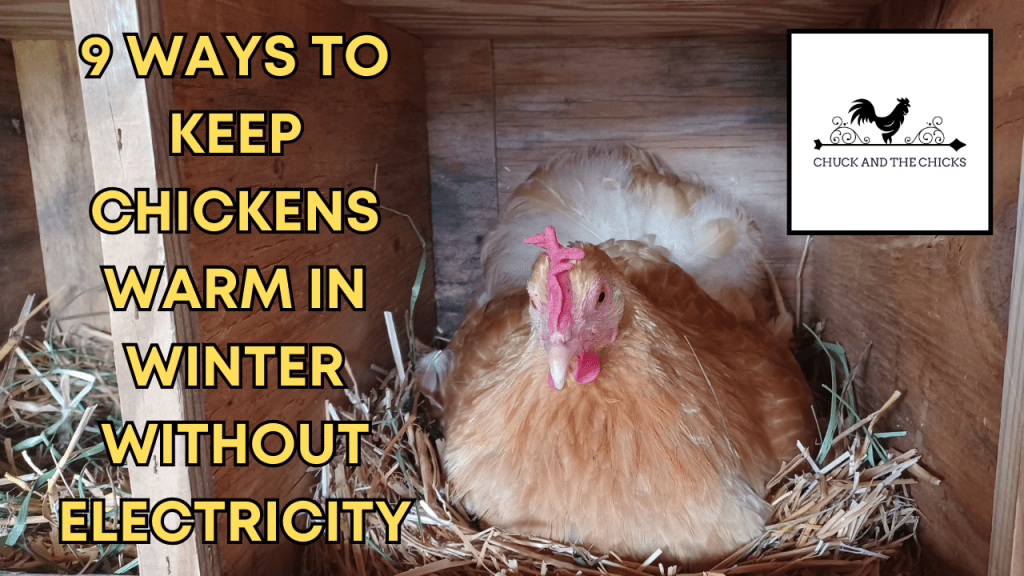
9 Ways To Keep Your Chickens Warm In Winter Without Electricity
If you live in an area that experiences freezing temperatures, snow fall, and ice during the winter you may be wondering how to keep your flock warm and comfortable during winter weather without supplemental heat or electricity.
The vast majority of chicken breeds DO NOT require use of supplemental heat during the winter. The exceptions would be ornamental breeds, ill or elderly chickens, and chicks. If your chickens are not fully feathered (meaning they no longer have any soft downy chick fuzz) they should not be outside yet. Chicks should remain in a protected brooder until they are fully feathered sometime between 8-10 ten weeks of age. If you provide your chickens with dry, safe, sanitary conditions they will likely not require any additional heat source. *DO NOT use a heat lamp in your coop. The bulb of the heat lamp becomesencrusted with dust and can cause a coop fire. Heat lamps are an extreme fire hazard*. If you feel your chickens do require an additional heat source, this will likely require electricity. Consider safer coop appropriate alternatives like a wall mounted panel heater or panel brooder heater.
Here are 5 simple tips to help you effectively keep your flock safe and warm this winter that don’t impact your power usage.
1) Keep your chickens dry and protect them from the elements.
Protect your chickens from harsh winter weather conditions by providing them with accommodations that protect them from the elements. If your chicken’s feathers are kept dry, they will do a great job of insulating their body in the winter time. You want to protect your chickens from precipitation falling on them and from harsh draft blowing directly on to them. A roof protects your chickens from precipitation. A metal or shingle roof is the ideal but more economic options include things like a tarp. Side walls protect your chickens from harsh wind and draft. You can construct temporary winter side walls for your structure from things like a tarp, plywood, or scrap lumber. Don’t entirely seal in your chicken structure because fresh air and ventilation are important in the winter to prevent harmful conditions that result in health issues like ammonia toxicity or respiratory issues. When constructing your roof and side walls, leave an area open at the top protected by hardware cloth to allow stale air to escape without exposing your chickens to harsh draft. Have a replacement tarp on hand in case extreme winter weather damages or destroys the one currently in use on your chicken structure.
2) Use a livestock safe ground cover litter like pine flake shavings or coarse construction sand.
Providing your flock with a livestock safe ground cover gives them relief from direct contact with the cold ground and also helps mitigate muddy and moist conditions which can contribute to frost bite. If you are using spot clean and scoop bedding methods, be sure to remove excess droppings regularly with a scoop and/or rake and regularly refresh your chosen ground cover litter. If you’re using deep bedding method, cover areas of excess droppings with your chosen ground cover litter. Either method of bedding requires that annually your chosen ground cover litter is replaced in entirety so it doesn’t harbor harmful pests or bacteria from year to year that could harm your flock.
3) Provide plenty of options for roosting and perching.
Chickens can keep their feet warm in the winter by roosting and perching and covering their feet with their feathers. Provide your flock with roosting and perching options including things like 2x4s, thick fallen tree branches, platforms, or other chicken safe objects for them to climb on. Be sure to sand down and remove any sharp protrusions or edges from objects your chickens will be roosting or perching on to protect their feet from injuries.
4) Repair holes and cracks in your coop.
Visually inspect your chicken coop for holes in the wall especially near areas where your chickens roost for the night. Make needed repairs now to protect your chickens from both harsh temperatures and predators. Like your chicken run, you want your coop to be well ventilated but not drafty. You can include small vents at the top of your coop covered in hardware cloth to allow stale air to escape while still protecting your chickens from cold wind, rain, ice, and snow. It is imperative to use hardware cloth and not chicken wire on your coop vents as your chickens are most vulnerable to predators when they’re roosted at night. Dusk and nighttime are also when you are likely to experience the most predator pressure. Repairing cracks and holes in your coop and in your chicken area roofing also helps reduce excess moisture which is important to keeping your chicken area safe, dry, and warm.
5) Provide strategically timed warm treats during the winter.
You can use treats to help bolster your chickens’ natural ability to cope with harsh winter temperatures. *Important note* treats should be given in addition to, not as a substitute for complete chicken feed. I provide treats 3 times per week to be certain I don’t accidentally create a nutritional imbalance in my flock. Also, do not provide moist treats at night before your flock roosts. Moist treats can adhere to your chicken’s face and waddles which can lead to frostbite. If you are providing treats with a moisture component during cold temperatures do so in the morning when chickens have adequate time to bath and remove any extra food that adhered to them, or avoid moist treats altogether in cooler temperatures if you experience frequent extreme harsh winter cold. I serve my chickens a warm morning treat like cooked oatmeal, apples, and meal worms (be certain the oatmeal has cooled to room temperature so you can touch it without discomfort so it doesn’t burn your chickens, even at room temperature it is still warm compared to outside winter temperatures) and at night I provide meal worms, corn, or scratch grain but only 3 times per week. Serve treats in a livestock safe dish and remove and discard any unused portions so you don’t attract predators to your chicken area at night.
6) Natural wind breaks can help deter draft from impacting your flock.
Mindfully landscape around and intentionally position your coop and run areas for your chickens. Trees like ever greens and full lush shrubs can provide natural insulators and barriers between your chicken area and harsh winds. Thoughtful landscaping in addition to constructing temporary winter walls and wind breaks can help provide your flock with refuge from cold weather. Trees also provide visual protection from aerial predators.
7) Use straw bales for additional perching and roosting space, boredom busting enrichment, and for biodegradable wind blocks.
Bales of straw can used creatively to provide your chickens with additional places to perch and roost. Chickens will enjoy scattering and scratching sections of straw for enrichment and a new safe object like a bale of straw in their chicken area provides them with an opportunity to explore and climb off of the cold winter ground. Straw can be used as a nest box liner and can be utilized in a dry coop. I would not recommend using straw as a ground cover litter in an exposed chicken run as straw retains too much moisture and is difficult to clean. Instead, I would recommend pine flake shavings or coarse construction sand as a chicken run cover litter. Bales of straw can be staked strategically against exposed areas of your chicken run to provide a biodegradable wind block. *Important note, if you’re using straw outside of your chicken structures be sure to dispose of it and replace it in a timely manner as decomposing, untended straw can and will become habitat for predators like snakes and mice*. Straw is short term or emergency wind block solution.
8) Place sun warmed bricks or blocks in your coop.
Place bricks or cinder blocks in an area where they will receive maximum amounts of sun during the day. Before the day begins to cool, place the sun warmed bricks or blocks on the floor of your coop somewhere out of the way. Overnight, these stones will slowly release heat to somewhat mitigate falling temperatures. Be mindful to place your bricks or blocks against a wall or in an area where your chickens won’t be injured by falling or leaping on them from their roosts and perches.
9) During emergency drops in temperature, minimize opening the doors of your coop.
While it is important to check on your chickens, maintain their area, and to be mindful of their conditions regardless of the weather, try to minimize frequent trips in and out of the coop during severe emergency drops in temperature. Collects eggs in a timely manner daily to avoid losing any eggs to freezing temperatures.
Other things you can do that don’t require power are providing your chickens with a dust bath year-round. A dust bath is essential to their health and also serves as a form of enrichment. You can create a dust bath from any chicken safe container they can easily step into and out of. Fill your chicken dust bath with clean fill dirt, wood ash (from non-chemically treated wood), coarse construction sand, and food grade diatomaceous earth. *It is important it is the food grade diatomaceous, not the pesticide. * Ensure your chickens have adequate food and water. Multiple food and water stations make it possible for less dominant flock members to eat and drink freely. Eliminate excess mud and moisture in your coop by utilizing a livestock safe cover litter and by addressing any leaks or holes in your existing chicken structure. Excess moisture and freezing temperatures contribute to frostbite conditions.
I hope this information has been helpful to you as you begin your research to prepare for the winter season ahead with your flock. Check out Chuck’s other social media for more backyard chicken and homesteading content.
 Chuck and the Chicks
One response to “9 Ways To Keep Your Chickens Warm In Winter Without Electricity”
Good advice from a good heart , Love for animals from the start ; Chickens are Gods gift to man , It only makes sense to take care of them the best we can.
LikeLiked by 1 person