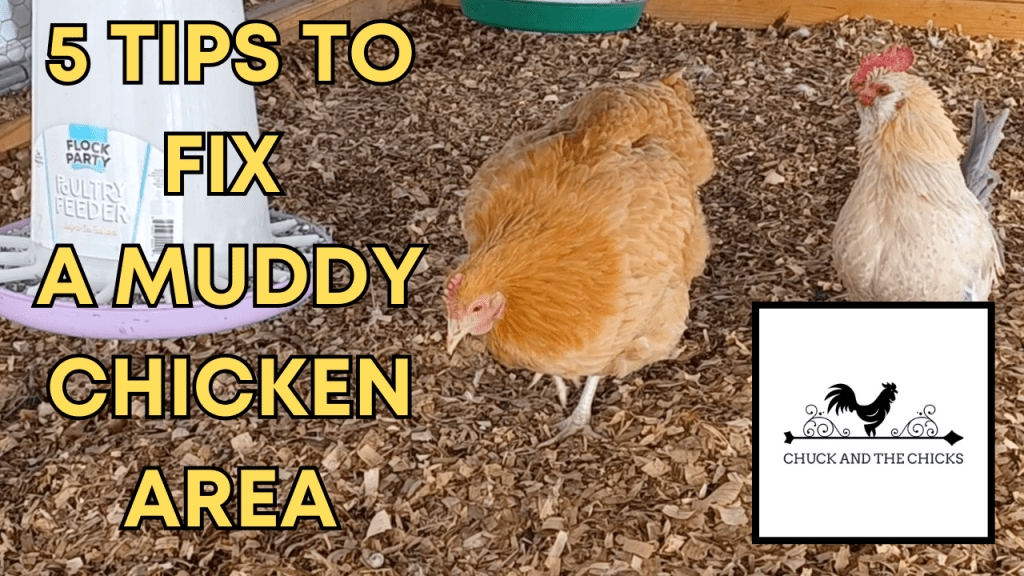
5 Tips To Fix A Muddy Chicken Area
With the fall season here and the winter season just around the corner now is the time to do important preventative maintenance and cleaning of your chicken area. Especially for chickens who will be living partly or in full-time confinement maintaining their area is essential to their health, happiness, and productivity. A muddy, unsanitary chicken area is a breeding ground for pests and bacteria which can harm your flock. Inescapable muddy moist conditions also contribute to frostbite when temperatures dip below freezing. Here are 5 simple strategies for preventing excess mud or fixing your muddy chicken area.
Be mindful of the natural collection and flow of water on your property. If your chicken area perpetually floods, it may be necessary to relocate it to a dryer place on your property. During a rain be in and observe your chicken area. Be mindful of puddles, landscaping, or run off from buildings that may be impacting the moisture levels in your chicken area. If relocation is impossible, you may be able to divert water flowing toward your chicken area by creating channel trenches to direct water run off away from your chickens. There are also other kinds of drains you can construct like a French drain or rock garden which is a trench filled with landscaping gravel and water tolerant plants. If you can’t move your chicken area to avoid the flow of water you may be able to modify your landscaping to direct water around and away from your chickens.
Repair, replace, and regularly maintain the roof of your chicken structure. Even the simplest chicken areas need a roof to protect your chickens from the elements as well as predators. A metal roof is the ideal but less expensive alternatives include things like a tarp. Secure the roof of your chicken structure and check it during an active rain event when you can safely do so to be sure there are no leaks or holes in your roofing material. If you’re using a tarp as your roofing material have an emergency replacement on hand in case unexpected weather conditions damage or destroy it.
Use a livestock safe ground cover litter. Any chicken area that once had grass will eventually become a mud pit if you don’t utilize a livestock safe ground cover litter. Materials like livestock pine flake shavings or coarse sand make great ground cover litter for your chicken area. These materials can be spot cleaned when needed and any cover litter you choose should be replaced in entirety annually to avoid your litter harboring pests or disease spreading bacteria from year to year. Mulch DOES NOT make an appropriate cover litter due to the sharp edges (which cause injuries to your chicken’s feet and causes the condition bumblefoot) and the dyes they contain (the chemicals in mulch can discolor, harm, or even kill your chickens). Straw is also not an ideal ground cover. Straw retains too much moisture and causes unsanitary and exceedingly moist conditions as it decomposes. It is also difficult to clean. Straw is appropriate for nest boxes or a very dry, well-maintained coop but it is not appropriate material for a ground cover litter. Always use a livestock safe material. Never use any material in your chicken area which could harm their feet, expose them to chemicals, or cause injuries. Play sand is also not appropriate because the grains of sand are too small and can become inhaled into your chicken’s sensitive respiratory system. If you use sand, use coarse washed construction sand.
Create additional roosting areas, perching areas, or platforms for your chickens. Even in ideal circumstances your chicken area will accumulate some moisture. Give your chickens options to escape the wet ground like a perching ladder, fallen tree branches, scrap lumber shaped into roosts, a platform, and other safe objects for your chickens to roost on. Carefully check any objects you introduce into your chicken area for sharp protrusions that could injure your chickens. Sand down and remove any sharp edges or points.
Consider adding weather blocking walls to your chicken area especially during the winter. During the summer our chicken run has exposed chicken wire walls but during the late fall and winter we place panels over the sides of the run, carefully leaving open panels at the top of the run. These panels on the side which are constructed from scrap lumber and construction plastic keep bad weather, wind, and precipitation out while the open exposed panels at the top allow fresh air to flow through. You don’t want to seal your chicken area in entirety because without adequate fresh air this can cause harmful conditions for your flock like ammonia toxicity and make a bad moisture problem even worse. You want to prevent precipitation and cold wind from blowing directly onto your chickens while still allowing fresh air to flow into their area near the top. This allows for fresh air to come in, but not draft. Leave space at the top of any wall you construct for air flow to allow fresh air in but to keep harsh weather out. You can construct temporary winter walls from things like tarps, plywood, or scrap lumber.
I hope these tips for reducing or eliminating excess mud in your chicken area have been helpful to you! Check out Chuck’s other social media for more backyard chicken and homesteading content.
https://www.youtube.com/channel/UC6CjdDVs4qN1xxxJXAH6sOg?sub_confirmation=1
 Chuck and the Chicks