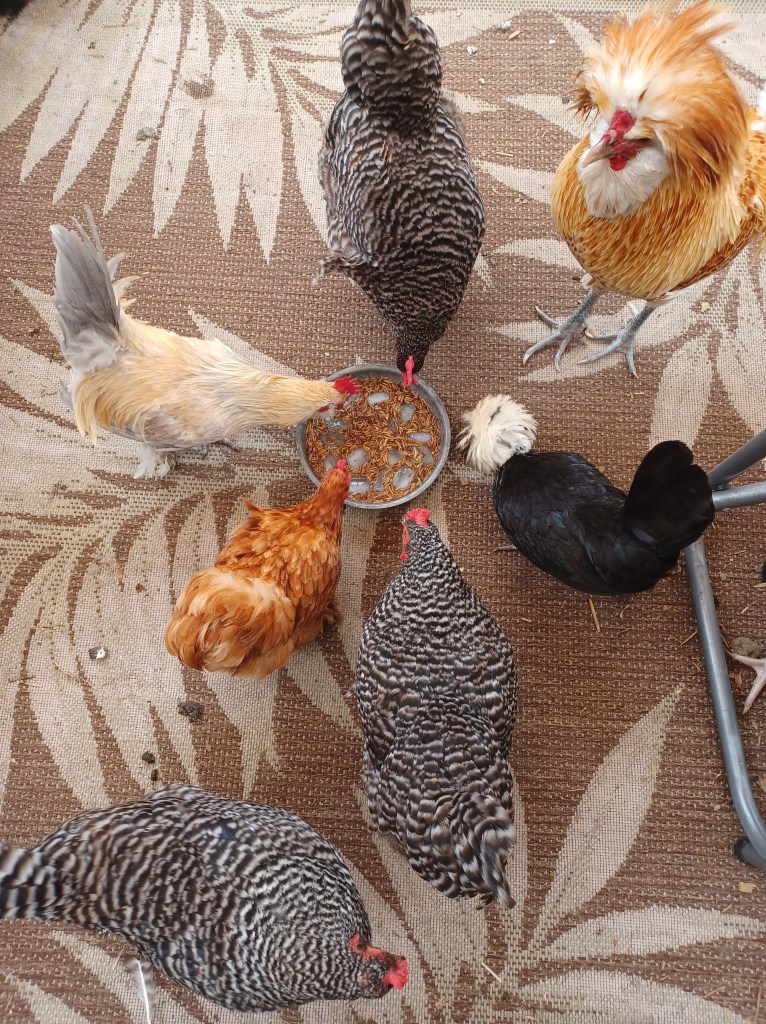
Pictured above the flock enjoying some meal worms and ice water on the porch.
3 Summer Chicken Care Tips (Embrace The Season)
Summer is my favorite time of year! There is not limit of things to do like tending a garden, taking care of your animals, or just enjoying the outdoors. Seasonal living is part of homesteading. Rather than fighting the seasonal norms, I do my best to embrace the parts of the season that make this time of year special. For me, that means seasonal fruits like strawberries and watermelons. It means enjoying simple and free things like evenings star gazing on the porch and listening to crickets and peeper frogs. It means fresh greens from the garden and enjoying the wonderful eggs my flock provides for our family. Heat waves and rising temperatures can be alarming, but there’s many things you can do to ensure your flock’s comfort in order to have a safe and happy summer.
These are some simple and frugal summer care tips that have served me well on my homesteading journey and I hope they’ll be helpful to you too!
- Water, water everywhere. During the majority of the year, I maintain 3 water stations for my flock. During the summer, I up that count to 7 and deploy all of my extra water stations and accessories to make sure my flock stays hydrated. Water stations don’t have to be dispensers it can just be a livestock safe bowl with fresh clean water. I make sure the water stations I make stay full, fresh, and cool and that they are not in direct sunlight. If you place your water stations in a hot part of your chicken area that gets baked by the sun during the day your chickens are unlikely to utilize them. Take note of the shady areas of their space that your flock frequents and make sure they have water available to them. Multiple water stations also make it possible for less dominant or aging members of your flock to hydrate more easily. Remember any hydration supplement for chickens you use should be given to them in addition to just plain, fresh water, not as a substitute. You can provide additional shade for your flock using a tarp, old bed sheet, or camping pop up structure. You can also make ice forms in reusable plastic containers or ice trays. Meal worms, fruit, or healthy scraps can be added to ice cubes as a cool summer treat and as enrichment.
- Get the doors open and do a deep clean. During the day (weather permitting) I open my coop doors and vents to allow for maximum air circulation. I close the doors at dust to prevent predators from encroaching on the coop. Summer makes it possible to get into your chicken area and perform must needed maintenance tasks. During the summer I’m able to wipe down the areas inside my coop thoroughly. Replace and refresh your litter depending on your chosen litter method whether it is spot clean and scoop or deep bedding. Reducing the presence of droppings in your coop and chicken run area also reduces the presence of unwanted insects. Timely seasonal maintenance is a boost to your flock’s health and productivity. While there are additives you can use to get some extra life from your chosen litter, nothing can replace a much needed seasonal deep clean.
- Be vigilant and observe your chicken areas for predator activity. Spring is when many wild animals produce their young. During the summer juvenile animals and hungry parents will be looking for new and convenient food sources. Don’t let your eggs or your flock be one of them! Collect eggs daily and be watchful of your chicken areas for signs of predator disturbance. Utilize fencing around your chicken areas for added protection. Be on the lookout for signs of predators which include but aren’t limited to: suspicious amounts of outdoor food disappearing, signs of digging, unpleasant marking or urine smell, missing eggs, new unexplained holes in the ground near your chicken area, or changes in your flock’s behavior like avoiding their coop or run space. Depending on the predator pressure in your area you can store your chicken feeders in weather proof totes overnight and replace them in the morning for your flock if that would be practical for you. I highly encourage you to consider other proactive deterrents like sound infrastructure, fencing, child and animal friendly spray and powder pest deterrents, decoys, and others. Vigilance and observation are some of your best tools against predators. If you notice your flock acting strangely, sending out alarms in the middle of the night, or avoiding parts of their chicken area it is time to investigate!
I hope these summer tips are helpful to you. Check out Chuck’s other social media for more backyard chicken and homesteading content.
https://www.youtube.com/channel/UC6CjdDVs4qN1xxxJXAH6sOg?sub_confirmation=1
 Chuck and the Chicks