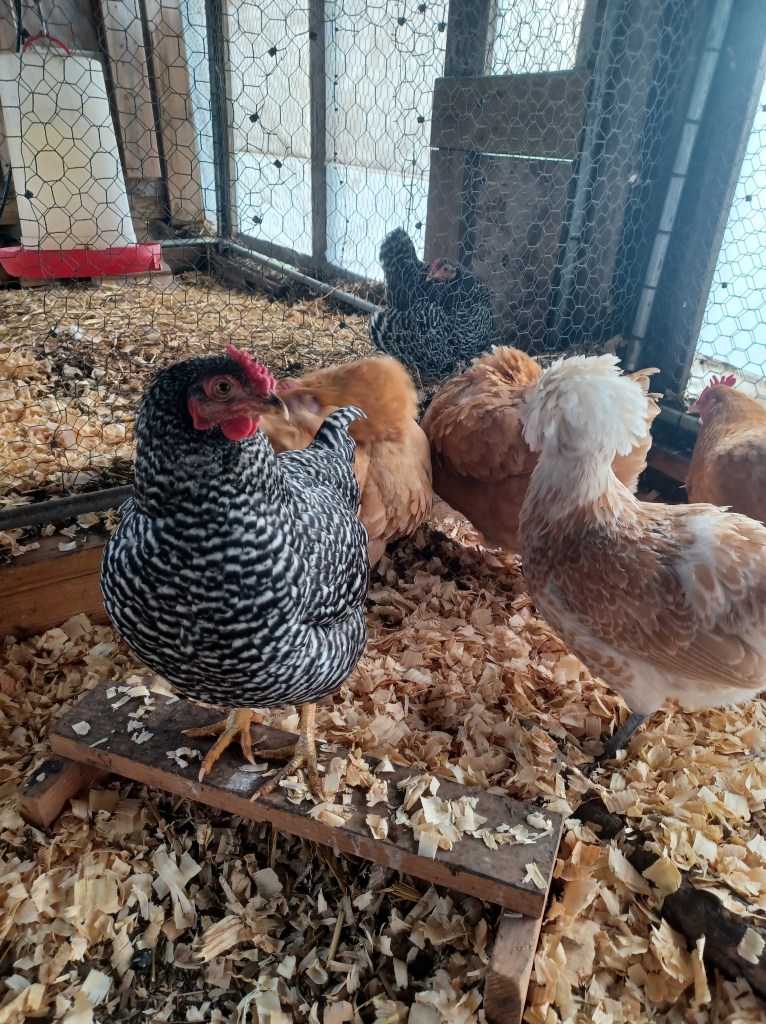
Daily And Seasonal Cleaning For Your Backyard Flock
Daily and seasonal cleaning and maintenance of your chicken’s coop and run area is a cornerstone of their health. Unsanitary conditions compound, cause, and perpetuate many backyard chicken ailments, diseases, and unwanted behaviors. Build up of dust, mud, and excessive droppings provide homes for unwanted pests and diseases. These kinds of conditions also cause backyard chickens to be less productive and more aggressive.
What do you clean daily and what do you clean seasonally?
There are many factors that will impact what cleaning regimen is appropriate for your flock. The purpose your flock fulfills (meat birds, egg layers, show birds, or companions), the breed of chicken, the weather conditions of your specific region, and the size of your flock will all impact your cleaning routine. Below is the cleaning regimen that works for us, but I’m not here to diminish anyone’s lived experience. If what you’re doing works great for you and you have healthy, happy, productive chickens by all means keep doing that! Backyard chicken keeping is very nuanced. While there are standards that most chicken keeping situations share, the specifics are going to vary from flock to flock. Also, no cleaning schedule is perfect. While I’m sharing the scheduling and timing that works for me, you will ultimately need to use your own judgement.
Daily cleaning
Scrape boxes, roost poles, and perches to remove droppings that have accumulated. Keeping the areas where your chickens perch free from droppings helps preserve their health and prevents other issues like unwanted pests.
Collecting eggs and spot cleaning any dirty nest boxes. Collecting eggs daily prevents unwanted predators from viewing your chicken coop as a place for an easy meal. Refresh your nest box material regularly and whenever it becomes soiled. Excessive droppings in your nest boxes may be an indicator of worms or of other possible health issues. I use straw in my nest boxes but you can use hay or even gathered dry grass and leaves. Whatever material you use should be soft, dry, and clean to appeal to your laying hens.
Examine food and water dispensers for signs of mold, dirt, and grim. I don’t change and clean every water dispenser daily but being aware when their water and food dispensers need dismantled, cleaned, and refilled is important to ensuring unwanted bacteria don’t accumulate in their food and water. I refresh these and clean them as needed throughout the year.
Remove and clean any dirty livestock dishes. If I serve fermented feed or treats to my chickens in a livestock dish, I’m certain to bring in any remaining dishes before nightfall so these dirty dishes don’t grow bacteria or attract predators.
Spot checking and addressing any areas of excessive droppings and muddy messes in their run area. I examine my chicken areas daily for any areas that may have become heavily soiled or muddy. This excessive moisture can cause and exacerbate a host of backyard chicken health issues. I use pine shavings as our run cover. If an area has become heavily soiled or muddy, I apply fresh pine shavings as needed. If any area has become too heavily soiled for the run cover to remain there, as in the mess is bad enough an application of fresh pine shavings won’t address the issue, I remove the soiled shavings and replace them with fresh shavings.
Run cover and bedding methods will vary from flock to flock. I highly encourage you to use a form of run cover that works for you and not to keep chickens on bare ground. Bare ground quickly becomes a mud pit and jeopardizes the health of your flock. *Disclaimer. I am referring to a ground cover being beneficial in your chickens are contained especially for long periods of time in a stationary area. I am not referring to pastured chickens or chickens who have access to fresh grazing area and are moved daily. I am saying leaving your chickens stationary in excessive mud is not healthy for them. Mud can harbor pests, make excessive droppings impossible to remove, and in the winter time mud can contribute to frostbite conditions. I use pine shaving in my run. Other people use things like coarse sand (not play sand, the grains are small enough your chickens can inhale them causing respiratory issues), or smooth pea gravel. Straw does not make a good run cover as it can retain excessive moisture. Straw is best utilized in a dry coop but makes a poor run cover. I would not recommend mulch as this can contain sharp pieces that can harm your chickens’ feet and cause injuries and other issues. I use the rule of thumb if I wouldn’t walk on it in bare feet, I would not use it in my chicken area.
I use deep bedding method here on our micro homestead. That is not feasible or practical for everyone. Annually in the spring the entire bedding pack from the coop and run is transported to the compost where it processes for a year. The previous year’s bedding is recycled as compost for my garden.
Many backyard chicken owners use the spot clean and scoop method. In this method you would as the name implies spot clean and scoop areas of excessive droppings and mud and then refresh these areas with your chosen run cover material.
Run cover regardless of which method of maintenance you are using should be replaced in entirety annually so it doesn’t harbor pests or bacteria.
Deep seasonal cleaning
I use an all-natural castile soap mixture as both my perimeter treatment and my cleaning solution. Dilute the soap according to the directions on the bottle. *Never use harsh cleaning chemicals in your coop or run. These can harm or kill your chickens. * Only use all-natural, gentle cleaning solutions like all-natural castile soap. The kind I have is gently scented. Gentle natural scents are fine in my experience. Don’t use any artificially scented or harshly perfumed cleaners, perfumes, or chemical in your chicken areas. Harsh, chemical, artificial scents can irritate or harm your chickens.
I deep clean my next boxes, roost polls, and perches. I wipe down my nest boxes with the all-natural soap mixture and clean off the soap residue with a damp rag.
I clean roost poles, perches, and any toys or accessories with the soap mixture.
I use deep bedding method in our coop and run. During the seasonal deep clean the entire run cover is removed and composted. I replace the run cover in entirely. I repeat the same process with the coop. I remove all of the coop ground cover which is also composted. I replace the coop ground cover with all fresh materials annually. Both the run and coop ground covers are entirely replaced at least once per year. Your cleaning scheduling needs may vary especially if you are not using deep bedding method.
Seasonally I refresh the perimeter spray with my soap mixture and also apply this to other surfaces inside the coop like under the nest boxes and in hard-to-reach corners to make these less accessed areas less appealing to pests. In addition to seasonally I will sometimes use my perimeter spray when spot cleaning between deep cleans. *Note, the all-natural castile soap spray is a wonderful tool but is not a substitute for necessary maintenance. It is also not a substitute for cleaning, scraping, or wiping down objects that require further maintenance. *
During a deep seasonal clean, I fully dismantle and clean all of my food and water containers using a dedicated scrub brush and my soap mixture. Wash, rinse, and dry your food containers before refilling them. I do this more often than seasonally; I would categorize this as an as-needed scheduling item but it is also part of my seasonal care routine.
A well-maintained chicken coop and run do not smell. If your chicken areas are unpleasant for you to be in, they are unpleasant for your chickens too. In sharing the cleaning routines that I follow I hope I can provide some helpful information to brand new backyard chicken owners who are developing their own routines. Your exact timing for these routines will vary based on your situation, but I hope this information is a helpful starting point for developing your own cleaning and maintenance backyard chicken routines.
Check out Chuck’s YouTube channel and Instagram for even more backyard chicken and homesteading content!
https://www.youtube.com/channel/UC6CjdDVs4qN1xxxJXAH6sOg?sub_confirmation=1

