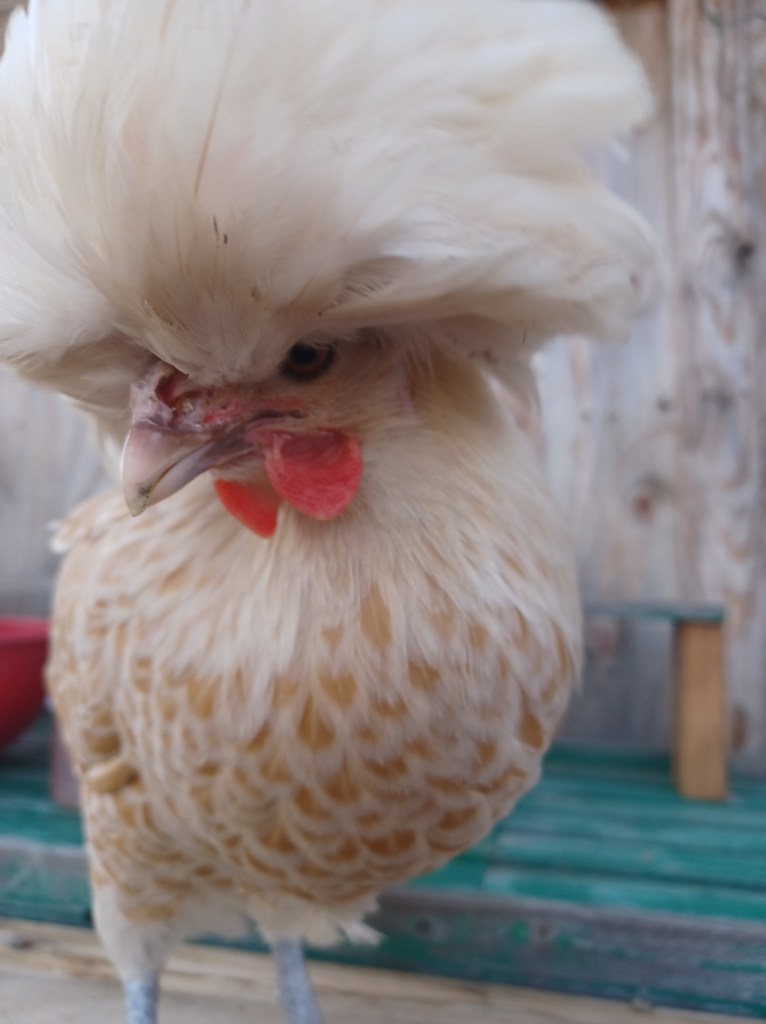
Pictured above, Cynthia, a buff laced polish hen.
Spring Care Tips For Your Flock
Spring cleaning isn’t just for our space. Your backyard flock benefits greatly from deep seasonal cleans in addition to your ordinary daily care and maintenance of their areas. Extra care and time spent cleaning and refreshing your chicken’s environment contributes to their productivity, health, happiness, and inter-flock harmony.
Give your coop a deep clean. *Never use harsh cleaning chemicals in your coop!* These can harm your chickens. Instead, use an animal safe cleaner like all-natural castile soap. Dilute according to the directions and put into a spray bottle. Scrap droppings from perches and nest boxes. Refresh nesting materials, litter, and bedding. Wipe down perches, roosts, and accessories with the soap mixture, clean, and rinse them thoroughly. Use a damp cloth to clear away dust on as many surfaces as you can. You can use your soap mixture as an area treatment on the perimeter of your coop inside to deter bugs and other pests. Refresh coop bedding according to whatever method works best for you whether that is deep bedding method or by spot cleaning and refreshing soiled bedding.
Disassemble and wash food and water containers. The natural soap mixture also works great on your chicken’s livestock food and water dispensers as well as livestock dishes. Use a dedicated scrub brush and give all of their food receptacles a good cleaning. This prevents bacteria from accumulating in their dishes and harming your chickens. Rinse and dry thoroughly before refilling.
Give your flock spring health checks. During the depths of winter pests like mites and other ailments can go unnoticed among your flock. Examine your flock thoroughly for any signs of frostbite, unexplained feather loss, damaged scales on their feet and toes, or any signs of mites or infections around their vent area. If your flock is not hand-tame or difficult to approach, you can do these health checks with the help of another person and a flashlight after your flock has roosted for the night. Observe your flock daily for signs of lethargy, limping, appetite loss, respiratory distress, or any other concerning behaviors. Treat any signs of injury or infestations with the appropriate treatment. Farm box stores and online stores offer many over the counter remedies for most chicken health issues.
Address muddy chicken areas. Excessive mud and moisture contribute to conditions that can cause frostbite in your flock. While spring is here, many of us still have a few below freezing days ahead. Use livestock safe bedding to address muddy areas of your run. We use pine shavings. You can also use coarse sand (not play sand, it is small enough chickens can inhale the grains of sand and it can cause respiratory issues) or smooth pea gravel. I don’t recommend mulch as this can contain sharp jagged pieces that can harm your chickens’ feet. I use the rule of thumb if I wouldn’t walk on it barefoot, I don’t use it in my chicken area. Straw, while good for use in a dry coop, is not recommended for your chicken run as it can retain a lot of moisture. Provide your chickens with perches and roosts for relief from excessive mud. You can use foraged branches, stumps, and wood scraps to make roosting areas. Remove any sharp or protruding edges that might harm your chicken’s feet.
Do a yard sweep for trash or harmful objects. Construction trash, litter, hardware, and other objects can be hidden under the snow. Chickens are curious creatures and can accidentally ingest harmful objects left in their area. Do a visual sweep of your chicken areas and pick up any inappropriate items like discarded hardware, construction trash, or other garbage.
Employ multiple predator prevention methods. Use as many layers of predator protection and methods as you feasibly can. Spring means predator pressure may increase as wildlife are working to provide for their offspring. See my predator prevention video and blog where I mention all the methods in detail I know of to prevent predators. Use hardware cloth on your coop. Don’t rely on just one form of predator prevention but instead stack as many as you can to provide your flock with the best protection possible.
Observe your flock closely in the spring for signs of broodiness. Broody is term that describes the state where a hen actively attempts to hatch chicks. It may be necessary to deter this behavior if you don’t intend to expand your flock this year. Consistently and gently moving the broody hen away from the area she is attempting to nest in has worked us. If the broody behavior is extreme, it may be necessary to isolate the hen with her own food, water, and grit for 48 hours or until the broody episode has ended. Watch that all of your flock members are returning each night. An unattended hen may sneak away to an area hidden in the brush, woods, or even under a deck to hatch her eggs and re-emerge with chicks. If you are intending to hatch or acquire chicks this year, please see my quick start guide to chicks video with helpful tips about how to get started. Make sure you are collecting all of your eggs daily to diminish the chance of inspiring broody spring season behavior unless it is intentional!
I hope this was helpful. Check out Chuck’s Youtube channel and Instagram for more great backyard chicken and homesteading content!
https://www.youtube.com/channel/UC6CjdDVs4qN1xxxJXAH6sOg?sub_confirmation=1
 Chuck and the Chicks