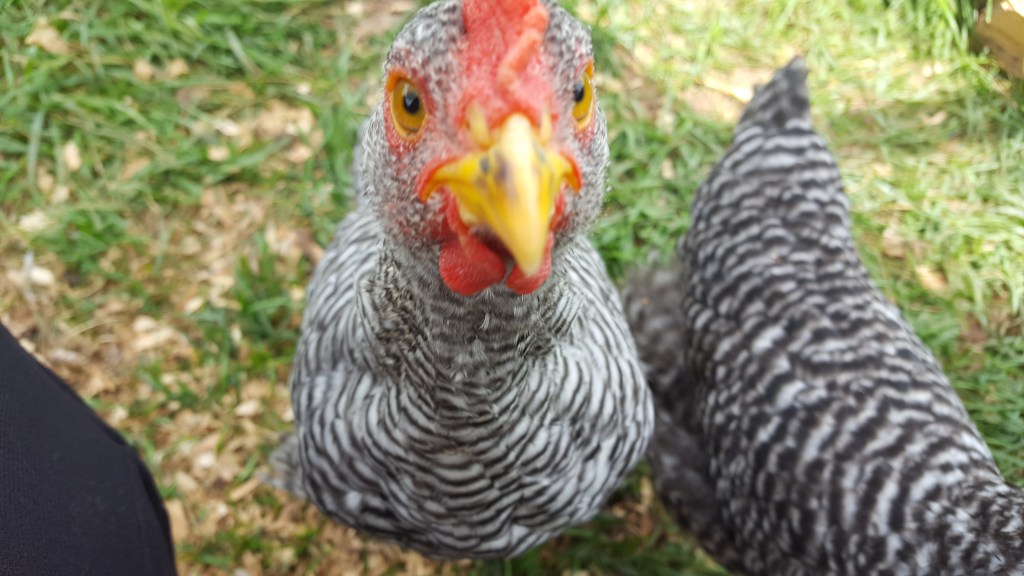
Above, baby Chuck as a cockerel.
Quick Start Guide Your First Chicks
Be sure you can legally have chickens in your area. Different HOAs, neighborhoods, cities, regions, and states have different laws regarding livestock animals within city limits among other rules. Be certain you are legally allowed to have chickens and how many chickens prior to bringing your first birds home. Some areas allow you to keep chickens but do not allow you own roosters. Know the rules where you live.
Have a learning mindset. Don’t rely on any one form of media or word of mouth for your information about chickens. The library and your local agricultural office have free resources about chickens! Also, big farm box stores and hatcheries often have book sections with helpful books and magazines that include coop plans and vital information to help you get started! Invest in these resources and learn as much you can before you get your first chickens. The best homesteaders know they can always learn more, grow, and improve!
Adopting chickens is a daily, multiple year commitment. With the exception of meat chickens which will only live a few months, chickens are long lived animals that require daily care. Be sure this commitment is right for you, your family, and your lifestyle.
Baby chicks are adorable but they do require extra equipment and care. Some other options to start your flock are:
Pullets from a hatchery. These are young hens from a hatchery less than a year old. They will be more expensive up front because you pay for the care the hatchery did to get them to a certain age, but you know with certainty they are hens and not roosters.
Adopt adult hens or rescue hens. If you have an existing flock quarantine new birds in a separate area for one month to ensure they are healthy. If these are your first birds be certain your infrastructure is in place and ready for use. Rescue hens may require additional care to recover from their previous situation but once healed they will be wonderful, productive flock members.
Build your infrastructure before you buy your first chickens. The small hutches they advertise for chickens are great to transition chicks outside but they are not large enough for adult birds. Have your coop and run built and completed prior to getting chickens. You can’t build as fast as your chicks will grow.
Where to get your first chickens. You can get your chickens from a farm box store, hatchery, or from person to person sales. The farm box store while convenient often sells straight run chicks meaning 50% male and 50% female chicks. While they may assure you they are selling you hens you cannot be certain. If you purchase chickens from a farm box store, be sure you have a rooster plan in place. A hatchery is more likely to know the correct sex and breed of your chickens as well as care for them better. From our lived experience with this we only purchase chicks from a hatchery going forward. If you acquire chickens from a person to person sale take measures to ensure the birds you are bringing home are healthy and quarantine them for one month prior to introducing them to your current flock. You can also buy hatching eggs and chicks by mail.
Your baby chicks will need a brooder. A brooder is the safe protected place you create for your baby chicks for them to live. 1 square foot of brooder space per chick is recommended. Create the biggest brooder possible as your chicks will grow at an astounding rate. The sides of your brooder should be at least 24 inches high. You will need a protective top for your brooder. If you are brooding your chicks in your home you can use screen panels. If your brooder will be outside, use a sturdy hardware cloth top. We use large 75 gallon totes for our brooder but you can construct a wooden box, use large steel tubs, or create a brooder from cardboard boxes. Prepare your brooder before bringing your chicks home so they have a safe place to be from day one.
Your brooder will need additional elements.
Bedding. Baby chicks will slip and injure themselves on slick surfaces. Use items like puppy pads or pine shavings to line your brooder and protect your baby chicks.
A heat source. You can use a clamp light with an incandescent heat bulb or purchase a special adjustable heating panel designed for baby chicks. LED bulbs will not work because they don’t produce heat. If you think you will raise more than one batch of chicks, I highly recommend investing in the special heating panel. The light bulb while less expensive does pose a fire hazard so it will need to be checked several times a day to ensure the safety of your area and your chicks.
Purchase a thermometer for your brooder. When your chicks are grown this can be transferred to their coop! The thermometer does not have to be fancy or expensive, just functional. To begin your brooder should be between 90-95 degree F on day one for baby chicks. Decrease the temperature 5 degrees every week until your chicks are fully feathered. Adjust your panel up and down as needed. Adjust your light fixture up and down as needed in order to increase or decrease the temperature.
A water container. Some suggest adding small pebbles or glass beads to the bottom of your water container so your baby chicks don’t accidentally drown by napping in their water. I highly recommend using chick hydration packets when you first bring your chicks home to give them a great start.
A food container. Your chicks will need a food dispenser filled with chick grower feed.
Place your heat source on one end of the brooder. Watch your chicks body language and behavior for signs of issues. Ideally you want to see your chicks active, eating and drinking during the day, and under their heat source at night.
Constantly huddled under the heat source not active=too cold
Crammed in the corner away from the heat source=too hot
Active, moving freely, eating and drinking, under the heat source at night=just right
Use safe handling practices when you bring your chicks home.
Allow your chicks 2-3 days to adjust to their new space prior to handling them. Wash your hands before and after handling your chicks or after cleaning their brooder. *Children handling chicks need to be supervised. *
Your chicks will need protection from predators. This will be the top you create for your brooder. While a screen top is adequate if your brooder is in your home, if it is outside use a hardware cloth top to protect them from predators like rodents, racoons, snakes, and others.
We choose to place our brooder in a guest bathroom and then sanitize the bathroom once the chicks are grown. You can also use outdoor locations like a garage, covered patio, barn, or your coop. Regardless of where you place your brooder it will be messy and it will need to be clean daily to keep your chicks healthy and thriving.
We allow our chicks to begin to have outside time at 5-6 weeks of age. We use a small hutch with hardware cloth and return the chicks to their brooder at night. When the chicks are outside at this age we only do so while we are able to monitor them closely for maximum safety.
At 8-10 weeks of age once your chicks are fully feathered, they are ready to be outside. Fully feathered means there is no downy chick fuzz left on their body and instead they are fully covered with feathers. Downy chick fuzz cannot retain body heat. Chicks need to be fully feathered in order to regulate their own body temperature and retain heat.
Never transition your chickens outside during bad weather. Storms, bad weather, and precipitation can kill young chickens. Wait until you have good weather to move your chickens into their new home outside.
When your chicks are ready to transfer to their outside coop and run area, place them in their new coop for 24 hours with food and water. After a day open the door to their coop and allow them to roam. Place their food and water in their run area or close to the entrance of their coop. Your chickens will naturally identify their coop as their safe place and return at night. As their owner, close your chickens’ coop at night once all of the flock is inside to protect them from predators.
I hope this was helpful! Check out the video corresponding to this post on Chuck’s YouTube channel where you will find this and other helpful information!
https://www.youtube.com/channel/UC6CjdDVs4qN1xxxJXAH6sOg?sub_confirmation=1
 Chuck and the Chicks