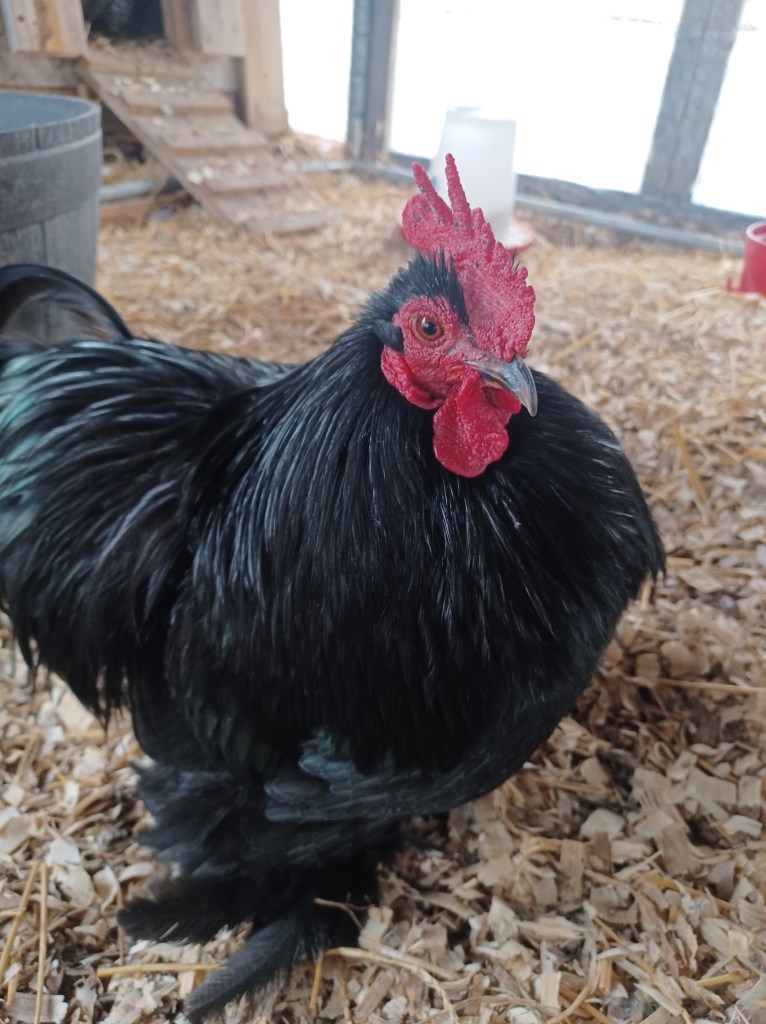
Having adequate space for your chickens in their coop and run is important for many reasons. When chickens are living in crowded conditions this can result in unwanted behaviors like feather pecking and aggression. Overcrowding can also cause unsanitary conditions which can result in disease and other ailments. Providing your chickens with enough space in their coop and run area contributes to their health, happiness, and productivity. How do you know how much space your chickens need?
The current minimum of spacing for standard chickens is 4 square feet of coop space (where they sleep) and 8 square feet of run space (a run is a protected exercise area). Bantam breeds require approximately half of that, 2 square feet of coop space per bird and 4 square feet of run space. Heavy or large breeds require 8 square feet of coop space and 15 square feet of run space per bird. Extra space is always better! The more space you are able to provide for your birds, the happier they will be and the easier it will be for you to maintain their areas. Additional space is also good if you plan to eventually expand your flock!
How do you calculate square feet? You multiply the length (how long your structure or space is) by the width (how wide your structure is). You will need a tape measurer, a pen or pencil, and scrap paper to write down your measurements. So, for example if you have an 8 foot long by 4 foot wide coop, that is 32 square feet. Divide this number by 4, the amount of square feet needed for a standard adult chicken, and you have 8. So, in an 8 foot by 4 foot coop, you could comfortably keep 8 adult standard chickens. There are multiple resources to help you calculate the square feet of oddly shaped spaces. Let me know in the comments if you would like to hear more about how to calculate spacing for chickens and square feet in non-regular shaped spaces in the comments. Keep in mind these are space minimums! More space if possible is always preferable.
Small baby chicks are usually ready to be outside between 8-10 weeks of age. That is a little over two months! Once their downy chick fuzz is gone and they are fully feathered they are ready to be outside! For the least stressful transition possible have your infrastructure constructed and in place prior to bringing home your first chicks.
Do you already have too many chickens for your existing space? Here are some things that can help. Adding additional perches and roosts can give crowded birds options when making the most of their space. You can consider building a structure like a chunnel, a protected chicken tunnel, to give your chickens additional space to explore during the day. You can adapt temporary structures like hoop houses and dog pens to be additional space for your chickens while you work to fortify and expand their existing structures. Keep in mind housing not intended for chickens will need to be modified in order to protect them from predators. As a last alternative, you can consider responsibly re-homing or culling members of your flock. Please do not attempt to cull a chicken without doing adequate research about how to do so humanely. Some of my favorite farm resources for this information are the library, Just a Few Acres farm channel, and the work of Joel Salatin. Don’t abandon members of your flock in the wild. They are domestic livestock and will not survive in the wilderness.
Expanding your existing structures to make creative use of your existing space may be an investment but it is well worth it to honor your commitment to give your backyard chickens healthy and happy lives!
If you have questions or comments, please leave them in the comments section of Chuck’s Youtube channel. Follow the link on the blog homepage.
 Chuck and the Chicks