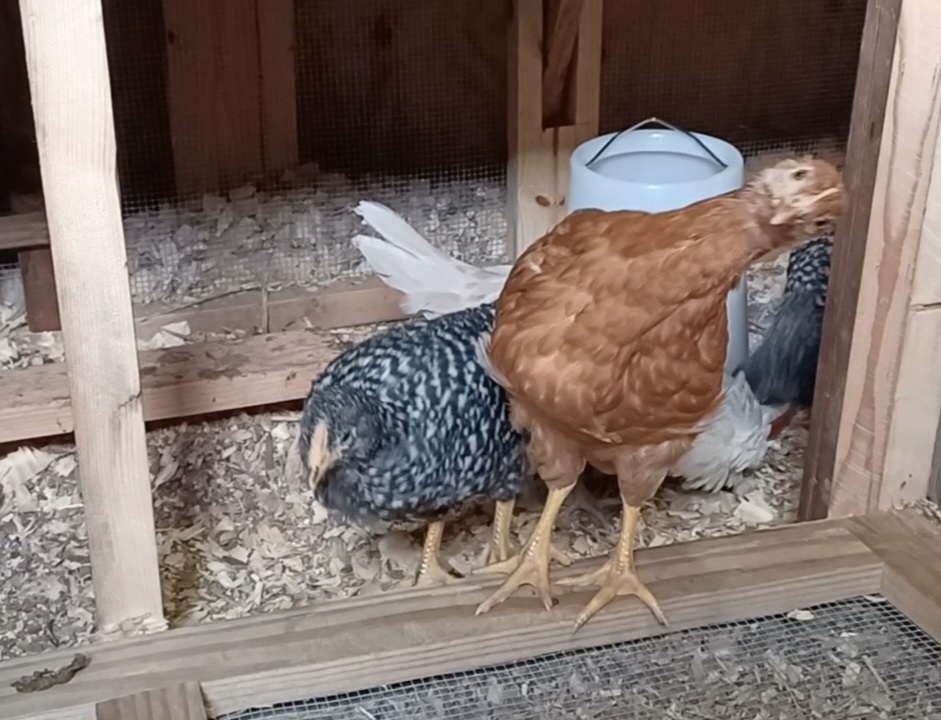
We have started the acclimation process to incorporate our new chicks into our existing flock. They are 9 weeks old, are fully feathered, and have been thriving outside in their new accommodations. They are fully feathered and doing well despite our winter temperatures. We are using the following tips as we are slowly introducing our new chicks.
1) Quarantine new chicks in their own enclosure. This step is important not only to determine they are healthy but to ensure your existing flock can meet the new chicks without them being in immediate danger from any aggressive flock members. You can modify items like a dog pen or construct an enclosure for your chicks. It’s important to use hardware cloth as opposed to chicken wire for maximum safety.
2) Provide extra food and water. Your chicks will need their own food, water, and grit inside their enclosure. Providing extra food and water stations during acclimation helps diminish aggressive behavior and also helps your new chicks eat and drink without competing with established flock members.
3) Introduce new chicks with their brooder group. Introduce new chicks with their entire brooder group to prevent individuals from being isolated. New chicks will benefit from the protection of the group.
4) Monitor introductions and start with short windows, increasing to larger ones. We begin with short, monitored windows of socialization with the flock during the day and gradually build up to longer interactions. Even once they are socializing with the established flock during the day we will still maintain their separate enclosure so it can be used if needed and until the chicks are incorporated enough to roost with the flock at night.
5) Provide distractions. If your chickens are well fed and distracted by treats or new enrichment items they are less likely to be aggressive towards your new chicks. Aggressive behavior in chickens is fueled by boredom, lack of resources, or lack of space.
6) Be patient and don’t rush the integration process. Adding new chickens to the flock can be stressful for all involved. This process can take anywhere from 1-3 weeks depending on the breed and temperament of your chickens. Your flock will need to re-establish the pecking order, their chicken social pyramid, when you introduce new members. Some pecking is normal. Provide your chickens and new chicks with maximum space and areas such as their enclosure and other places where the smaller chicks can escape larger birds. Some pecking is normal and vital for your flock to establish their new harmony with each other. Intervene if an individual bird is being targeted, if the pecking lasts longer than 30 seconds, or if blood is being drawn.
7) It may be necessary to isolate especially aggressive flock members. If one of your existing flock members is stalling the integration process it may be helpful to isolate them in their own area with their own food, water, and grit for short periods of time to allow the smaller chicks to acclimate.
Be patient, don’t rush the process, and stay consistent! Eventually the chicks will be accepted as part of the existing flock. If you’re having trouble, begin the process again. Utilize your enclosure and separate facilities until they are no longer necessary. You may wish to keep and maintain multiple food and water stations especially during transition to support inter-flock harmony.
Some resources have suggested introducing chicks at night when the other chickens are roosted. We have not had success with this method of introduction. For us, daytime monitored introductions have worked best.
I hope this information is a helpful starting point for your research about incorporating new chicks into your existing flock. If you have questions about backyard chickens or homesteading, visit our YouTube channel and leave your questions in the comments!
 Chuck and the Chicks