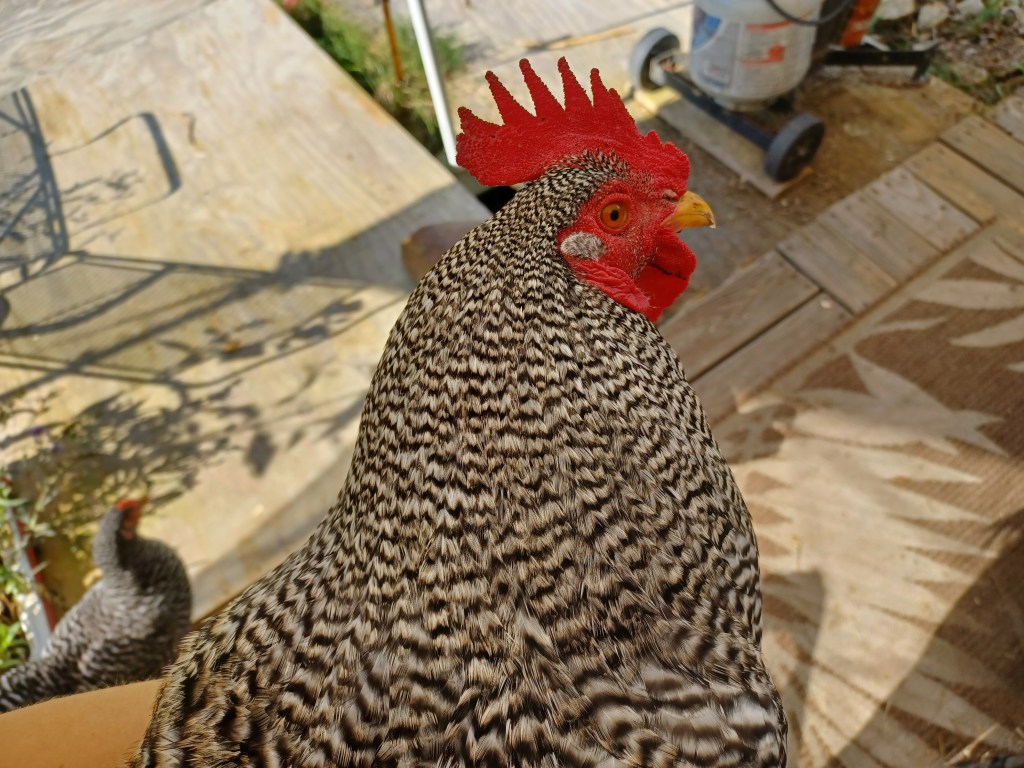
Did you know pecking order within a flock of chickens is literal? Chickens have a complex social structure with different levels. Dominant chickens will peck chickens with lower status to exert dominance, defend territory, to defend mates, or secure their right to eat before another chicken. Small amounts of pecking within a flock are natural and normal as chickens order themselves according to their status within the flock.
Behaviors like feather picking and cannibalism are a sign there is a severe imbalance of some kind which is impacting your flock. If you see these behaviors in your flock it means one or more of your chicken’s basic needs are not being met. Feather picking is when chickens remove and damage the feathers of other chickens or themselves leaving bald and possibly bloody exposed patches of skin and damaged feathers. Cannibalistic behavior is when a chicken actually consumes part of another chicken by tearing a small wound or even consuming a smaller bird than themselves.
When chickens molt annually, their feathers re-grow as pin feathers, a fresh feather protected by a thin sheath. As these new feathers grow some members of the flock may be tempted to peck them. Some chickens may even peck themselves for a variety of possible reasons.
Many factors play a potential role in these undesirable behaviors. While there is no one cause of these behaviors, there are some possible solutions you can try to discourage and hopefully avoid these behaviors entirely. Here are possible causes and solutions to feather picking and cannibalistic behavior.
A temporary measure to discourage minimal feather pecking is a peck-no-more style lotion or spray. There are many varieties of these products so you may need to experiment to find which one works best for your chickens. These are topical remedies which you apply to the damaged or exposed pin feathers or wound which discourages pecking. We have used these products with success within our own flock. To make applying medications less stressful for you and your chickens if they are not hand tame, apply the medication at night once they have roosted with the assistance of another person. This is only a temporary solution. Pecking will resume if the underlying cause is not addressed.
Possible causes of these behaviors are:
Inadequate space. Make sure your chickens have the recommended amount of coop and run space. Full size chickens need 3-5 square feet of coop space per bird (the coop where they sleep) and 8 square feet of run space per bird (a run is a covered and protected exercise activity area), and bantams require approximately half of that. Heavy or larger breeds require more space. Adequate space for your birds promotes not only their physical health but inter-flock harmony. Adequate perches and roosting areas are also important. Try adding additional perching and roosting space for your chickens as both enrichment and a way to maximize the use of their areas. These numbers are considered the bare minimum. More space is always better!
Improper nutrition. It is essential to feed your chickens a nutritionally complete balanced chicken food which is appropriate for their breed and purpose. Inadequate or improper food causes aggression as well as behaviors like feather picking and cannibalism. Scratch grains should only be fed as a treat, not as your chicken’s primary source of food because it lacks many essential nutrients needed for their bodies to work properly. Try different brands and textures of chicken food to find what works best for your flock. Consider supplementing with higher protein blends like all-flock feed or high protein treats like grub worms. Your chickens need access to fresh water every day.
Boredom. During the winter many chickens spend more time in-doors which can lead to aggression. Try adding chicken-safe toys or more perches to their area. A snack on a string is an excellent source of both nutrition and enrichment.
Improper temperature or lighting. Temperature extremes cause stress to chickens which can lead to aggressive behavior. Excessive use of artificial lighting or manipulating the natural cycles of their body with the use of artificial light can contribute to aggressive behavior. Properly winterize your coop and run. Don’t use artificial light to manipulate your chicken’s natural laying cycle.
Having a mixed flock. Different breeds and sizes of chickens can demonstrate aggression towards each other. If you have a mixed flock like ours and have encountered issues with aggression, provide as much space as possible to your birds. Provide smaller birds with additional perches or hiding places where they can escape the aggression of other chickens. If the behavior is too extreme, you may need to consider maintaining separate or divided facilities. Provide your mixed flock with multiple food and water stations so birds with different status and size can eat and drink from separate places.
Inadequate or unsafe nesting areas. Without a proper space to lay their eggs chickens can demonstrate aggressive behavior. Provide one nesting box for every 4 hens. Line boxes with fresh and safe livestock bedding. Collect eggs daily. Keep your nesting boxes clean and replace bedding as needed. If your chickens are not using your nesting boxes try different styles, sizes, and locations.
Unsanitary or unsafe conditions can cause aggression within the flock. Maintain your chicken coop and run daily. Ensure you have adequate clean bedding and litter for your chickens.
I hope this information is helpful! If you have questions about backyard chickens or homesteading please visit our YouTube channel and leave your questions in the comments. Thanks for stopping by!
 Chuck and the Chicks