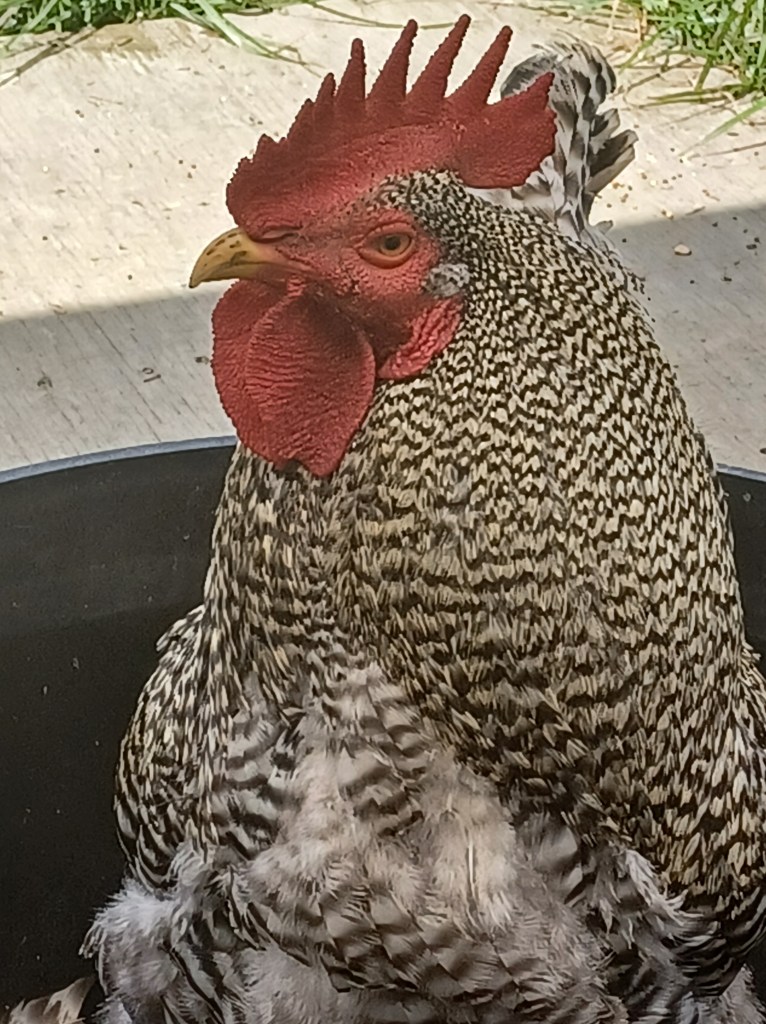
Chuck shown here enjoying a bath in his garden tub on the porch.
Winter can be a challenging time for chickens and their owners. Colder temperatures can result in increased dangers and stress for your backyard chickens. Luckily, there are some simple steps you can take to prevent the majority of chicken ailments. The kind of care your chickens will require in the winter will vary depending on the severity of weather in your region. However, these basic tips will apply to most backyard chicken situations. I hope you’re able to use this information as a starting point for your winter chicken care education and readiness.
#1) Prioritize cleanliness. Remove droppings regularly to keep your chickens healthy. Colder temperatures mean more time indoors for most backyard flocks. Heavily soiled bedding and litter can result in a myriad of health issues such as ammonia toxicity, Coccidiosis, and other issues. Take measures now to plan coop and run maintenance during the winter months. Regularly remove droppings from your chickens coop and run and replace heavily soiled litter material. You can use a dedicated litter scoop, rake, shovel, or other tools to spot clean heavily soiled areas. Purchase extra bedding material if you are anticipating severe winter weather so you have the materials on hand to maintain a clean environment for your chickens. Continue cleaning perches, toys, water, and food containers regularly.
#2) Keep bedding and litter dry. Moisture is the primary cause of frostbite in chickens. Moisture from decomposed and unsanitary bedding or litter material adds moisture to the air which can make it difficult for your chickens to stay warm. Frostbite can damage chickens’ feet, waddles, combs, and some severe cases even lead to death. You can apply bees-wax based salves to the larger combs and waddles of your hens and roosters when record severe temperatures occur. Chickens need to stay dry in order to remain warm. Refresh bedding and litter as needed throughout the winter to keep your chickens healthy. Never use cedar chips as bedding or litter! Cedar chips are carcinogenic to chickens and the acid from cedar chips damages chickens’ respiratory systems! Instead, use a safe livestock bedding like pine shavings. Bathing is part of how chickens maintain their own health. Be sure to provide a bath in your chicken’s run (or outdoor area) during the winter filled with clean dirt for dust bathing. Take measures to ensure their dust bath remains dry. We use a garden tub but you can use a variety of different styles of containers.
#3) Continue to provide excellent nutrition during the winter months. Supplement your regular high quality chicken pellets or crumble with high protein snacks like fly grubs and delicious vegetables. Consider offering a vitamin supplement water mixture in addition to your regular fresh water offering as chickens will have less access to natural forage during the winter. There are many varieties to choose from. Mix according to the package instructions and offer this in addition to your regular fresh water system. We also provide grit and oyster shell supplement year round. Use snack time also as a way to combat boredom! Vegetables, fly grubs, perches, and swings are also ways to provide enrichment and activity to your chickens during the winter months.
#4) Reduce exposure to the elements. If protected from the elements, chicken’s natural feather coat and abilities will help them thrive during the winter. Cover the sides of your run and coop while still allowing for fresh air to circulate. Remember, your chickens will need fresh air but not draft! Make sure they are protected from wind and precipitation as these two things pose the biggest threat to your chicken’s ability to keep themselves warm. *Never use a heat bulb lamp in your coop or run, these are a fire hazard!* Dust accumulates in these light fixtures and causes fires. Chickens are able to survive cold temperatures as long as they are kept dry, protected from the elements, and their basic needs are met. If you keep ornamental breeds and feel your severe weather warrants the use of a heat element, consider safer alternatives like wall mounted panel heaters. The vast majority of chickens do not require any additional heat source. Keep your chicken’s environment dry and clean as well as ensure they have access to fresh food and water to help them have a safe and happy winter!
I hope this was a helpful starting point for your backyard chicken winter readiness. Be sure to keep learning to find out what additional specific measures are needed to help your chicken’s thrive during winter in your area!
 Chuck and the Chicks