3 Things Your Chicken Needs You To Know
The world of backyard chickens holds a lifetime of learning. No matter how much research you’ve done, nothing can totally prepare you for every situation you will encounter with your backyard chickens. That being said, knowing the basics can make a drastic difference in the quality of life and productivity of your chickens. Here are 3 things that can serve as a starting point for your chicken knowledge journey.
1) Know your chicken’s basic needs: appropriate nutrition and a safe environment. Knowing what your chickens need to eat for optimal health is important for every aspect of their care. Without proper nutrition chickens can succumb to a variety of ailments and health difficulties. Feeding your flock high quality feed and supplementing with nutritious treats is a great way to maintain their health and productivity. Chickens also need access to grit to remain healthy. However, without proper housing investing in nutrition won’t be of much help. Make sure your coop and run are predator proof and that they provide adequate protection from the elements.
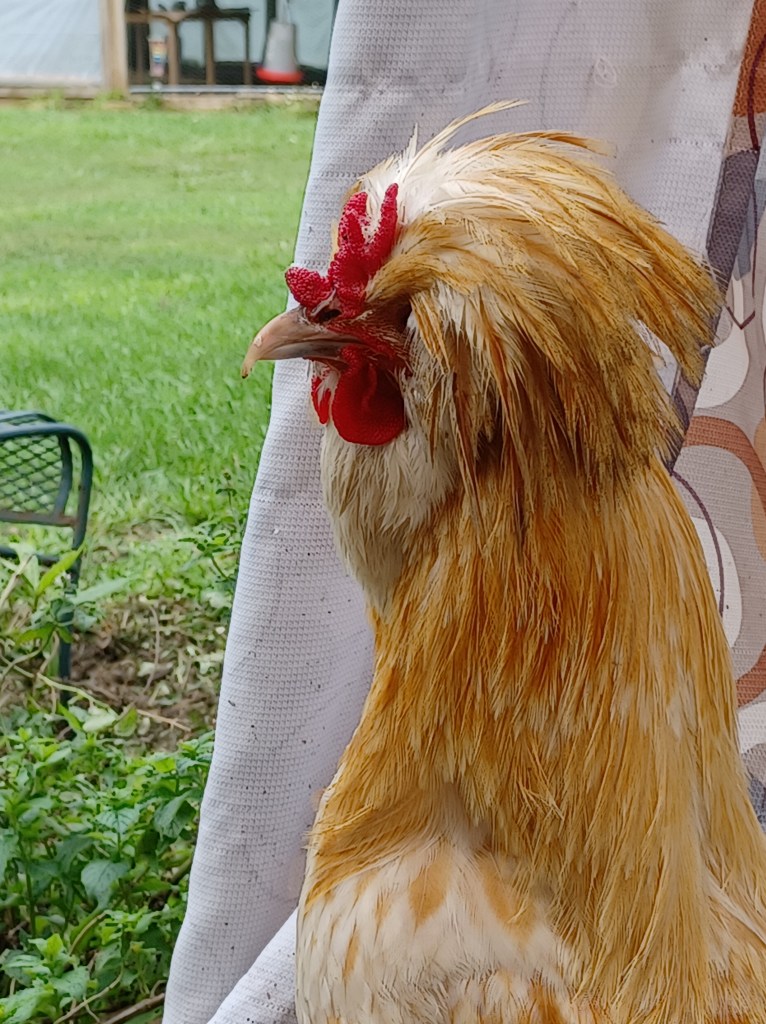
2) Know what breed of chicken you have and what their unique needs are. The breed of your chicken will determine their purpose and their specific needs. Just like the needs of a Chihuahua are not the same needs as a Great Dane, the needs of Pekin will not be the same needs as a Brahma. The breed and the purpose of your chicken (companionship, show bird, meat, or eggs) will determine many aspects of their care. Also be aware farm box stores and even hatcheries sometimes make mistakes! In the heat of chick season many birds can be mislabeled so do your research and confirm the breeds that make up your flock! (Jules, pictured above, was labeled a female Ameraucana. He’s a Polish rooster.)
3) Know what predators are prevalent in your area and how to protect your chickens. Just because you live in a more urban area doesn’t mean you won’t encounter predators. As winter nears and natural food sources decrease, desperate predators will begin to encroach on human boundaries in search of food. Take measures now to secure your coop and run. Remember, chicken wire is meant to keep chickens in, not predators out. Use hardware cloth whenever possible. There are many additional measures like a camera or light motion system, pest sprays, livestock guardian dog, and other methods you can use to protect your flock. Foremost however is ensuring their structures, especially their coop, are secure as you will likely experience the most predator presence at night. Know what specific predators are prevalent in your area and plan ahead to protect your flock.
Planning now can save you heartache and hardship in the coming season. I hope this was helpful! Wishing you all a safe and happy season ahead!
 Chuck and the Chicks