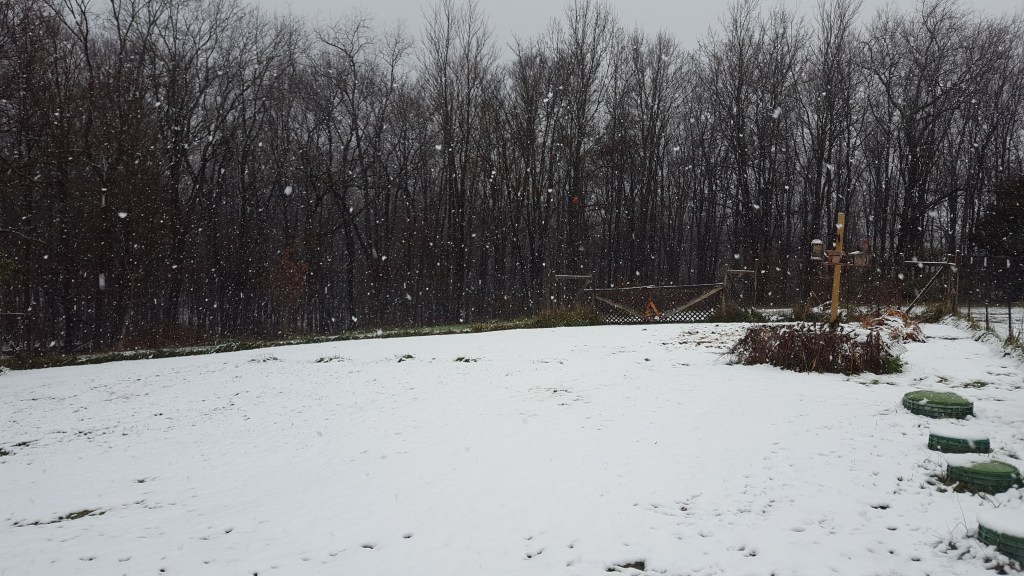
Feeding chickens in the winter time.
I was very surprised my first winter having chickens how much their eating habits changed! Typically, chickens can eat about 1 ½ times their normal amount of food in the wintertime as their bodies are coping with the harshness of winter and they can’t supplement with the food they locate when free ranging in the backyard. These are a few of the practices I have adopted after my first winter with chickens that have served me, my flock, and my family well. I live in zone 6A so we typically have very harsh winter months and we live quite remotely so I can anticipate being snowed-in on the farm at least a few days a year. Knowing this has impacted how I get ready for winter. While these steps would not be applicable to every flock, I hope you will find some of them helpful as you look ahead to supporting and caring for your chickens in the coming winter months.
1) I have an extra bag of layer feed on hand. While it’s not practical or affordable for us to have many bags in reserve I try to at least always have one extra bag of high quality chicken food on hand. During the winter months I will also continue to supplement their regular layer food with all-flock formula for extra protein.
2) I utilize frozen garden vegetables. Once thawed, I can share some of our summer crops from the freezer with our chickens. I serve them in a large dedicated livestock bowl with plenty of room for everyone to enjoy their snacks. When feeding chickens treats be sure to spread them out in a large container or trough to mitigate aggression around the food. Snacks are a great way to supplement your chicken’s nutrition in the winter. Be sure they are still getting the majority of their nutrition from their balanced layer feed, because chickens that rely solely on snacks and scraps can experience health problems due to nutritional imbalance.
3) I also use frozen bagged vegetables from the store. I have always thought the freezer section has some unsung and wonderful bargains for the whole family. A frozen bag of mix vegetables thawed and served appropriately is a wonderful treat for your chickens. I let any food I prepare for them cool to at least room temperature before serving. If it hurts for you to touch it, it is too hot to serve to your chickens. Wait a few minutes and ensure all food is cooled to an appropriate temperature before feeding it to your flock.
4) I supply fly grubs and the occasional cup of dry cat food as a treat. Grubs are a great way to introduce additional protein into your chicken’s diet. Chickens can also eat dry cat food as a treat but again, this should only be an occasional treat and not their primary diet. Food meant for other animals lacks the essential nutrients chickens need to be healthy and lay strong eggs. All of the treats I offer are in addition to their balanced layer feed and all-flock feed, not as a substitute.
5) I supply grit and oyster shell supplement year round. This is especially important in the winter in our area when snow on the ground makes foraging and finding grit impossible.
6) I offer vitamin supplement water as an option. In addition to their regular fresh water supply I will offer a vitamin supplement mixed according to the directions to the chickens in a separate container. We use Rooster Booster but there are many options to choose from. Be aware the supplement does create a residue in the water container so it will need to be cleaned more frequently. I always provide fresh water 24-7 to our chickens. You could also serve the supplement in a separate livestock bowl. The directions for use will be on the packaging. There are many varieties to choose from so you can find the best supplement to support your flock’s unique needs.
7) I will also occasionally offer a warm treat like layer feed mixed with oatmeal and apples. I make sure the oatmeal has cooled to room temperature and is safe to the touch and then I will add apple slices and a cup of layer feed. I stir and serve this in a livestock bowl and remove it when they’re finished enjoying it.
I hope this information was helpful. Know that your flock will be grateful for all of your effort and support during the winter months. They do such a great job taking care of us, the least we can do is return the favor! Thank you for being a dedicated and caring backyard chicken owner!
 Chuck and the Chicks