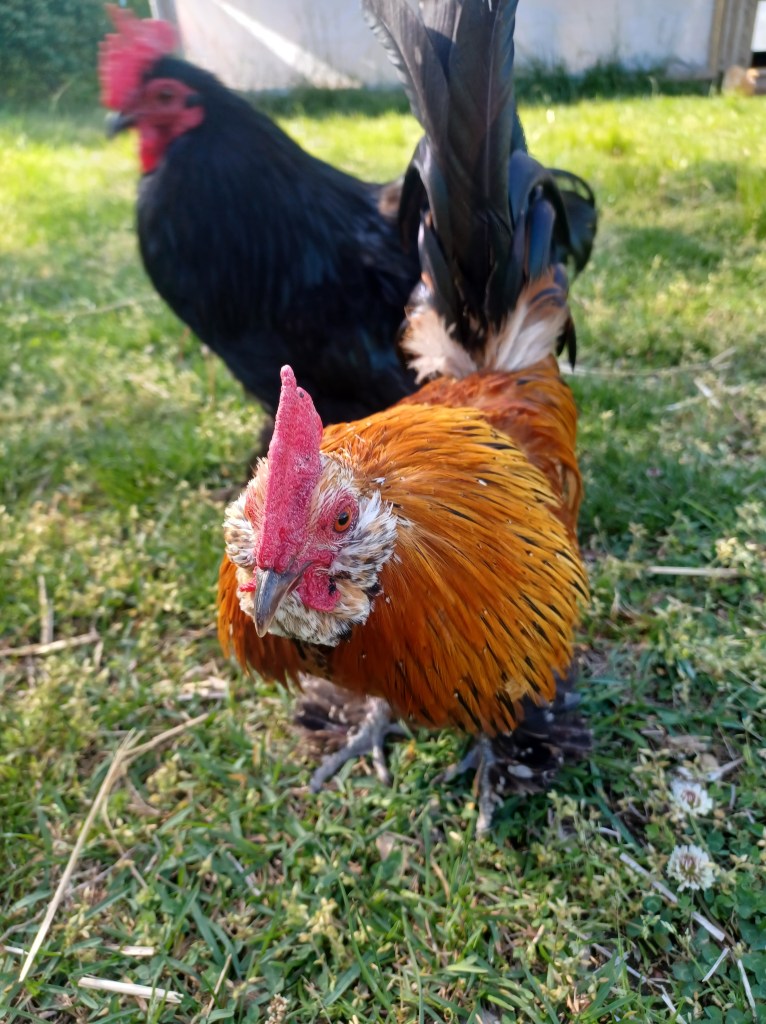
I faced a situation as a chicken owner I never thought I would have to. Toxic smoke from the wildfires mildly affected our area and I was at a loss. Totally dumbfounded I began to research how to protect my flock and other animals from smoke exposure. The following post is a summation of my findings and suggestions. I’m not a veterinary professional. Please follow this and any advice at your own risk and always consult a veterinary professional when possible.
The prevailing advice is bring them inside. If toxic smoke is present, the best case scenario is to bring your animals inside whenever possible. Bathrooms, shower stalls, even basements can be arranged to provide emergency accommodation for your animals. Consider buying additional animal crates or carriers for this purpose.
If you can’t bring your animals inside, limit their activity, and discontinue anything that could cause them to be extra active and breathing rapidly. During the smoke event here my chickens actually chose to return to their run and coop for safety. I kept their doors closed that day to limit activity and protect them to what I extent I could.
Have fresh food and water available and change them often. Toxins can accumulate in old food and water so during one of these events change their food and water frequently/as needed. Discard any tainted food or food you suspect might be tainted.
Include your pets in your emergency evacuation plan. In the event you should have to leave your home, include your pets (and livestock) in your emergency plan. If you can’t transport pets with you make sure they have enough food and water until your return. Ideally, take your pets with you. Utilize pet carriers, livestock trailers, and other means of transportation to get you and your animals to safety. If you don’t have this equipment, consider planning with a neighbor or friend who does have the equipment.
Have your animal first-aid supplies on hand. Especially those which support respiratory health. Don’t wait until you have sick animals to start searching for remedies. Invest in some basic medicines now and have then on hand. Some good basics to always have on hand: Vet RX, antibiotic cream, antibacterial salve, vitamin supplement, hydration supplement.
Other steps you can follow for additional peace of mind:
-Have additional food for your family and pets on hand. I try to have at least one extra bag of feed for each kind of animal whenever financially possible.
-Clear areas around houses and livestock structures (barns, pens, coops, runs, etc.) make sure this break between wooded/grassy areas and your buildings is maintained.
-Train your flock and other animals to an emergency recall to get them inside quickly in the event of an emergency. (I talk about how to train your chickens in a previous post.)
-Maintain awareness of major weather and environmental events.
The world can be an unpredictable place. It always has been. I write this post not to inspire fear but instead in hopes that it inspires preparedness and forward thinking. Backyard chicken owners will always have to contend with adverse and changing conditions. The more we share information and help each other, the better.
I’m including two helpful links below I encountered in my own research.
https://www.avma.org/resources/pet-owners/emergencycare/wildfire-smoke-and-animals
 Chuck and the Chicks