Chicken wire is not meant to keep predators away from your chickens. Several predators including raccoons, weasels, snakes, and others can permeate chicken wire. Chicken wire is more intended to create a safe space to keep your chickens in. The large holes allow for circulation and viewing your birds. However, these same openings can provide opportunities for predators. Hardware cloth is a fine metal mesh cloth that is designed to protect your chickens from all manner of predators. This is recommended above chicken wire because the predators above can’t get through hardware cloth. It is more expensive however. Planning ahead and investing in sound infrastructure is one of the best things you can do to protect your chickens. Here are a few other things you can do to protect your flock.
Use hardware cloth whenever possible on your coop and run. Also consider burying part of your perimeter wire or reinforcing borders with gravel or heavy rocks. Predators can dig into your structures!
Look up. Make sure roofs and windows are also secure and free of holes. Weasels and snakes can climb into these types of holes and make a home in the rafters of your chicken structure.
Don’t leave scraps out overnight. If you feed your chickens vegetable and table scraps (which I do) be certain to bring in and dispose of any leftovers at night. Food left overnight doesn’t only rot but it also attracts scavengers like possums and raccoons.
Train a livestock dog. If you can have one in your area, a livestock dog is a first rate line of defense against predators. It does take time to acclimate any animal to your chickens but the investment of time and training is well worth it.
Use snake deterrent sprays and balms. Snake ball repellents and sprays exist which you can utilize to deter snakes from your yard and areas your chickens frequent. Be aware these deterrents lose their effectiveness after a rain and will need to be reapplied.
Close your chicken coop and run in a timely fashion at night. Your birds are most vulnerable at dawn and dusk, when the majority of predators are active. You can use an automatic timer to secure chicken doors or set a timer on your phone to be sure at sunset your chicken facility is secured properly.
Create space between the woods and your chickens. If you live in a wooded area or have tall weeds or grasses growing near your chicken housing, remove these.
Collect your eggs daily. This is an important thing to do to avoid drawing predators into the nesting area.
Keep your coop and run bedding clean. Refresh bedding in a timely manner as excess, dirty bedding can make your chickens sick as well as serve as a home for rodents and other pests.
Know the predators in your area. Local chicken groups and other backyard flock keepers are a great resource.
Predator lights. These are available online. They are motion activated lights which deter predators whenever there is nighttime activity in your yard.
Netting. If you have an enclosed run don’t forget to also utilize wire or netting as a roof. Hawks and other climbing predators can access your chickens from above.
Vigilance. Nothing can replace your presence when it comes to protecting your flock. Checking on your birds especially in the morning and dusk is a great way not only to monitor their health but to inspect their coop and run for any sign of predator activity. Regularly walk your yard perimeter and be aware of any signs of predator activity such as new holes or damaged fencing.
Listen. If you hear your flock sound an alarm call or you notice strange behavior (they avoid an area or suddenly all run from their coop or run) inspect it yourself to see what may be impacting their behavior.
Additional predator deterrent methods will be specific to your area. Ask other local flock owners to know what to watch out for!
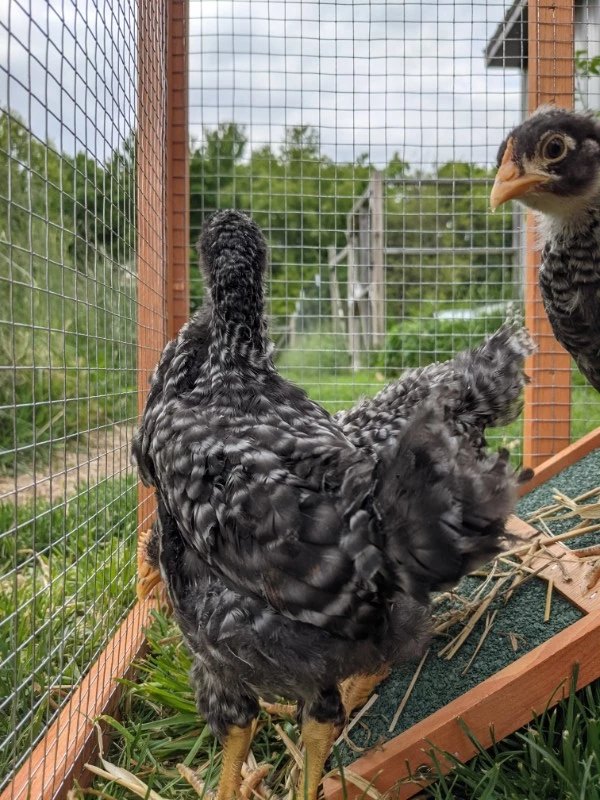
Pictured above, baby Cleopatra and Starshine.
 Chuck and the Chicks